By Shai Tsarfati, Co-Founder and CEO of Surplus International
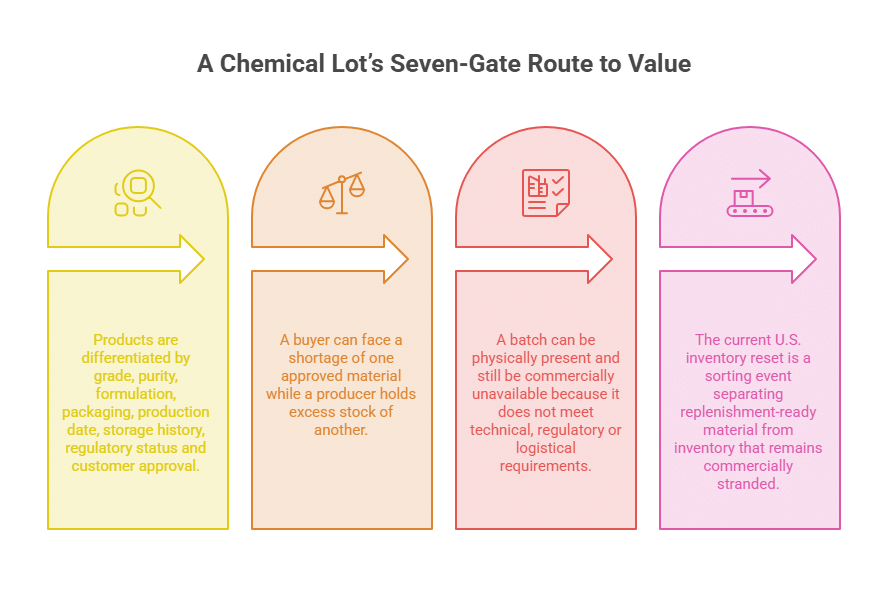
A discounted surplus chemical lot can look attractive on a product-price comparison and still fail to become a viable delivered deal.
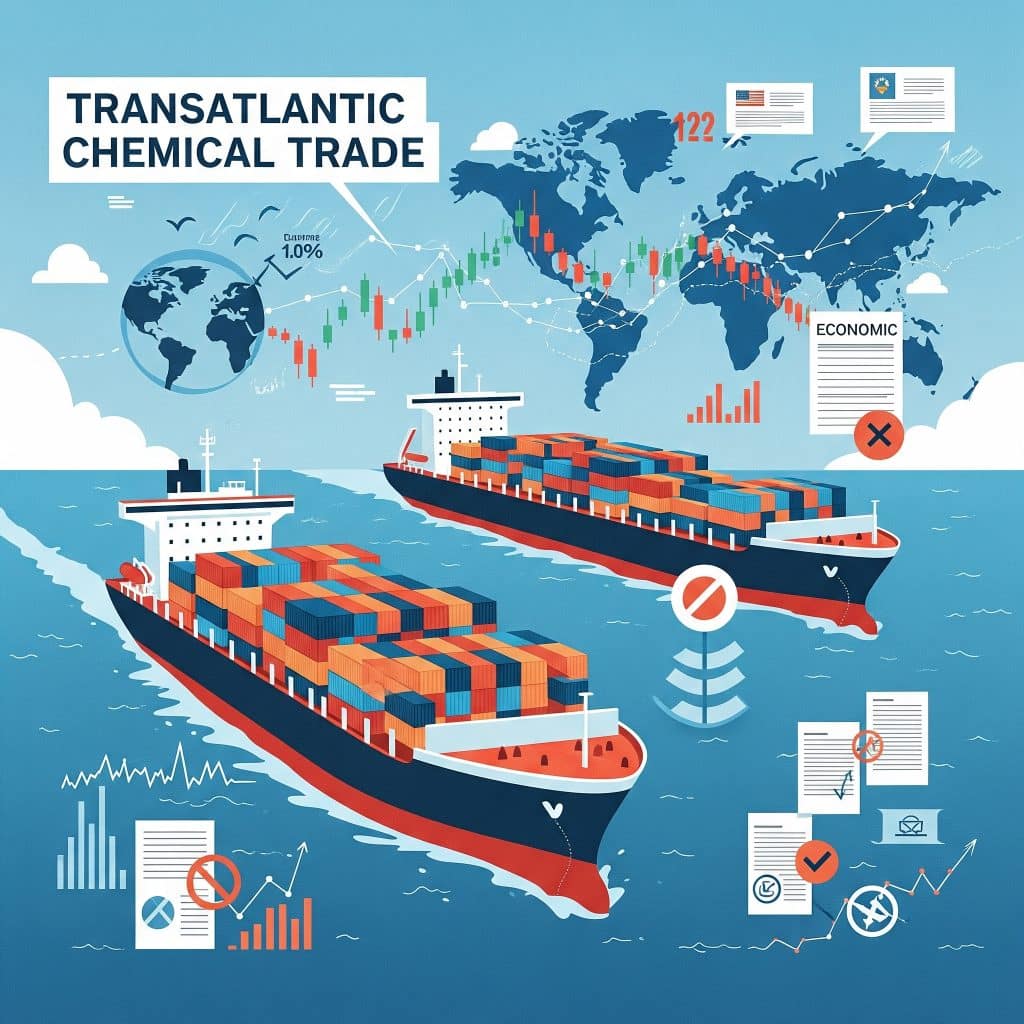
That matters where a movement may involve the Red Sea, Bab el-Mandeb or the Gulf of Aden. A shipment plan cannot be a footnote to the sale. Route, cargo acceptance, timing assumptions and cost allocation can determine whether an opportunity is commercially real.
On 25 October, the Joint Maritime Information Center said Bab el-Mandeb remained open to commercial traffic but volatile. It reported no confirmed attacks or disruptions there in the preceding 72 hours, while rating the Southern Red Sea and Bab el-Mandeb threat level substantial. 1 An open waterway is not a stable, universally available service proposition.
U.S. MARAD’s 23 September advisory says M/T AMZAN and DAISY were reportedly struck by Houthi missiles off Yanbu, Saudi Arabia on 24 August. 2 Its guidance is written for U.S.-flagged vessels and, in some passages, U.S.-flagged or owned vessels. It is not a binding instruction for every flag or a service forecast for every cargo.
For a surplus transaction, the conclusion is practical: validate the logistics premise before treating a product discount as delivered value.
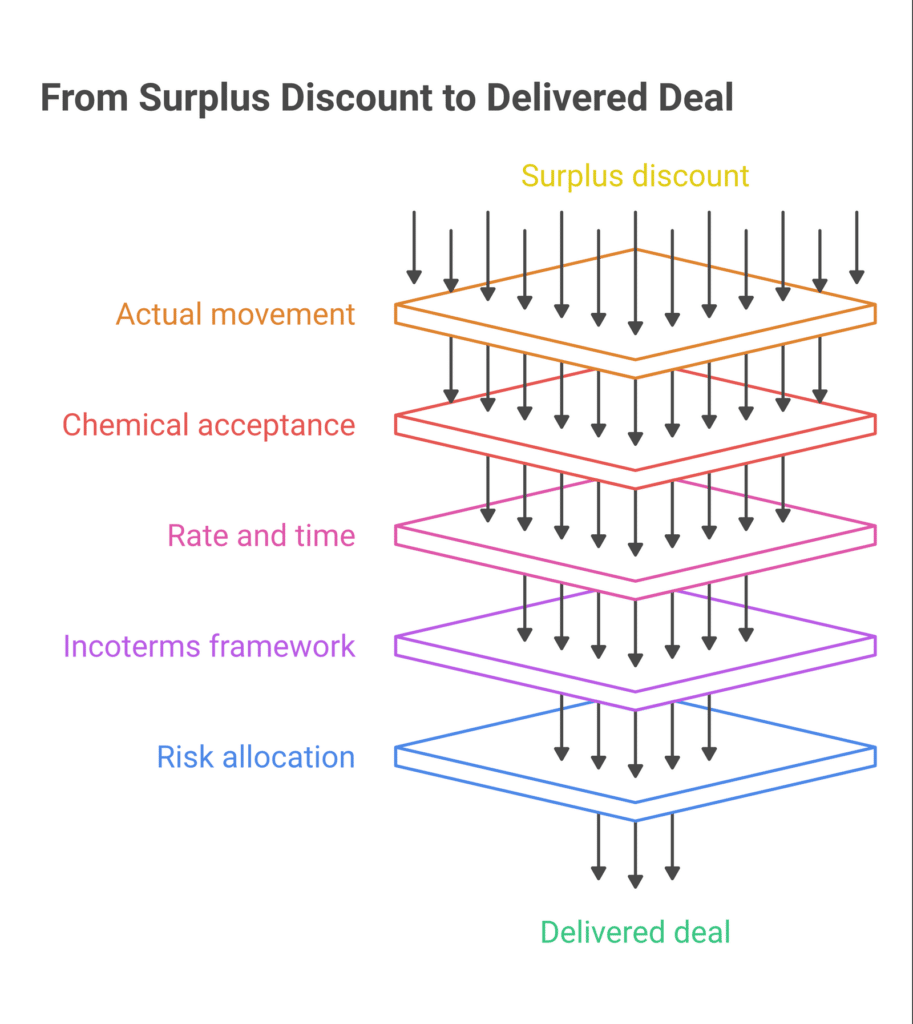
Start with the actual movement, not a map
“North America to India” is not a route. A real movement needs an origin, loading and receiving point, mode, nominated service and shipment window. Some movements may encounter the Red Sea route question. Others may not.
The carrier or forwarder should identify the port pair and service, and state whether the route is expected, conditional or confirmed.
This is not a request for a security prediction. If commercial value depends on a sailing pattern or timing, the parties need to know before committing material, packaging and working capital.
Confirm chemical acceptance before treating freight as available
A chemical shipment is not interchangeable with a generic container booking. Cargo description, classification, packaging, documentation and segregation can affect whether a carrier accepts it.
For dangerous goods in packaged form, SOLAS chapter VII requires carriage to comply with the International Maritime Dangerous Goods Code. The Code addresses requirements including packing, container traffic, stowage and segregation of incompatible substances. 3 It does not mean every carrier will accept every shipment. It does mean the plan needs correct cargo information early enough for an acceptance decision.
Before a buyer treats freight as an available input to delivered price, I would ask for confirmation that the carrier accepts the named material and shipment form. For cargo classified as dangerous goods, obtain the applicable dangerous-goods acceptance. Provide the safety documentation, classification and packaging information required by the booking party. Otherwise, freight is an assumption, not a confirmed transaction cost.
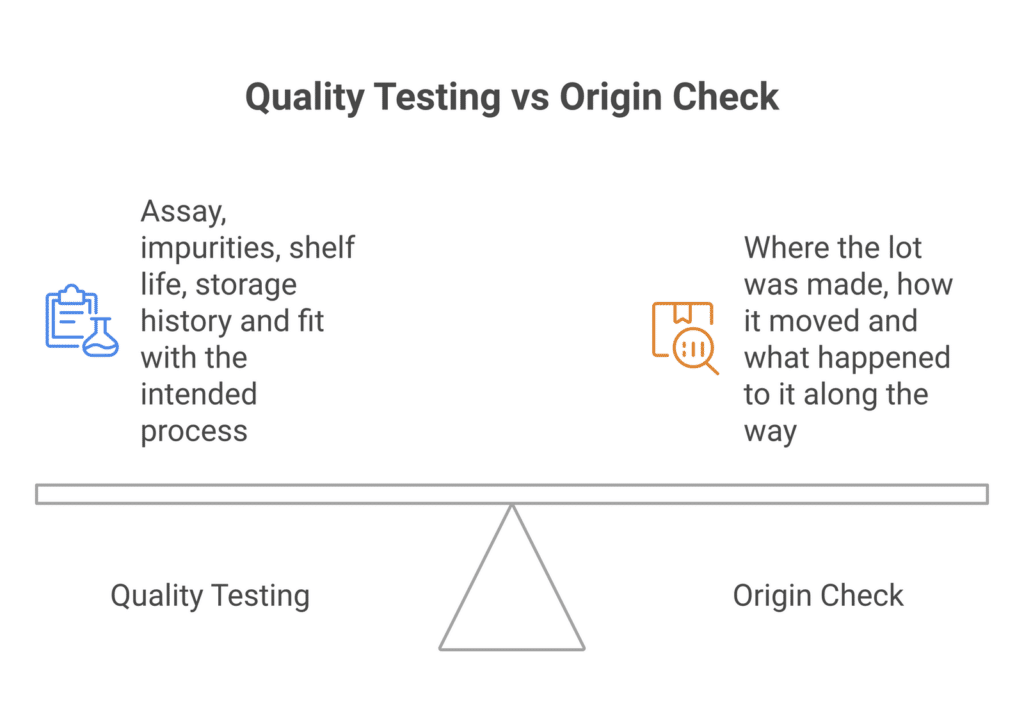
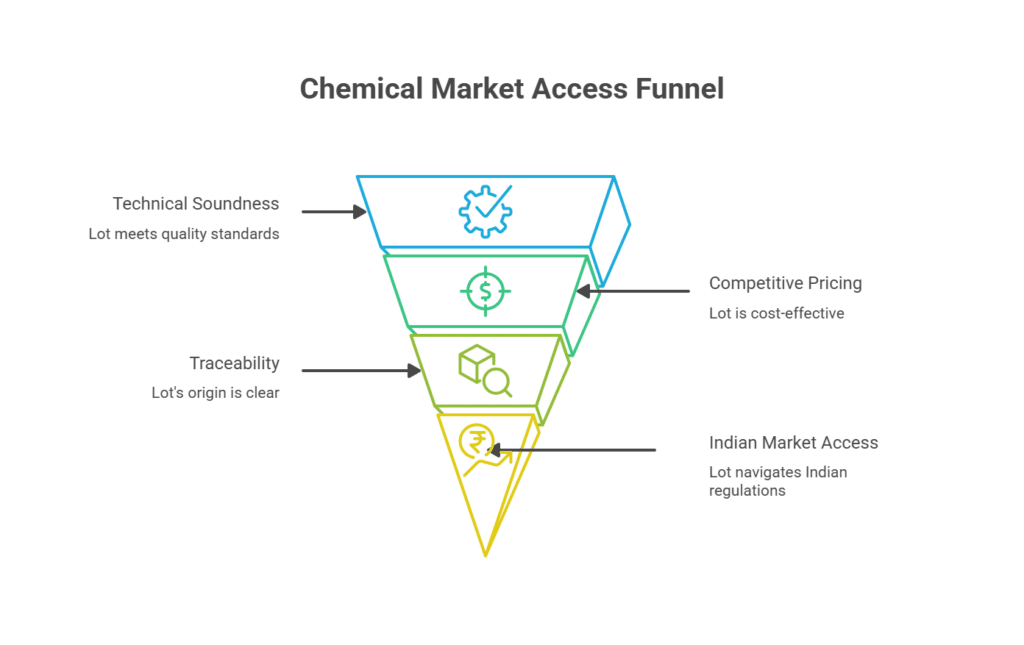
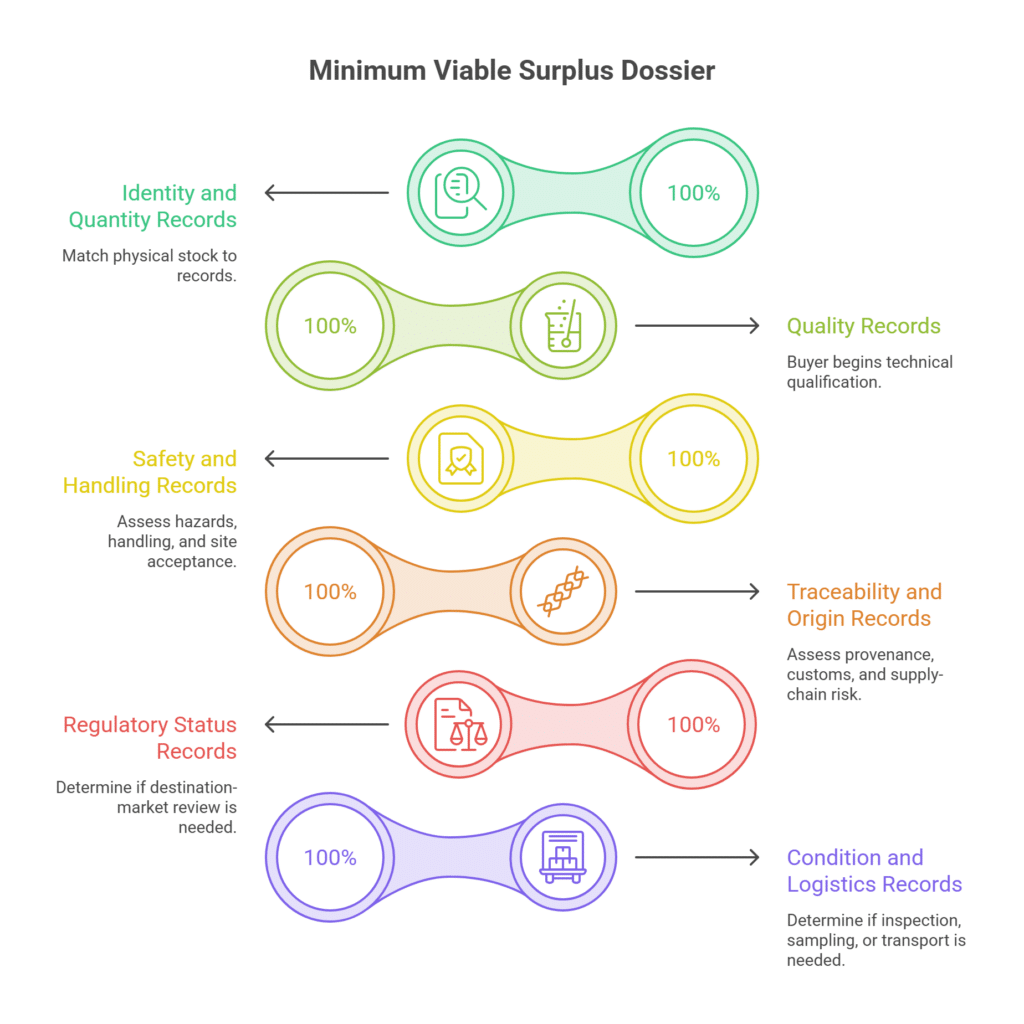
This matters in surplus trade because the lot may have been held for another purpose. Its documentation must support the lawful use and shipment. A lower price does not remove the need to establish suitability, usable life, safe handling and lawful market access.
Make rate and time assumptions explicit
Freight charges and transit assumptions need to relate to the proposed service and a current quotation. In a changing route environment, the useful question is not “What will every shipment cost?” It is “What exactly is included in this quote, for how long, and what can change it?”
The answer should cover the quotation’s validity period, stated route or service, included and excluded charges, and the point at which a reroute, revised carrier service or changed timing requires a new commercial decision. If a delivery date matters to the buyer’s production plan, that requirement should be documented as an assumption, not inferred from a historical transit time.
The same discipline applies to insurance. Obtain confirmation of the coverage arranged for the transaction and read the relevant terms. A trade term or previous policy does not automatically answer a different movement’s route, cargo and timing questions.
Use Incoterms as an allocation framework, not a substitute for evidence
Incoterms clarify tasks, costs and risks in the delivery of goods between seller and buyer. 4 They should be identified precisely in the contract, including the named place or port where relevant.
But naming an Incoterm does not confirm carrier acceptance or an available service. Where the chosen rule requires insurance, the parties still need confirmation that the required cover has been arranged and that any additional transaction-specific needs have been addressed. Assess route changes and surcharges against the chosen rule and the wider contract, rather than assume they are automatically covered or wholly unallocated.
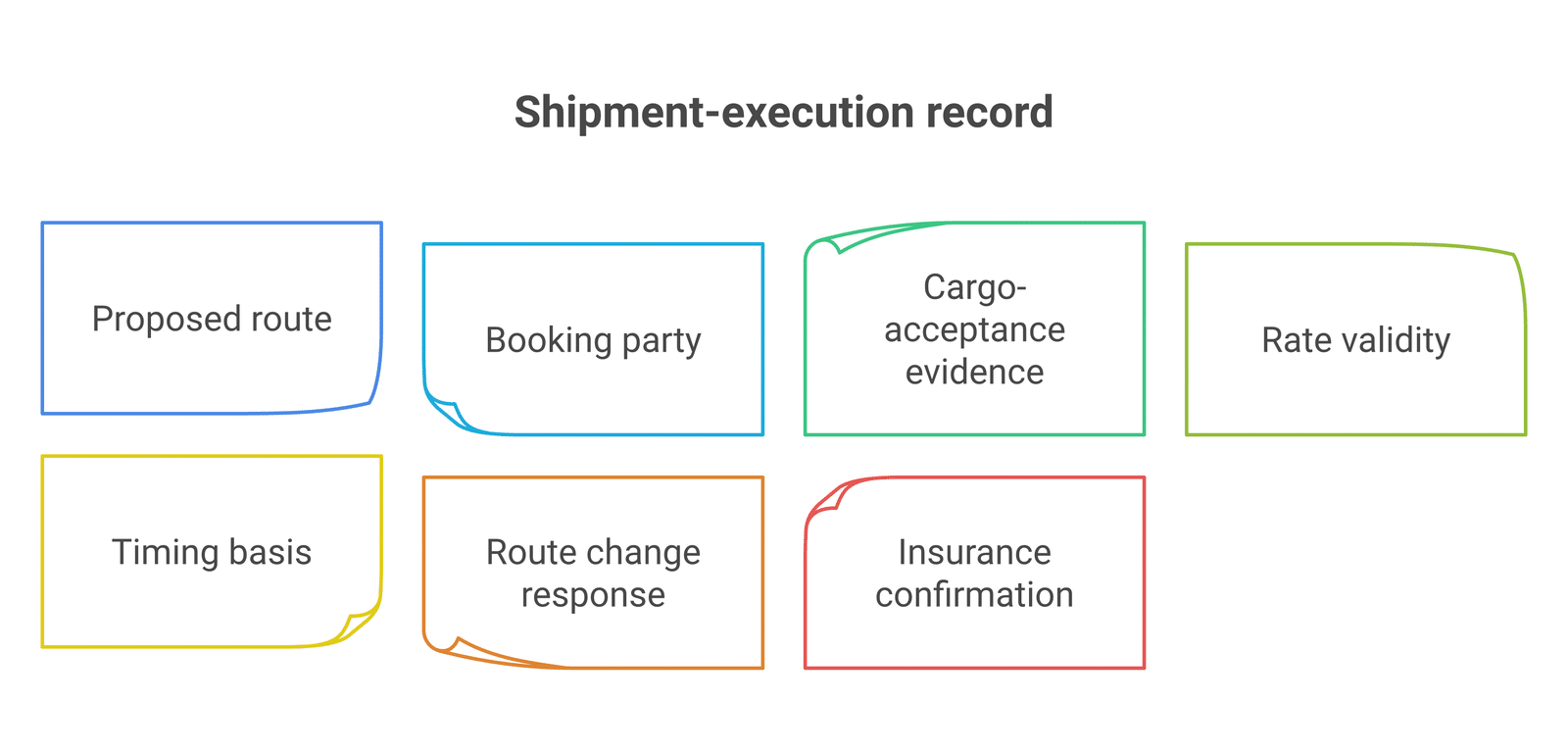
Add a short shipment-execution record alongside the Incoterm: proposed route, booking party, cargo-acceptance evidence, rate validity, timing basis, response to a material route change and insurance confirmation.
Put risk allocation into the commercial decision
For a North American seller and an Indian industrial buyer, this conversation should happen before either side treats the surplus price as the full economics. The seller may need to release material and prepare documentation. The buyer may need confidence that it can arrive within a usable planning window and fit a qualified, lawful use.
Neither side benefits from “freight to be arranged” as a substitute for a plan. Set a decision point. If acceptance is declined, the service becomes unavailable, or the delivery premise changes materially, do the parties seek a revised quote, use an agreed alternative, extend validity or end the transaction? The answer depends on the material and contract, but should not be invented after commitment.
A surplus transaction should be executable, not merely attractive
Surplus International buys and sells excess chemical inventory and works to match documented material to qualified, lawful uses. A product discount can create a reason to investigate a transaction. It cannot compensate for a shipment plan that has not been confirmed.
The strongest deals convert route risk into named, checkable assumptions before the parties rely on a delivered price.
If your business has documented surplus chemical inventory and wants to discuss whether a qualified secondary-market opportunity may exist, contact Surplus International.