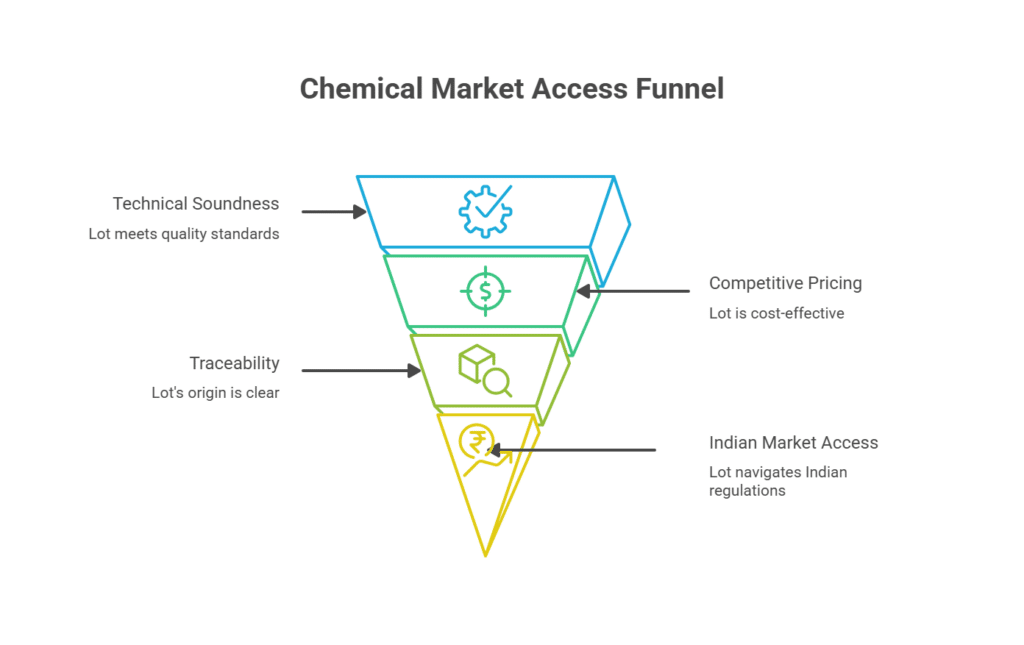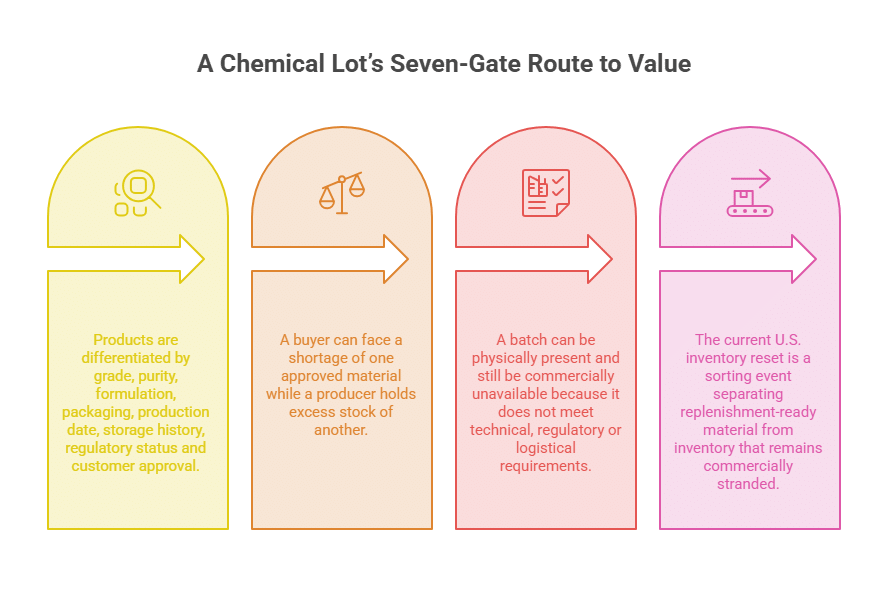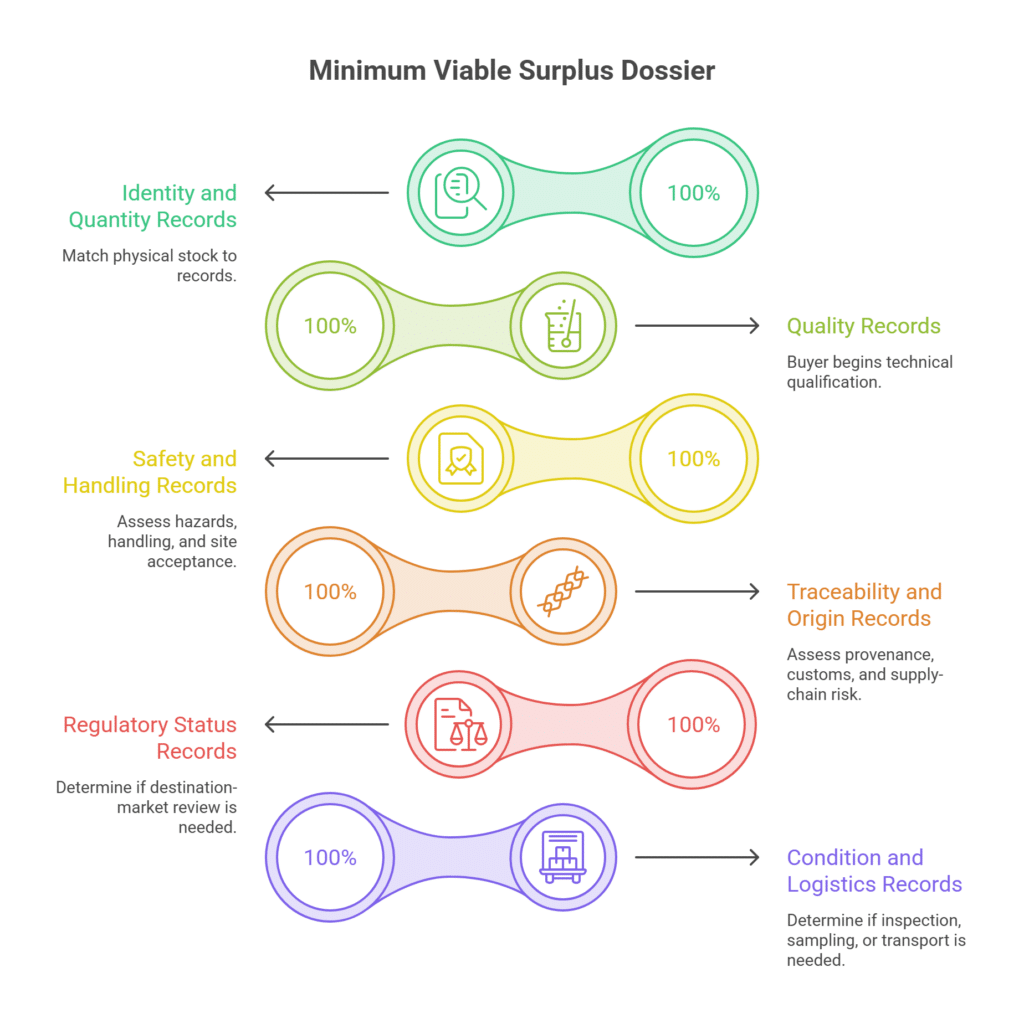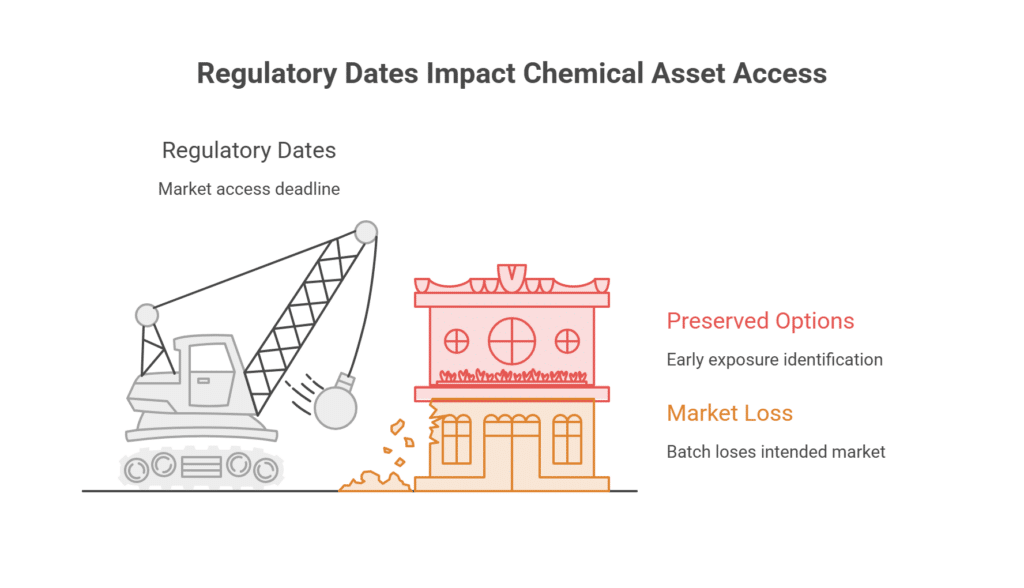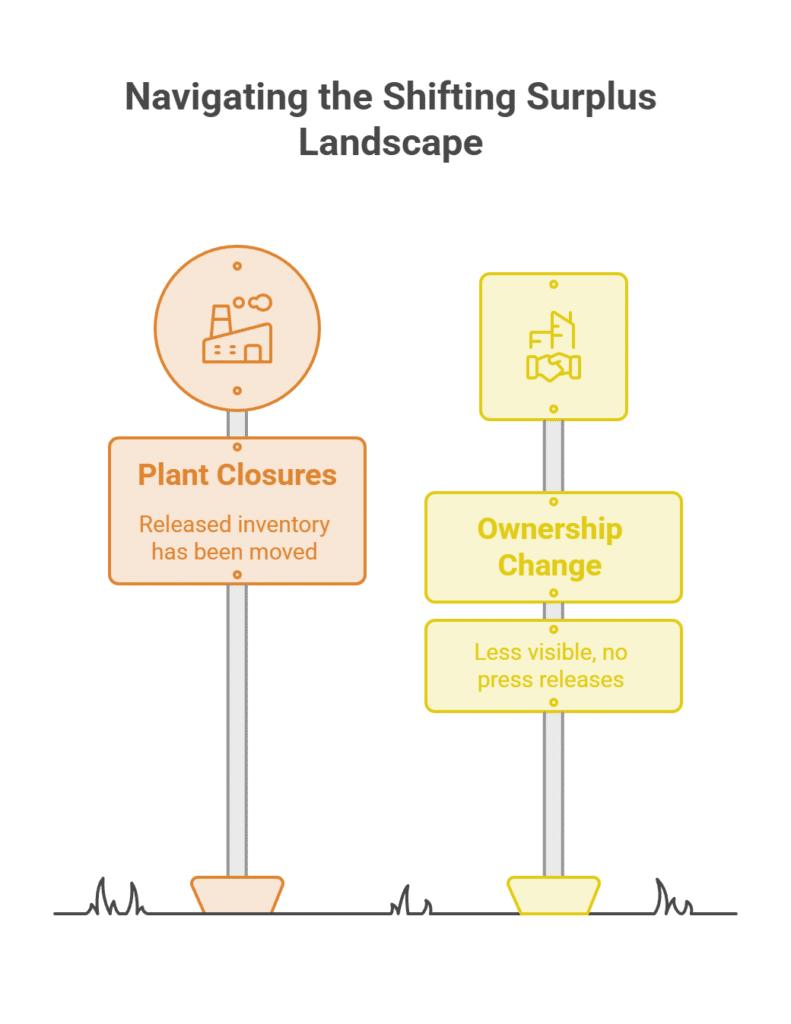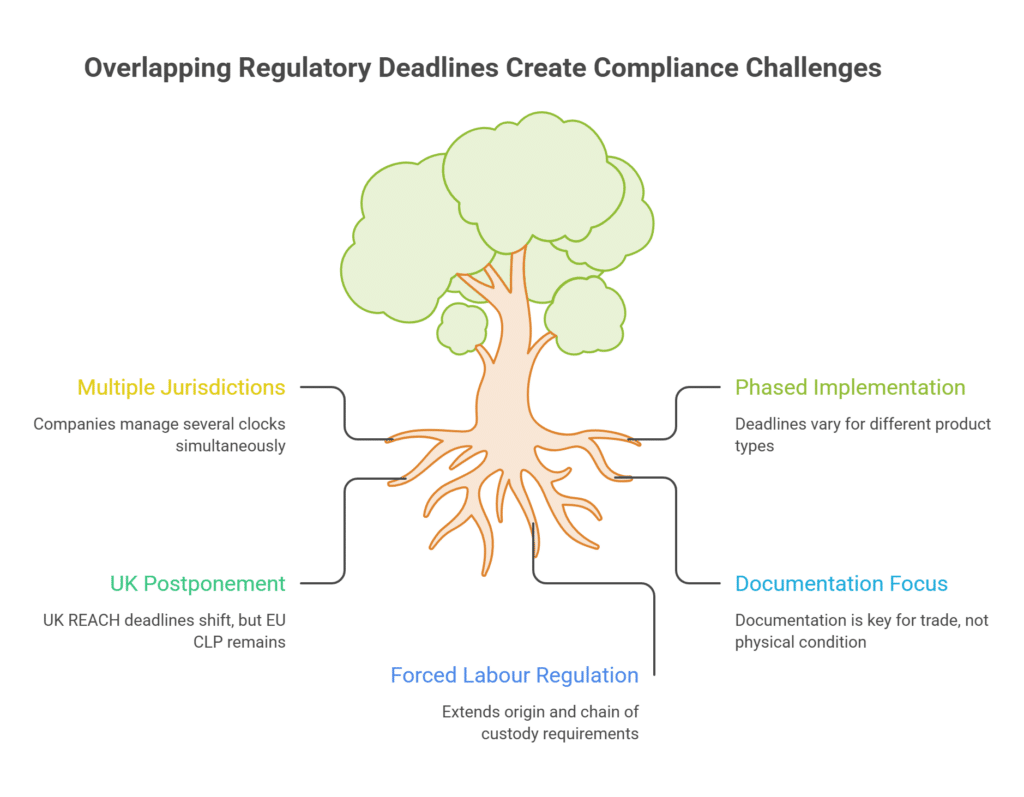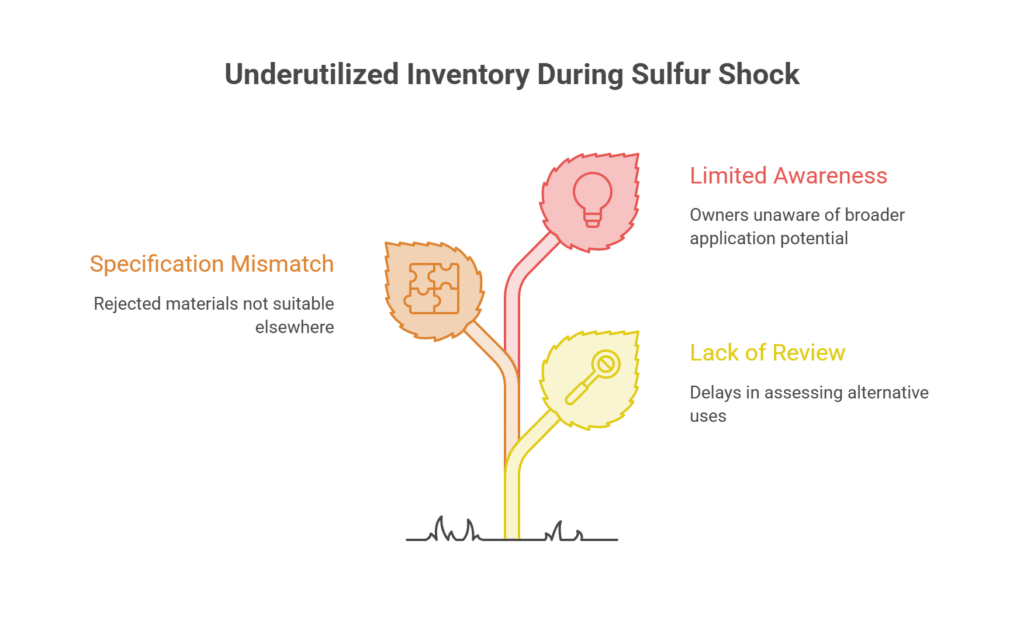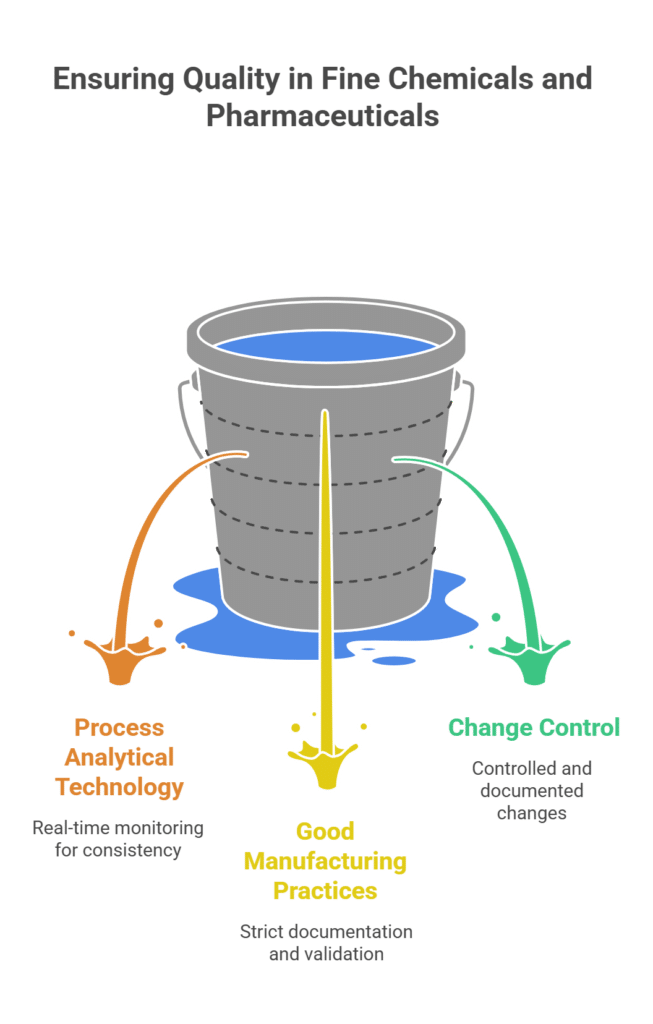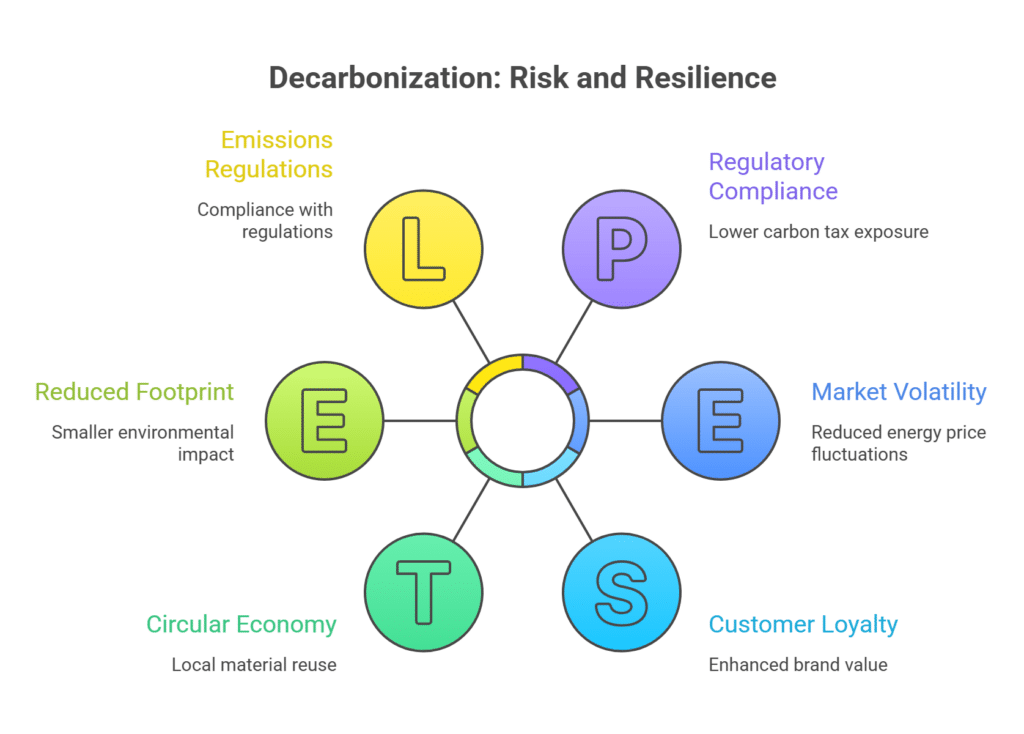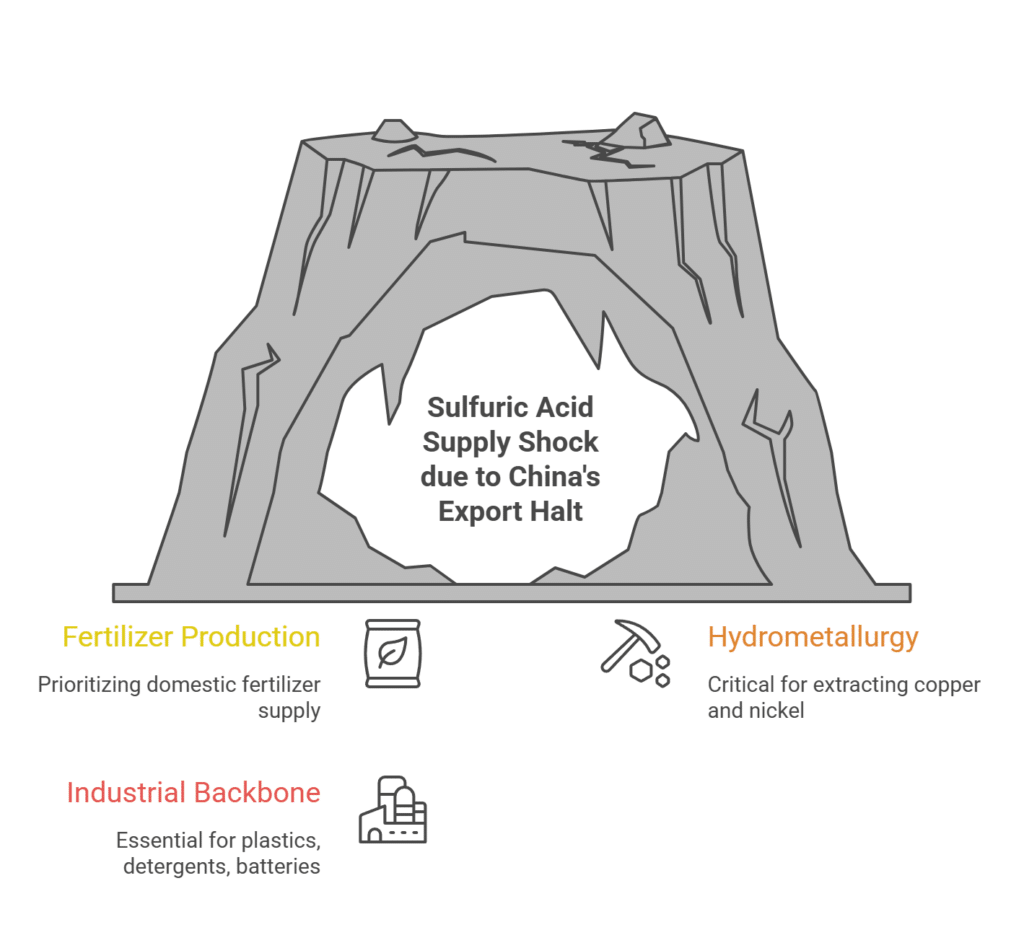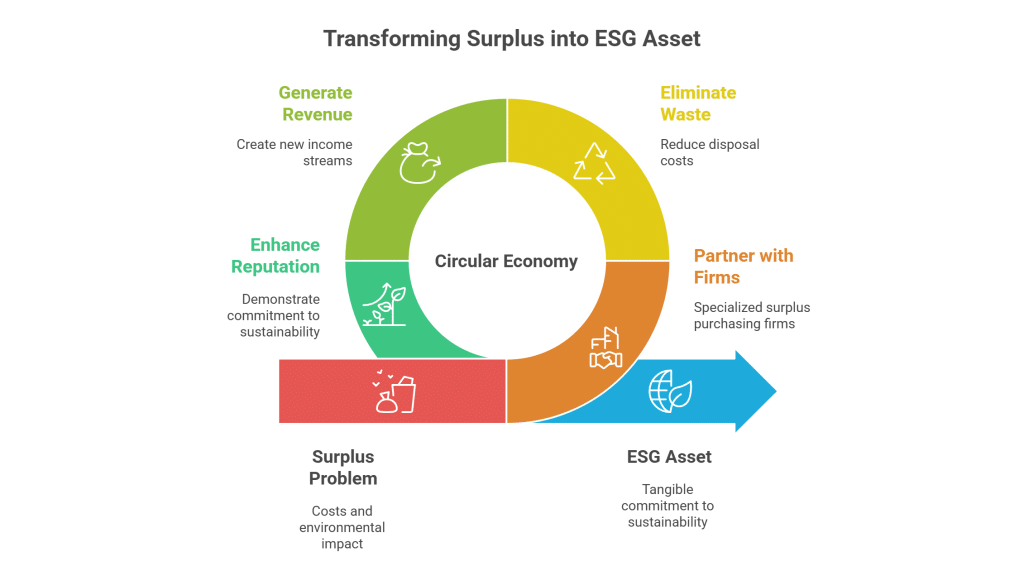

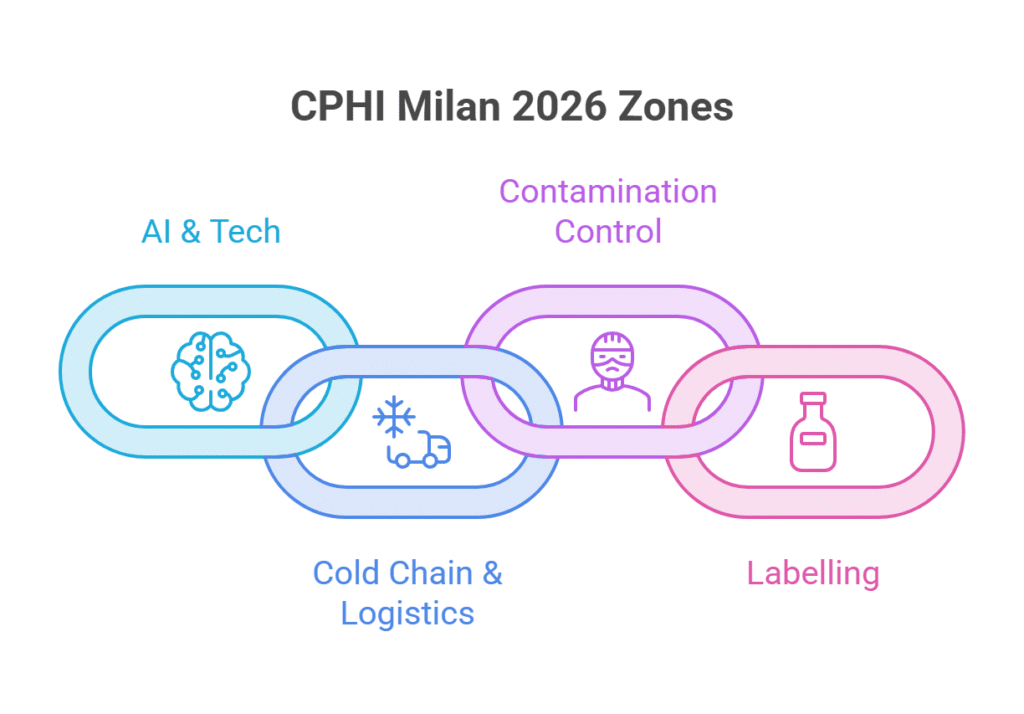
At first glance, these may appear to be separate areas of pharmaceutical operations. In practice, they form a connected system that determines whether unused inventory retains economic value or becomes a disposal cost.
The surplus problem begins before a batch is declared surplus
Pharmaceutical and fine-chemical inventory can become excess for many reasons: forecast changes, formulation updates, project cancellation, site closure, packaging or labelling changes, shelf-life policies, or failure to meet an application-specific specification.
Some events, such as a temperature excursion or suspected contamination, may also trigger a quality hold. A hold does not establish that the material is suitable for another use. It establishes the need for evidence: condition data, sampling, testing, investigation, intended-use assessment, and regulatory review.
The commercial question is therefore not simply, “Is the batch surplus?” It is, “Do we have enough reliable information to determine whether it has a legitimate next use?”
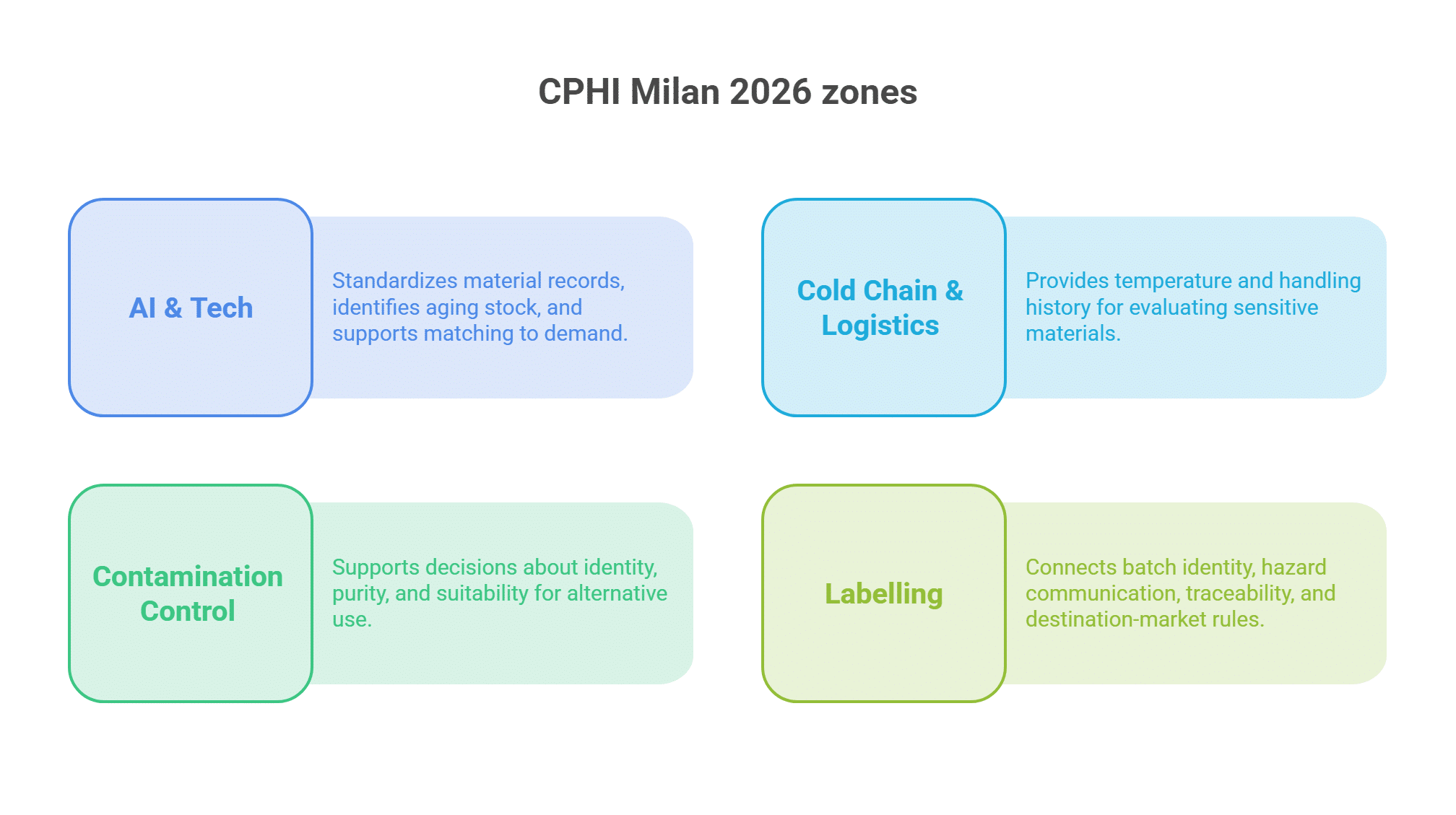
Four CPHI zones, one inventory-value chain
| CPHI Milan 2026 zone | Relevance to surplus inventory | Practical questions for inventory owners |
|---|---|---|
| AI & Tech | Helps standardize fragmented material records, identify aging or slow-moving stock, and support earlier matching to internal or external demand. | Are material names, CAS data, grades, batch records, shelf-life dates, and quality documents searchable across sites? Can the system flag inventory before options disappear? |
| Cold Chain & Logistics | Provides temperature and handling history needed to evaluate sensitive materials and design an appropriate transport route. | Is excursion data complete? Has the quality unit assessed the batch? What conditions must be maintained during any subsequent shipment? |
| Contamination Control | Supports evidence-based decisions about identity, purity, cross-contamination, packaging integrity, and suitability for a proposed alternative use. | What is known, what remains uncertain, and which analytical tests are required? Could contaminants affect the new application or transport classification? |
| Labelling | Connects batch identity, hazard communication, traceability, packaging, language, destination-market rules, and logistics. | Do the label, SDS, certificate of analysis, and physical batch match? Would relabelling or updated documentation be required before lawful placement or shipment? |
AI can find an opportunity, but it cannot approve the chemistry
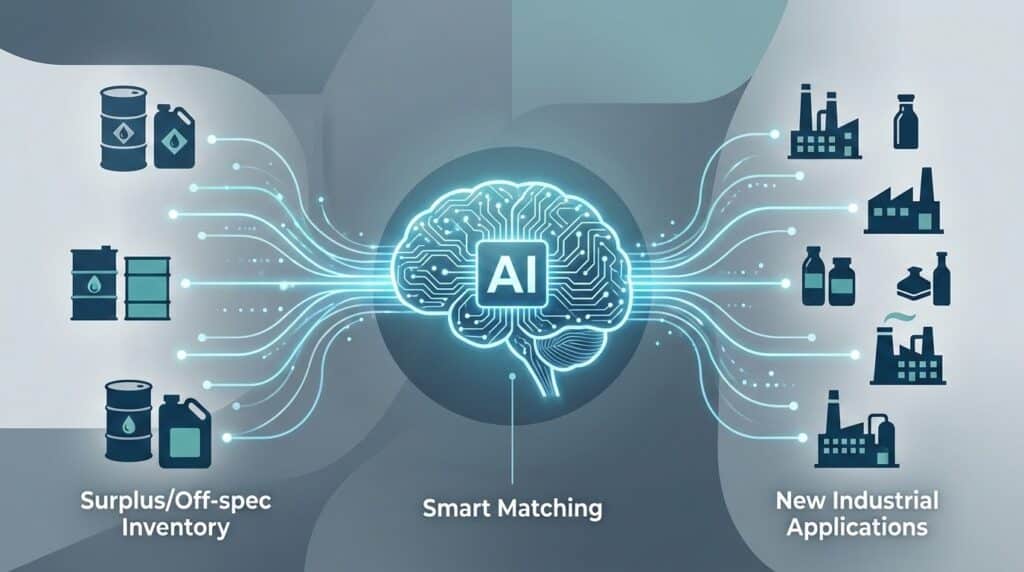
AI and digital inventory platforms can reduce one of the secondary market’s biggest obstacles: lack of visibility. They can normalize inconsistent descriptions, surface duplicate or slow-moving stock, match specification fields, and prioritize batches for review.
However, an algorithmic match is not a technical approval. A proposed transaction still requires knowledgeable people to review specifications, impurities, storage history, packaging, documents, legal status, transport requirements, and the buyer’s intended application.
The strongest model is therefore digital discovery followed by human qualification. Technology reduces the time required to find a plausible match; quality, regulatory, logistics, and commercial specialists determine whether the match is responsible and viable.
Better data preserves more options
Surplus value is rarely determined by chemistry alone. It also depends on what can be proven about the material.
A batch with a current certificate of analysis, complete storage records, secure packaging, an accurate SDS, and clear origin data is easier to evaluate than an equivalent batch with missing records. Early identification also gives the owner time to sample, retest, clarify classification, update documentation, or find a buyer before physical condition or regulatory circumstances change.
This is why the new CPHI zones matter beyond the exhibition floor. They represent the operating infrastructure of circularity: data that makes inventory visible, controls that preserve its condition, evidence that supports qualification, and documentation that enables lawful movement.
A broader question for CPHI Milan
CPHI Milan will naturally focus on new products, new capacity, new technology, and new partnerships. The industry should also ask what happens to existing materials when plans change.
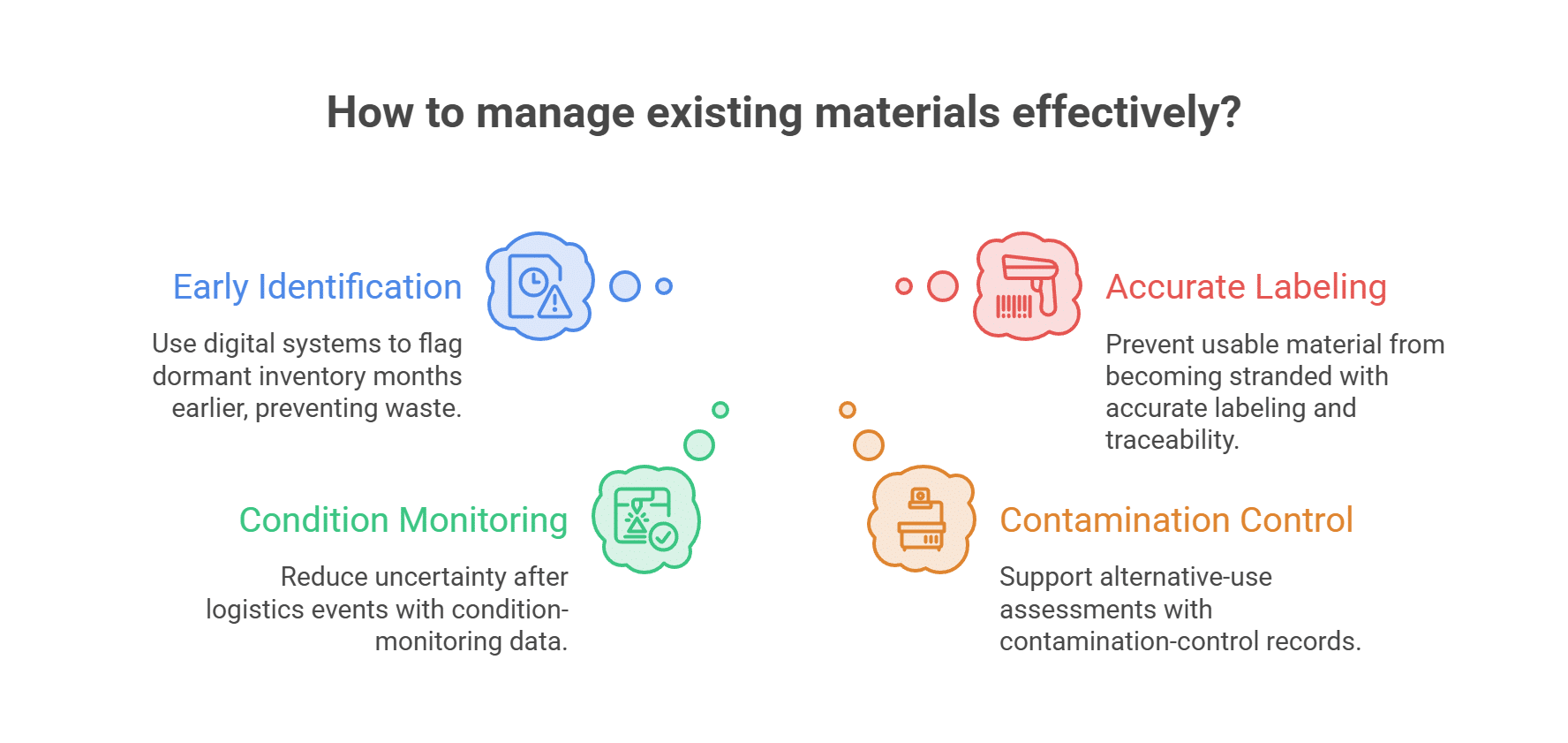
Can digital systems flag dormant inventory months earlier? Can condition-monitoring data reduce uncertainty after a logistics event? Can contamination-control records support a responsible alternative-use assessment? Can accurate labelling and traceability prevent usable material from becoming commercially stranded?
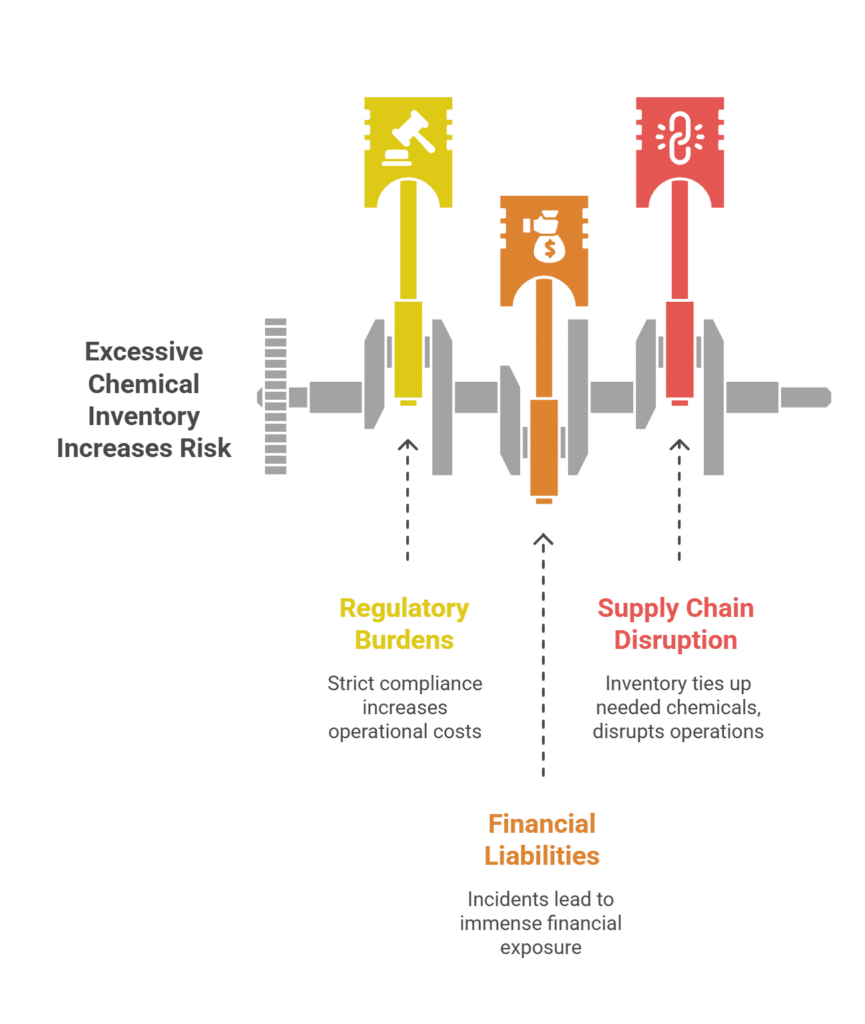
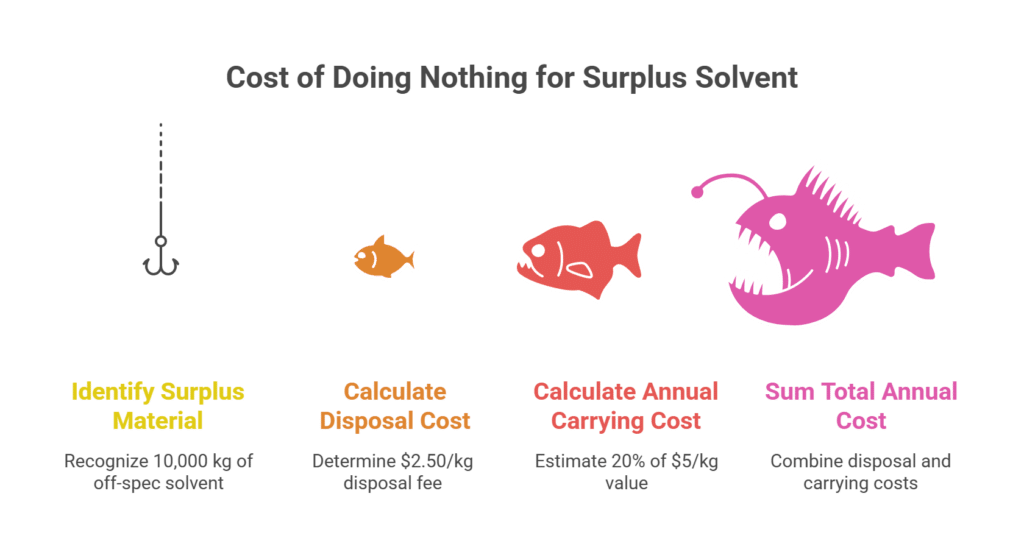
These are not secondary questions. They affect working capital, storage risk, disposal cost, supply resilience, and environmental performance.
For organizations attending CPHI Milan, the opportunity is to connect the four new zones into one strategy: identify material earlier, preserve reliable evidence, evaluate legitimate alternative applications, and recover value before usable inventory becomes waste.
Read the preceding article, Sulfur Shock: When “Excess” Inventory Becomes Strategic Supply:
Learn more about Surplus International’s approach to repurposing excess chemical inventory. Any material considered for alternative use must be independently assessed for technical suitability, legal status, quality requirements, transport, and the buyer’s intended application.