
In 2026, that commercial system has shown visible stress. Viridor closed three Quantafuel chemical-recycling sites in Scandinavia, saying the sector was not commercially viable. UK pioneer Plastic Energy entered administration after a European market downturn. Mura Technology cancelled its planned chemical-recycling project at Dow’s Böhlen site when closure of the adjacent steam cracker removed the intended processing route for Mura’s output.1
Across Europe, nine of 65 planned chemical-recycling projects had already been cancelled by July 2026. In the United States, the Department of Energy cancelled grants for projects it did not judge economically viable.1
Mechanical recycling is under pressure as well. The Association of Plastic Recyclers reported in April that seven US PET reclamation facilities had closed fully or partly in 15 months. The losses removed nearly one quarter of domestic PET reclamation capacity and more than 650 jobs.2
These developments should change how manufacturers think about surplus material. They should not lead to the conclusion that recycling does not work.
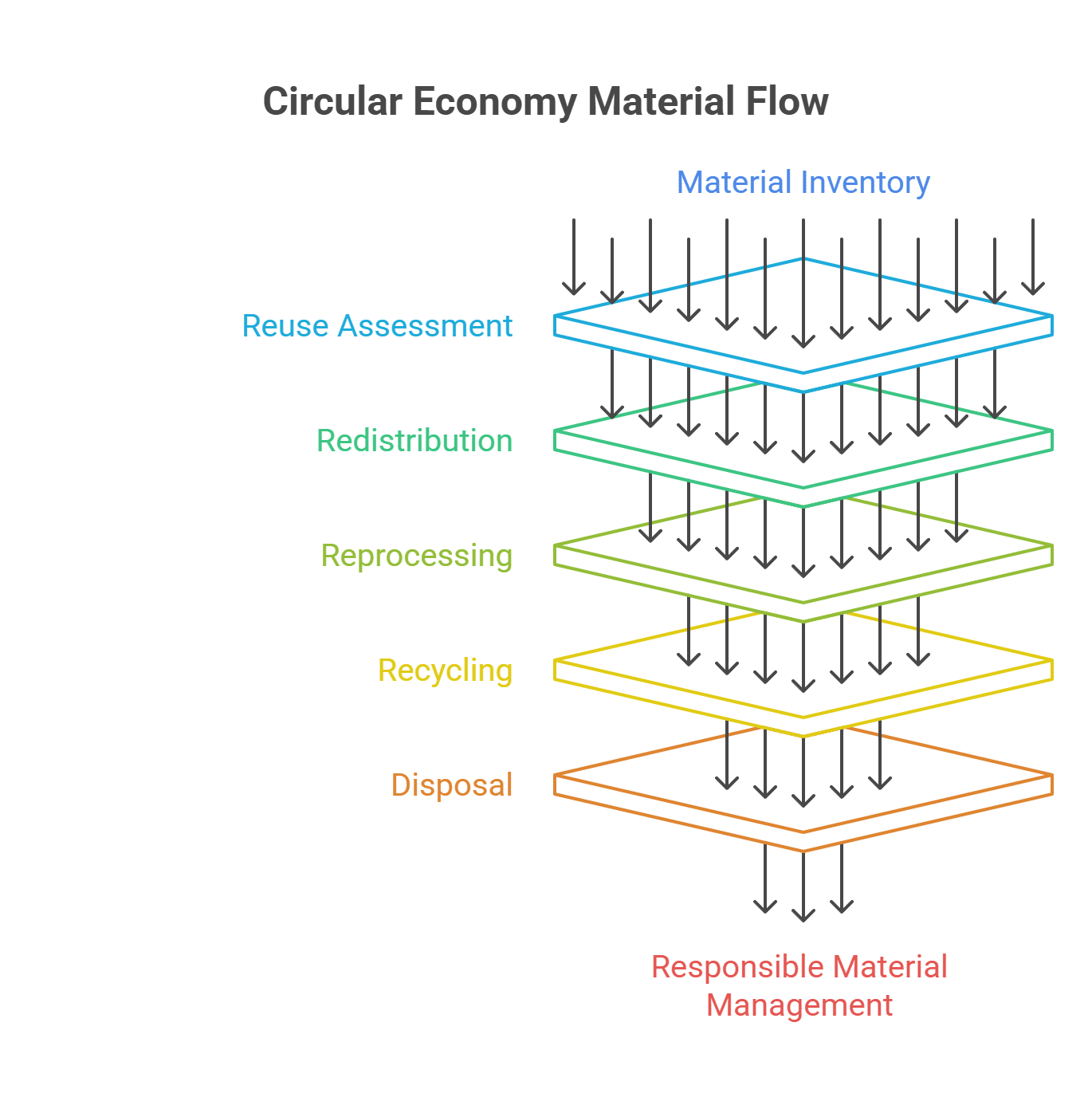
This hierarchy is not a claim that reuse is always better in a full life-cycle assessment. The right route depends on composition, distance, handling, reprocessing yield, energy source, end use and regulatory status. The point is to test the higher-value option before eliminating it.
 #SurplusChemicals #CircularEconomy #PlasticsRecycling #Manufacturing #ResourceEfficiency
The Technology Can Work While the Business Case Fails
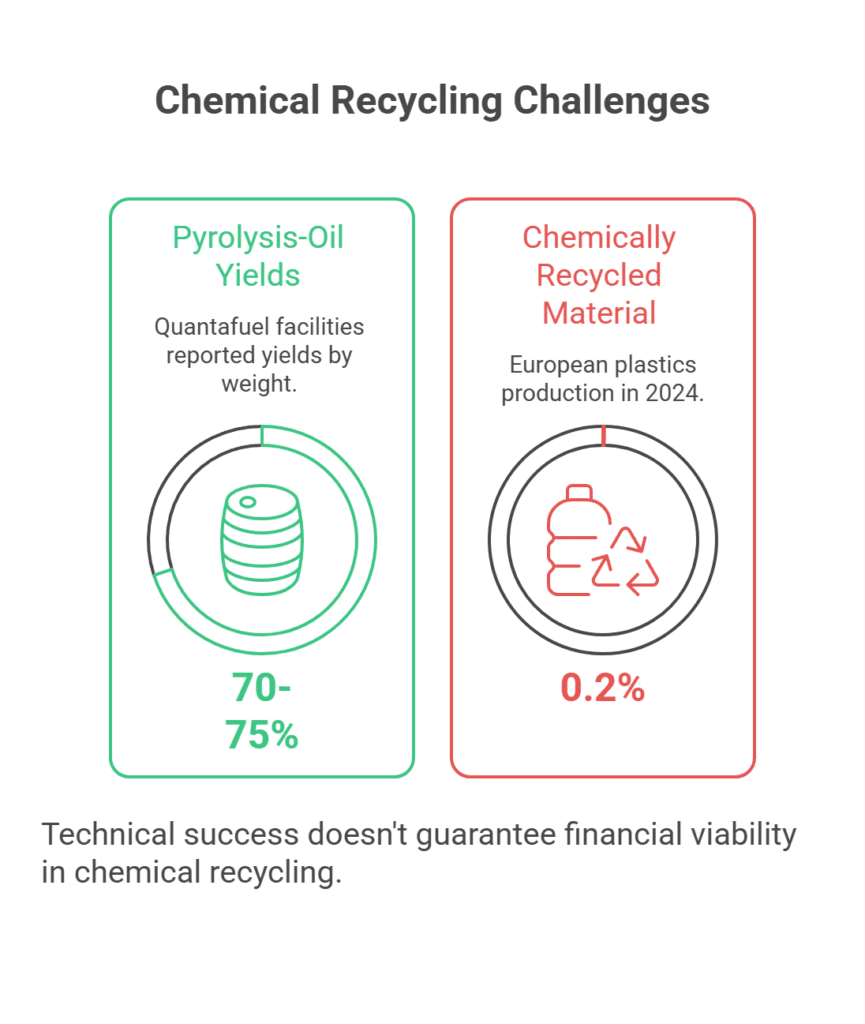
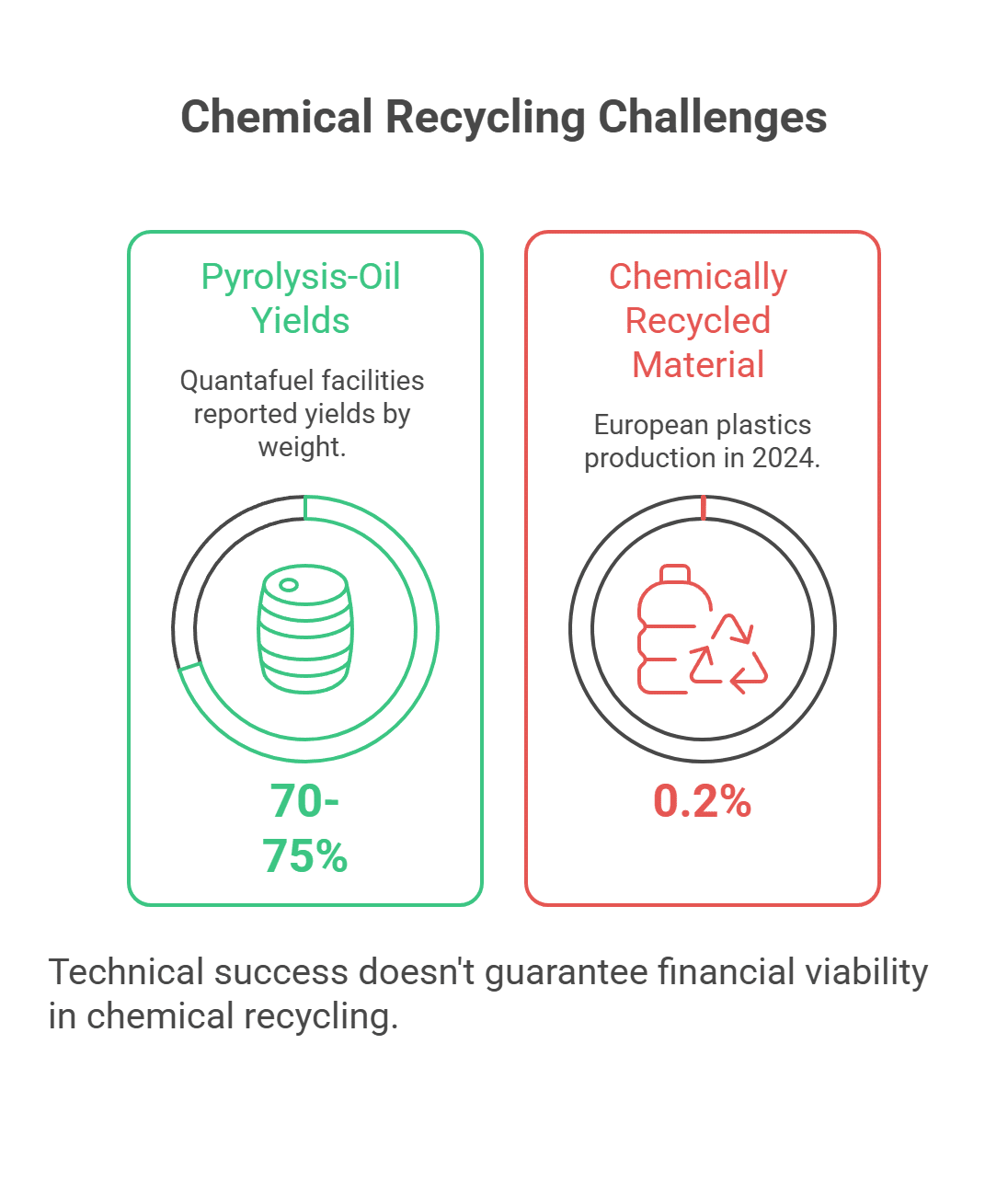
At the Quantafuel facilities, reported pyrolysis-oil yields reached approximately 70% to 75% by weight.1 That is an important distinction. A technically functioning process can still fail to attract sufficient capital or offtake at the price required to sustain it. Chemistry World reported that pyrolysis oil was trading at roughly twice the price of equivalent fossil feedstock in late 2025. It also reported that chemically recycled material accounted for only 0.2% of European plastics production in 2024.1 The constraints are systemic. Recyclers need reliable feedstock volumes of the right composition. They need affordable energy and proximity to chemical-processing infrastructure. Investors need confidence that regulation will create durable demand. Offtakers need confidence that accounting rules and product requirements will remain stable for the life of their contracts. When one link breaks, the project may no longer work financially even if the reactor works exactly as designed. That is why the lesson for chemical inventory owners is not “stop recycling.” It is “do not assume that recycling capacity will always be available, economical or appropriate for every material.”
Reuse and Recycling Solve Different Problems
A post-consumer plastic stream, a contaminated process residue and an unopened batch of slow-moving resin are not the same commercial or regulatory object. Treating them as one category called “waste” can destroy options. Treating all of them as reusable would be equally irresponsible. For still-usable industrial inventory, direct reuse may preserve the material in a higher-value state. The chemistry and energy invested in manufacturing the product remain embodied in that batch. If a qualified buyer can use it without breaking it back into feedstock, reuse may avoid an additional processing step. That possibility must be established, not assumed. A batch that falls outside one customer’s colour, viscosity or packaging requirement may or may not fit another user’s specification. Only the prospective buyer’s technical review, sampling and qualification can determine suitability for the intended process. A practical hierarchy therefore starts by identifying what the material is and which rules apply.| Material situation | First question | Potential route | Essential safeguard |
|---|---|---|---|
| Unopened, on-spec slow-moving stock | Is there another qualified user for the same grade and permitted use? | Direct resale or redistribution | Preserve batch identity, COA, current SDS, storage records and traceability. |
| Documented off-spec or wide-spec industrial material | Is the deviation understood, and can a buyer legitimately qualify it? | Alternative application, rework or reprocessing | Seller must disclose the deviation; buyer must test against its own specification. |
| Recoverable production byproduct | Does it retain product or byproduct status, or is it legally waste? | Industrial symbiosis, recovery or authorised recycling | Determine status and destination-market requirements before offering it. |
| Post-consumer, mixed or contaminated material | Which authorised process can manage the stream safely? | Mechanical recycling, chemical recycling, energy recovery or disposal | Do not present waste as saleable chemical inventory without a lawful basis. |
| Restricted, deteriorated or undocumented stock | Can identity, condition and legal use be established responsibly? | Further testing, treatment or authorised disposal | A low price cannot compensate for missing safety, legal or technical evidence. |
What Recycling Contraction Means for Surplus Managers
The closure of a recycler does not automatically create more usable surplus, nor does it prove that virgin consumption will rise by a predictable amount. It does something more practical: it removes an expected outlet. A manufacturer that planned to send a material to a nearby facility may face longer transport, different acceptance specifications or a higher gate fee. A converter may discover that a take-back programme depends on an offtaker whose project has been delayed. A site holding obsolete packaging resin may need to reconsider the sequence of reuse, rework and recycling options. For material that remains a usable product, this makes early review more important. If the seller waits until a recycling contract ends or warehouse space becomes urgent, there may be too little time to assemble records, take representative samples, find a buyer, complete qualification and arrange compliant logistics. For genuine waste, the answer remains an authorised recovery or disposal route. Surplus trading is not a substitute for waste regulation.Sellers Need to Preserve Optionality
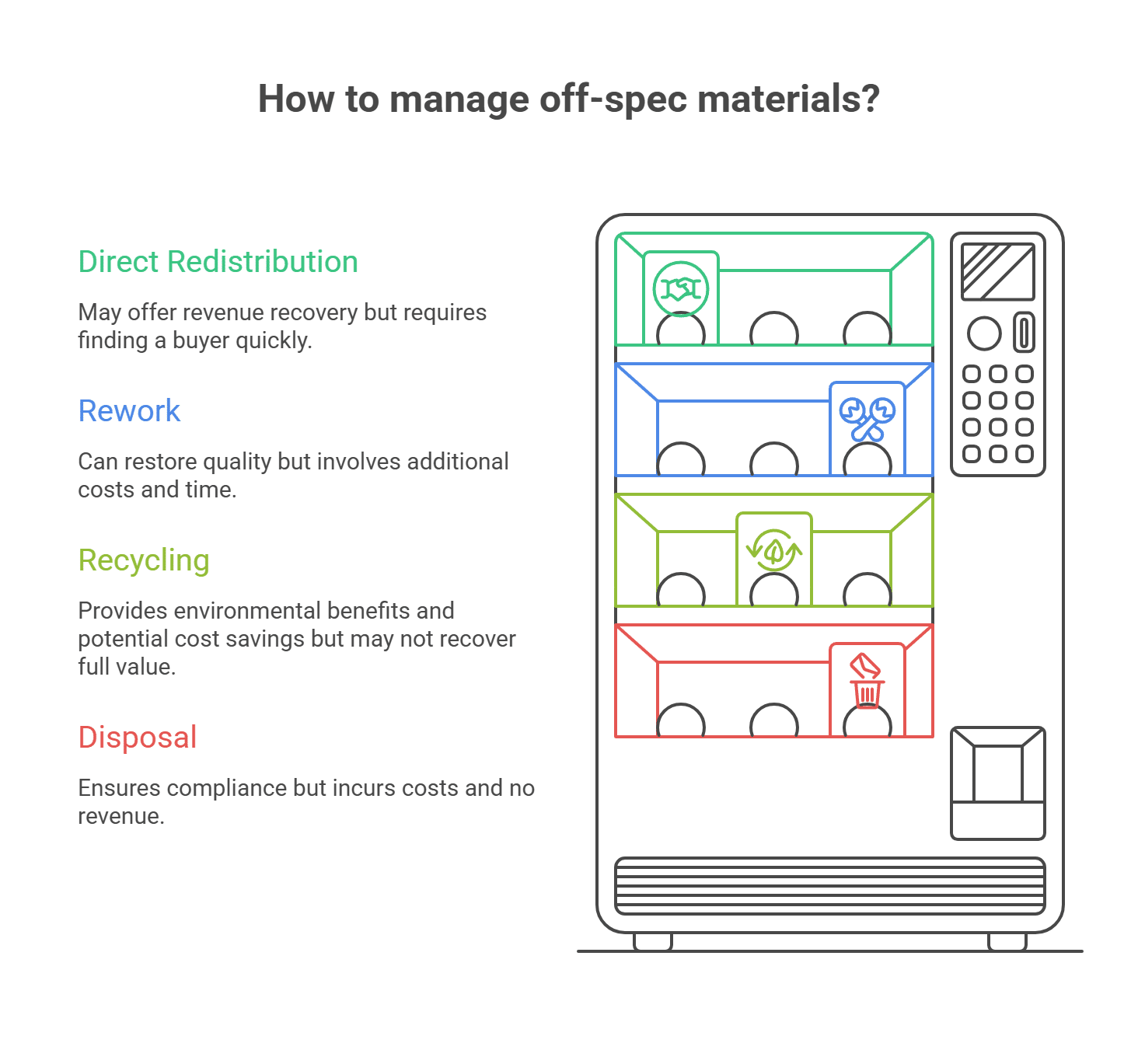
The best time to review a batch is when the original quality records, staff and storage history are still available. A seller should first link every physical container to a product identity and batch record. It should gather the applicable Certificate of Analysis, specification, current Safety Data Sheet and available storage information. If the material is off-spec, the deviation must be described precisely rather than hidden behind a broad label. The next step is to clarify status. Is the material still a product? Has it become waste under applicable law? Is it a byproduct with a recognised industrial use? Can it be exported, transported and used in the proposed destination? These questions require review by the responsible parties and, where appropriate, professional advisers. Only then should the company compare commercial routes. Direct redistribution, rework, recycling and disposal each carry different costs, risks and timelines. The best result may be revenue recovery, avoided processing expense, or simply a compliant exit from a storage liability. None is guaranteed.
Buyers Need to Protect Qualification Discipline
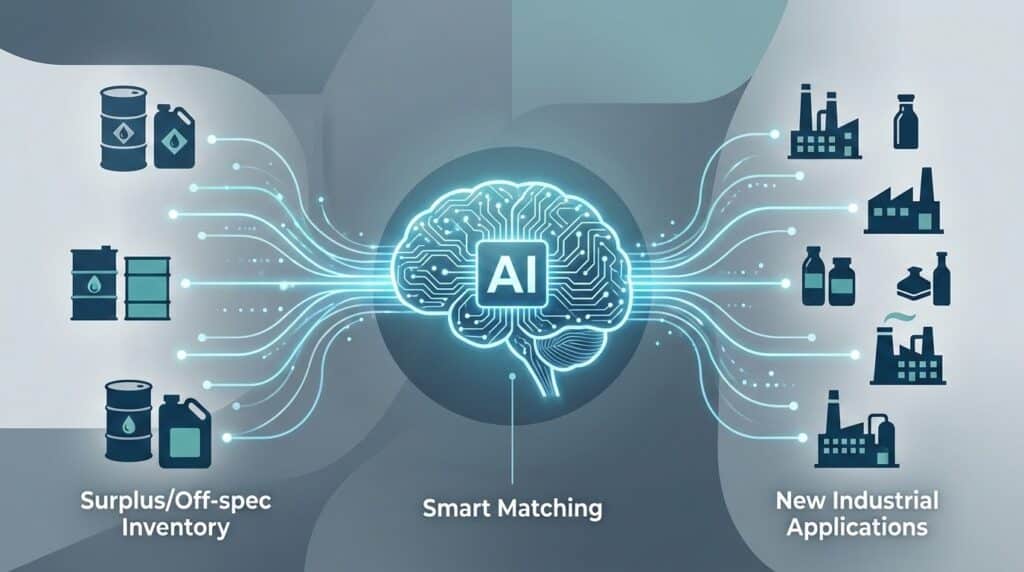
A lower price does not reduce the buyer’s responsibility. Buyers should define acceptable grades, parameters, documentation and packaging before reviewing surplus offers. They should decide whether aged stock requires retesting, whether the manufacturer’s COA is sufficient for initial screening, and which site or product approvals are required before use. A hypothetical batch that misses one producer’s narrow viscosity window may appear attractive to another user with a wider process window. That does not establish suitability. The second user still needs to test the material, confirm the intended application and verify all legal and quality requirements. This is where professional secondary-market matching adds value. A clear requirement can be compared with a clearly described batch. The intermediary can organise information and introductions, but it cannot replace the buyer’s technical approval or the parties’ compliance obligations.The Circular Economy Needs a Better Sequence
Recycling will remain essential, particularly for material that cannot be reused safely or economically in its existing form. Chemical recycling may become more competitive as technologies mature, policy stabilises and offtake grows. Mechanical recycling remains fundamental for suitable streams. But circularity should not begin only after a material has been classified for destruction or breakdown. For still-usable industrial chemicals and resins, the earlier question is whether another qualified user can preserve the product’s existing function. That is where surplus redistribution belongs: ahead of reprocessing when appropriate, and never as a route around waste, product-safety or trade rules. The 2026 recycling retreat is therefore a prompt to improve decision-making. Classify the material correctly. Preserve its documentation. Test reuse where legitimate. Compare reprocessing and recycling routes. Use authorised disposal when no responsible recovery option exists. Sur+ helps manufacturers present suitable surplus inventory to qualified buyers and helps buyers find documented secondary material. We do not certify compliance, guarantee reuse, amend third-party documents or determine a buyer’s specification. Those responsibilities remain with the transacting parties. If your site holds slow-moving resins, additives, pigments or intermediates, review them before the preferred outlet disappears. Reuse is not the answer for every material, but it deserves to be a question asked early.
#SurplusChemicals #CircularEconomy #PlasticsRecycling #Manufacturing #ResourceEfficiency