
Chemical procurement has always required more detail than a market headline suggests. In 2026, that difference has become unusually visible.
On one side, preliminary May data showed US polyethylene inventory increasing by approximately 791 million pounds in a single month. Supply reached nearly 47 days, while domestic demand and export activity softened.1
On the other, the North American delivered spot assessment for flexible slabstock polyols moved from 1,605 USD per tonne in mid-March to 3,140 USD per tonne by 8 May. PUdaily calculated the change at nearly 96% over ten weeks and linked it to propylene oxide constraints, producer allocation and reduced spot liquidity.2
The two data points do not contradict each other. They describe different molecules with different supply chains.
The Chemical Cycle Has Fragmented
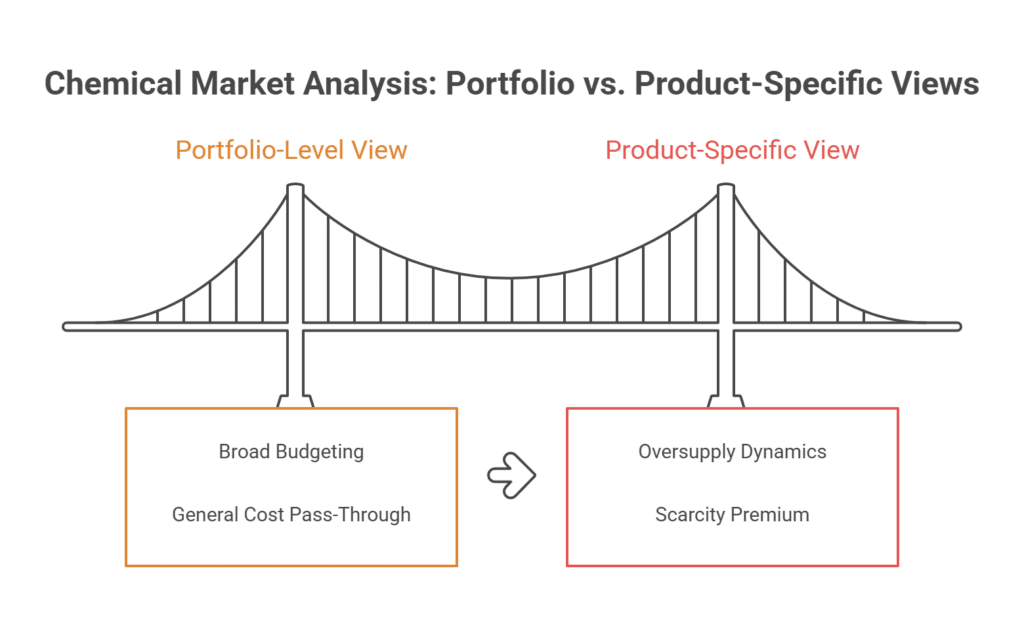
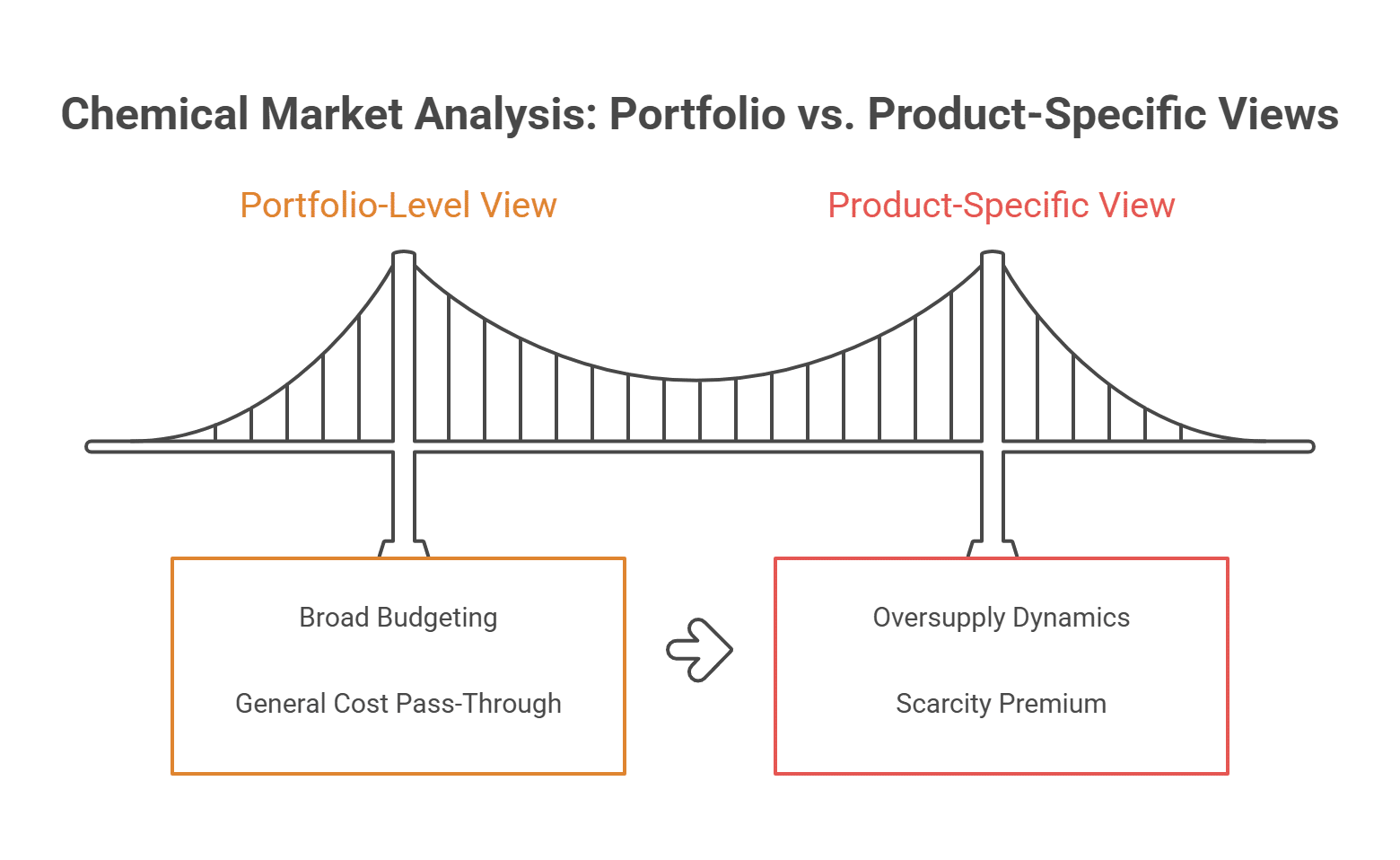
Broad indicators remain useful. Capacity utilisation, manufacturing output, feedstock costs and regional demand help procurement teams understand the environment in which they are operating. The problem begins when a portfolio average is used as a substitute for a product-specific view.
Polyethylene and polyols may both sit inside a large chemicals or polymers budget, but they are not interchangeable risks.
The May polyethylene build reflected production outpacing consumption. ResinSmart described rising inventories, lower crude-oil prices and softer demand as factors weakening proposed price increases. Its figures were preliminary, so they should be read as a market signal rather than a final audited industry total.1
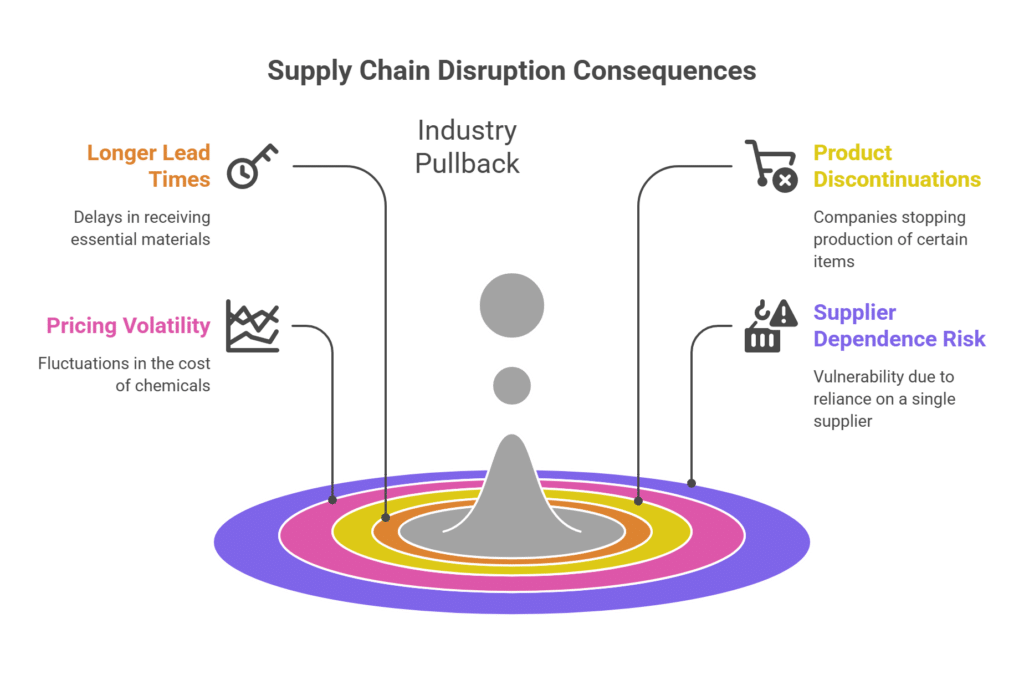
Polyols were experiencing a different mechanism. PUdaily reported that a propylene oxide force majeure fed into allocations among major polyol producers. Bid-ask spreads widened as spot supply became residual rather than routinely available. The 96% move therefore represented more than ordinary cost pass-through. It included a scarcity premium associated with access to material.2
The right conclusion is not that every commodity was oversupplied or every specialty was scarce. It is that the unit of analysis must match the unit being purchased.
Co-Product Economics Can Reverse the Headline
Acetone provides another example of why weak downstream demand does not always translate into lower prices.
More than 95% of acetone is produced alongside phenol through the cumene process, according to a July market analysis by Alliance Chemical. The analysis estimated that US acetone spot values reached about USD 1,547 per tonne FOB US Gulf Coast in April 2026, a two-year high, as reduced phenol operating rates constrained acetone availability.3
This figure comes from a commercial distributor’s analysis rather than an official statistical release, so it should be treated as a dated market estimate. The production logic, however, is important. If demand for the primary co-product weakens and plants reduce rates, the linked molecule can become less available even without a demand boom of its own.
Procurement teams see similar effects wherever supply depends on a co-product, a narrow feedstock, a limited set of qualified plants or a small number of import routes. The market headline may say “overcapacity,” but the purchasing manager still has to answer a narrower question: overcapacity in which molecule, grade and location?
Five Dimensions of Molecule-Level Risk
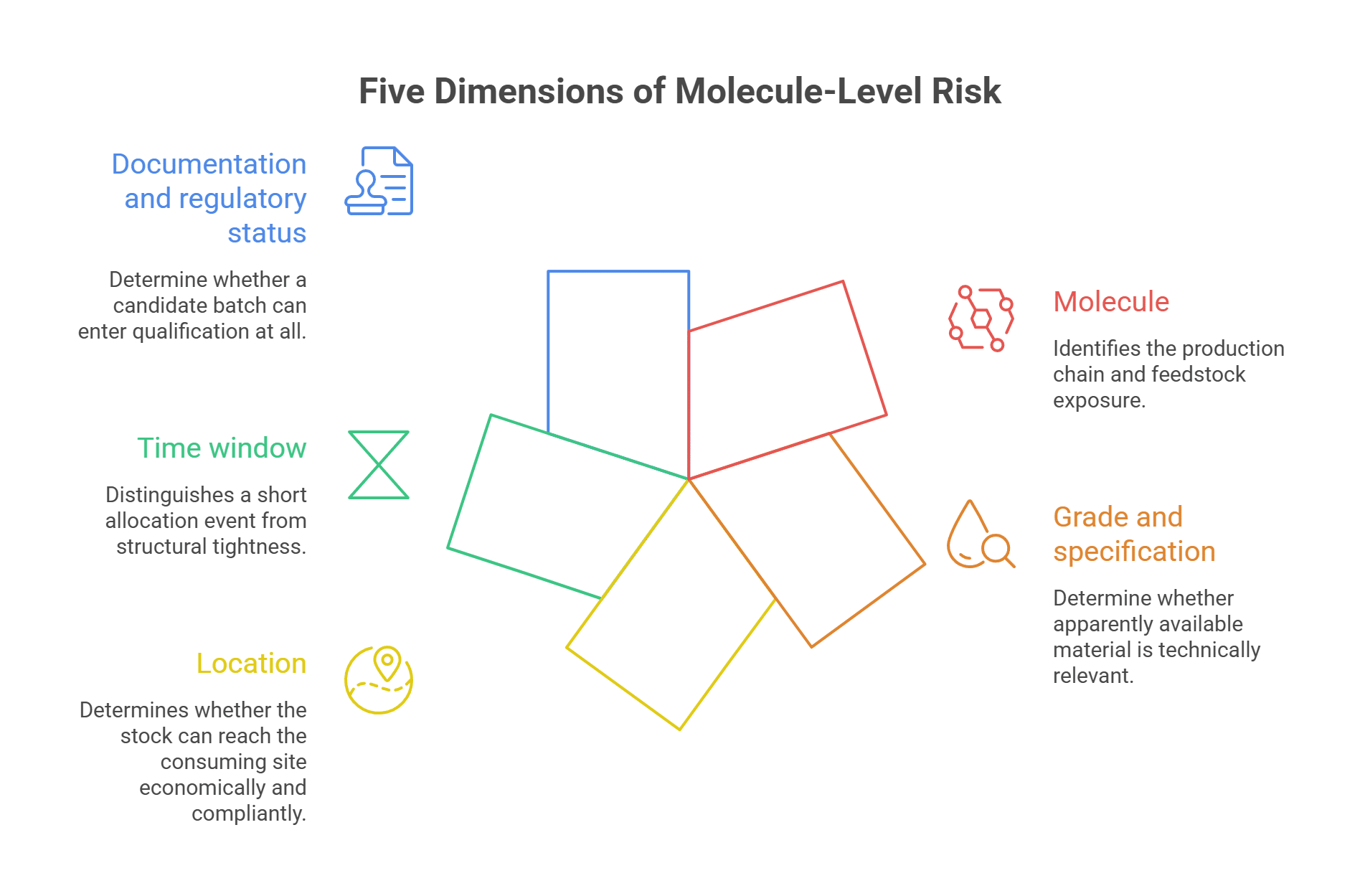
A product-specific procurement view should examine five dimensions together.
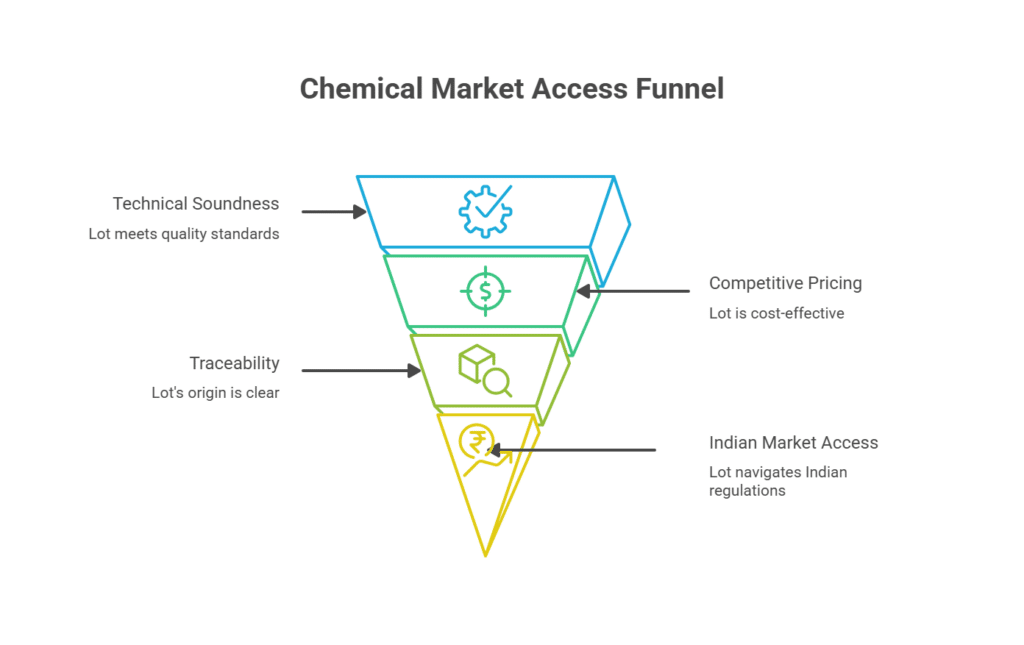
Molecule identifies the production chain and feedstock exposure. Grade and specification determine whether apparently available material is technically relevant. Location determines whether the stock can reach the consuming site economically and compliantly. Time window distinguishes a short allocation event from structural tightness. Documentation and regulatory status determine whether a candidate batch can enter qualification at all.
This creates a more useful decision framework than a simple long-market or short-market label.
| Market position | What procurement should verify | Possible role of secondary inventory | Main caution |
|---|---|---|---|
| Broad availability, required grade available | Producer inventory, contract flexibility, total delivered cost and demand outlook | Tactical comparison or supplementary volume | Prime material may already offer better economics and lower qualification cost. |
| Headline oversupply, required grade constrained | Grade-specific capacity, packaging, approvals and regional stock | A documented batch may widen the candidate pool | Do not assume material in the same product family is equivalent. |
| Temporary local shortage | Duration, allocated volume, production schedule and transport options | Qualified bridge volume may protect continuity | Qualification and logistics may take longer than the shortage. |
| Structural molecule shortage | Feedstock dependence, alternative chemistry, multi-sourcing and redesign | Secondary stock may provide limited time or trial volume | A finite surplus lot is not a long-term supply strategy. |
| Seller-side local glut | Shelf life, storage cost, alternative markets and documentation | Early matching can recover value from dormant stock | Delayed action can erase the commercial window or supporting records. |
The word qualified matters. Surplus inventory is not automatically substitutable inventory.
Secondary Supply Is an Option, Not a Shortcut
A buyer facing an allocation may be tempted to relax controls. That is exactly when controls matter most.
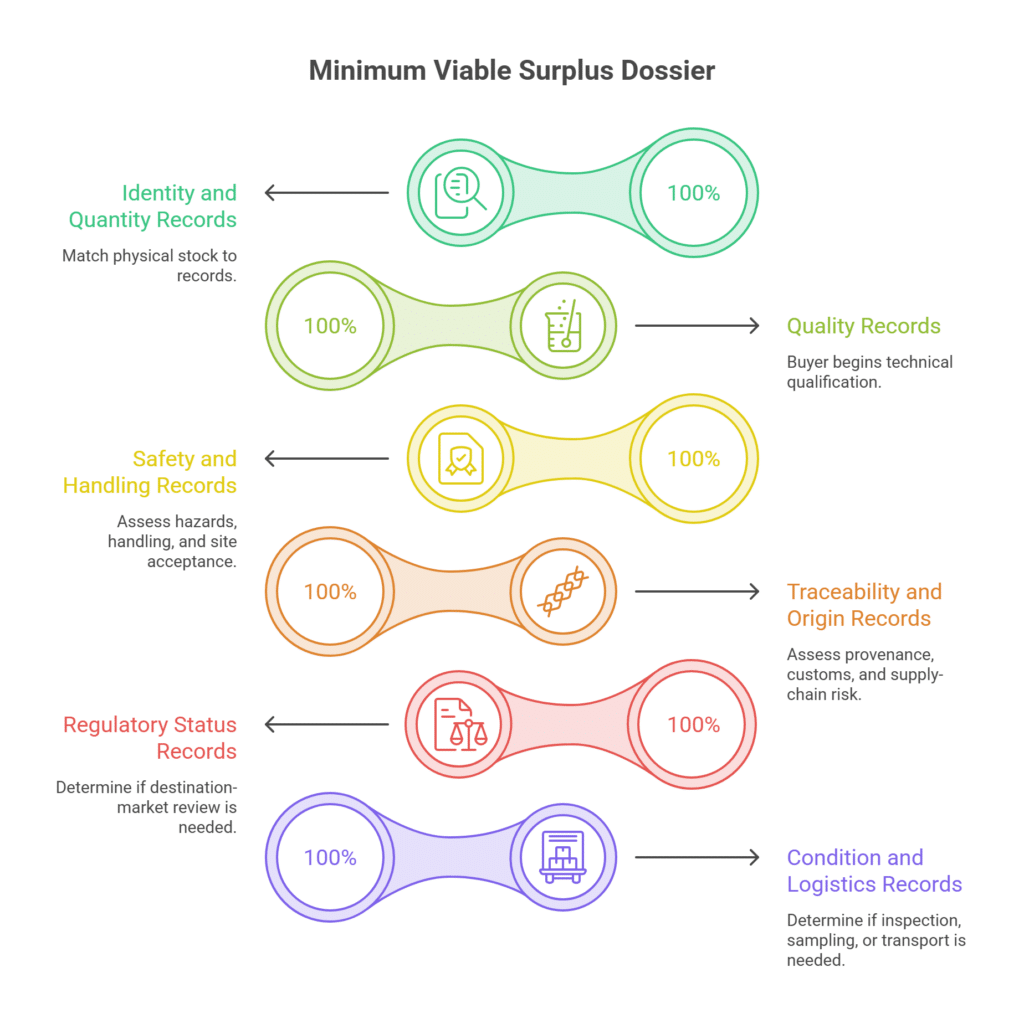
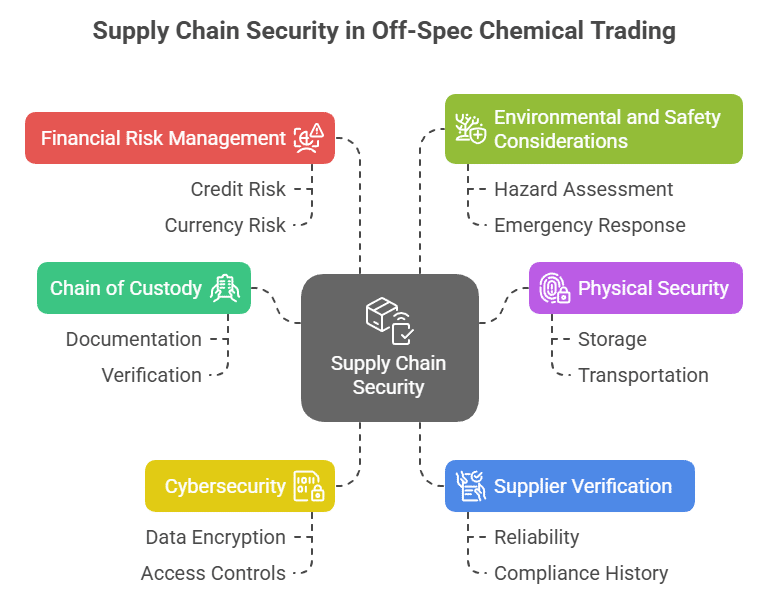
The batch must be identified precisely. The Certificate of Analysis should correspond to the physical lot. The buyer must compare the material with its own specification and intended process. The parties must confirm shelf-life or retest expectations, current safety information, packaging condition, dangerous-goods requirements, customs treatment and destination-market eligibility.
Off-spec material requires even more transparency. The seller should disclose the deviation, and the buyer should decide whether it can be evaluated for a different application. A discount does not make an unsuitable material suitable.
When those conditions are met, secondary inventory can add one more sourcing path. It may provide a defined quantity during an outage, a trial lot for an alternate source, or a regional option when the primary trade lane is constrained. It may also be the wrong answer because the quantity, timing, documentation or specification does not fit.
This is why secondary supply should be integrated into contingency planning before a shortage, not introduced as an emergency exception after production is already at risk.
The Seller’s Timing Matters Too
Molecule-level divergence creates a mirror-image problem for sellers.
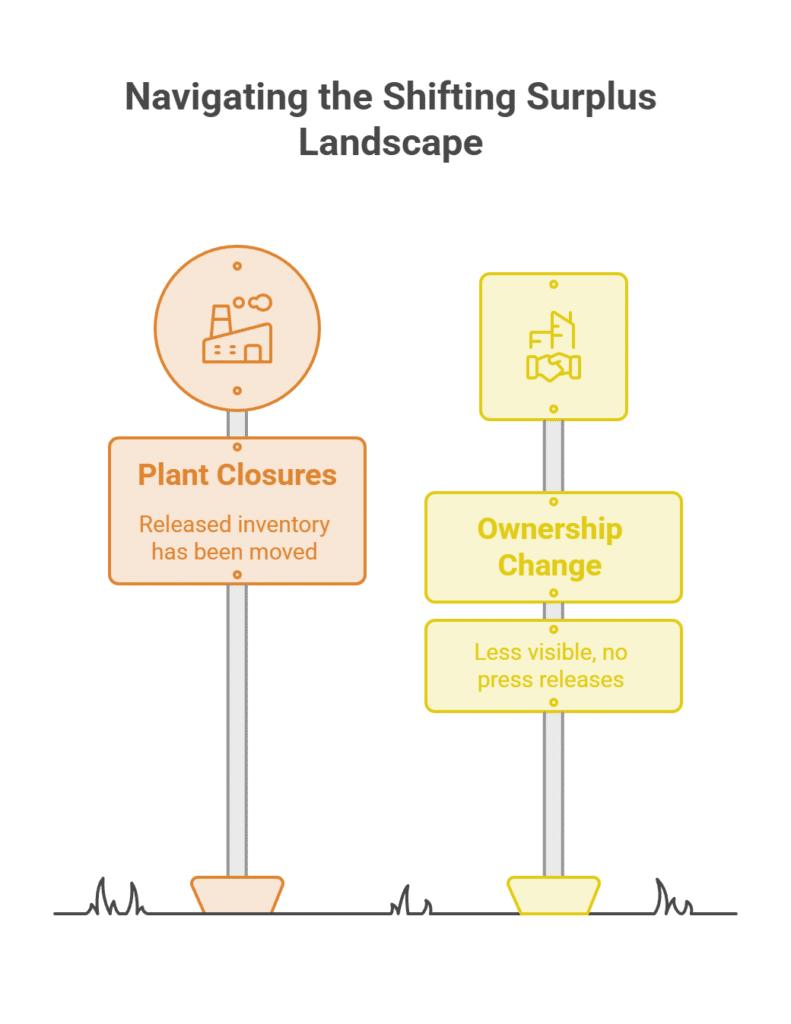
A manufacturer may hold slow-moving inventory in one region while buyers elsewhere face tight availability. That does not guarantee an international sale. Freight, duties, origin, local registrations, sanctions, shelf life and technical qualification can eliminate the apparent arbitrage.
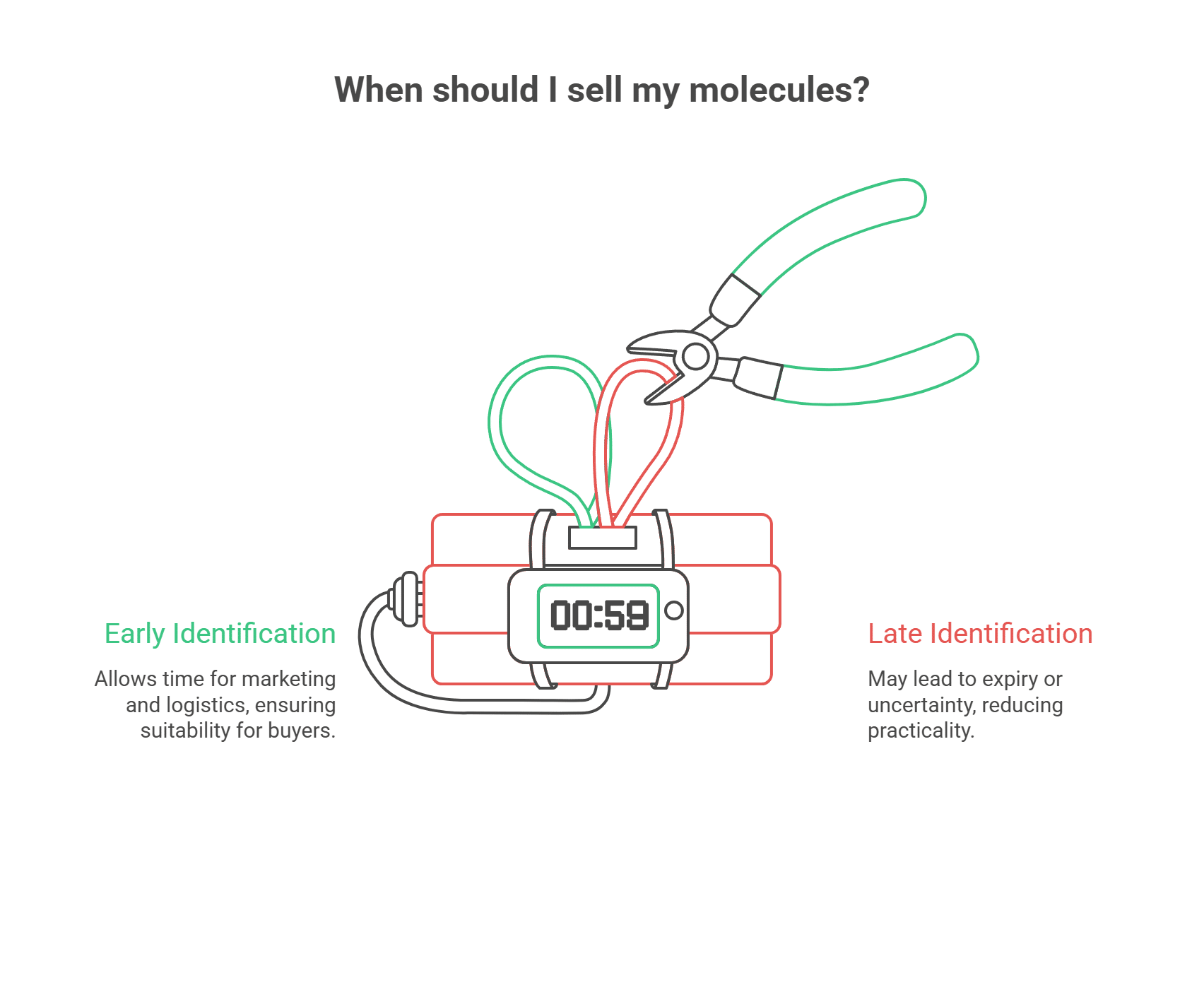
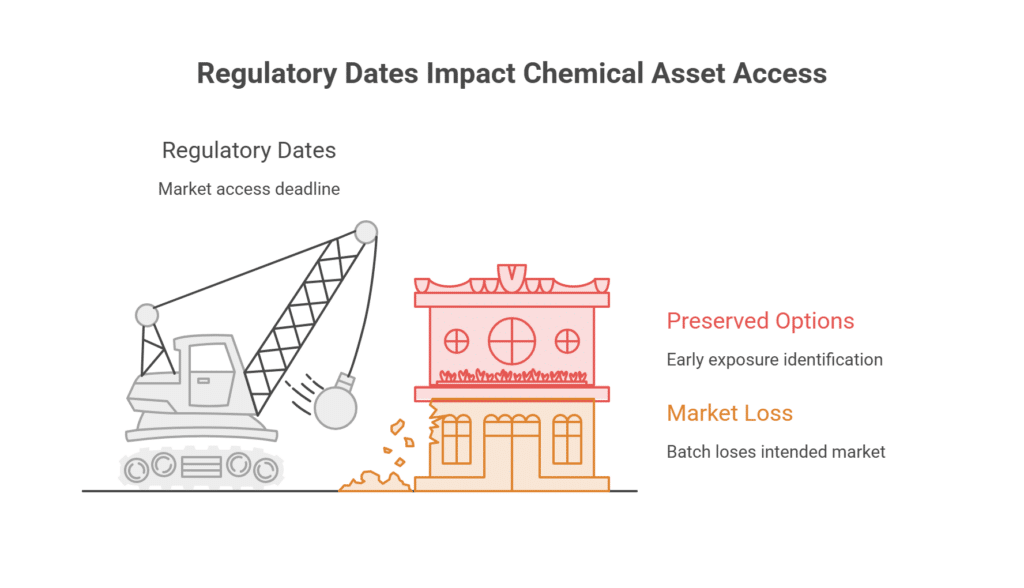
But timing still matters. A documented lot identified early gives an intermediary time to present it to buyers whose specifications and legal markets may fit. The same lot identified shortly before expiry, after the original team has left or after its storage history becomes uncertain, may no longer be practical to place.
This is particularly relevant for North American sellers and buyers in India. The commercial opportunity is not simply “material is cheap here and expensive there.” It is the narrower intersection of suitable specification, lawful import and use, acceptable documentation, competitive landed cost and a delivery window that still solves the buyer’s problem.
Build a Molecule-Level Control Tower
Procurement teams do not need a new dashboard for every chemical. They do need a disciplined exception process.
For critical materials, track current contracted coverage, qualified alternate sources, plant and feedstock events, regional inventory signals, lead time, shelf-life constraints and the time required to qualify another batch. Separate a price risk from a continuity risk. Polyethylene’s May inventory build created negotiating potential. The polyol event created an access problem. Those require different responses.
Sellers should apply the same discipline to slow-moving stock. Flag materials when demand changes, not after the write-off decision. Preserve the batch dossier. Define the deviation if one exists. Estimate the time available for another buyer to complete its review.
Sur+ helps organise these two sides of the market by presenting suitable, documented inventory to qualified buyers. We do not certify compliance, guarantee reuse, alter third-party documents or determine the buyer’s specification. The seller, buyer, importer, carrier and their advisers remain responsible for the transaction.
Ask What Your Molecules Are Doing
The 791-million-pound polyethylene build and the 96% polyol move belong in the same market story because they show why a single directional label is insufficient.
Overcapacity and scarcity can coexist across neighbouring product chains, regions and weeks. The teams that respond best will be those that can distinguish a portfolio headline from a molecule-specific exposure.
For buyers, that means defining exact requirements and contingency paths before allocation arrives. For sellers, it means surfacing dormant material while quality records and market time remain. For both, verified secondary inventory can be one useful option, where permitted, technically suitable and fully documented.
The better question for 2026 is not, “What is the chemical market doing?” It is, “What is this molecule doing, in this grade, in this location, during the period that matters to us?”
References
- ResinSmart via PRWeb, “Record Polyethylene Inventory Surge Creates Rare Negotiating Opportunity for Resin Buyers,” 27 June 2026.
- PUdaily, “US Polyurethane Raw Materials in H1 2026: From Feedstock Tightness to Structural Market Repricing,” 21 May 2026.
- Alliance Chemical, “The 2026 Acetone Squeeze: Why Prices Hit a 2-Year High,” 24 July 2026.