By Shai Tsarfati, Co-Founder and CEO of Surplus International
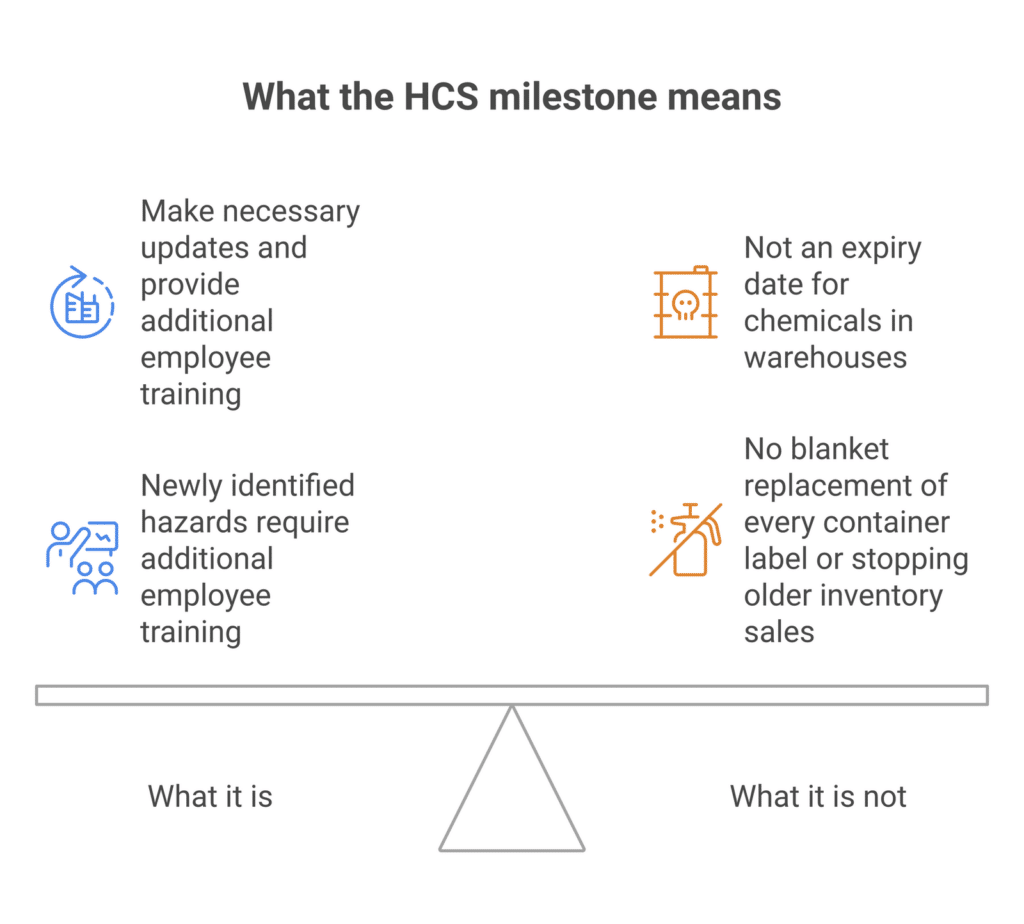
November 20, 2026 is an important date for U.S. employers handling chemical substances. It is not an expiry date for the chemicals in their warehouses.
Under OSHA’s updated Hazard Communication Standard, or HCS, employers must make necessary updates concerning substances to alternative workplace labeling and their hazard communication programme, and provide additional employee training for newly identified hazards by that date. The wording matters: these are employer duties, applied as necessary, rather than a blanket requirement to replace every container label or stop selling older inventory. 1
For surplus chemical trade, the useful question is what happens when a dormant lot moves again. A sale can bring the material into a new operation, with different people responsible for handling it. Its identity and the relevant hazard information need to remain connected throughout that handoff.
Start with the right date and the right role
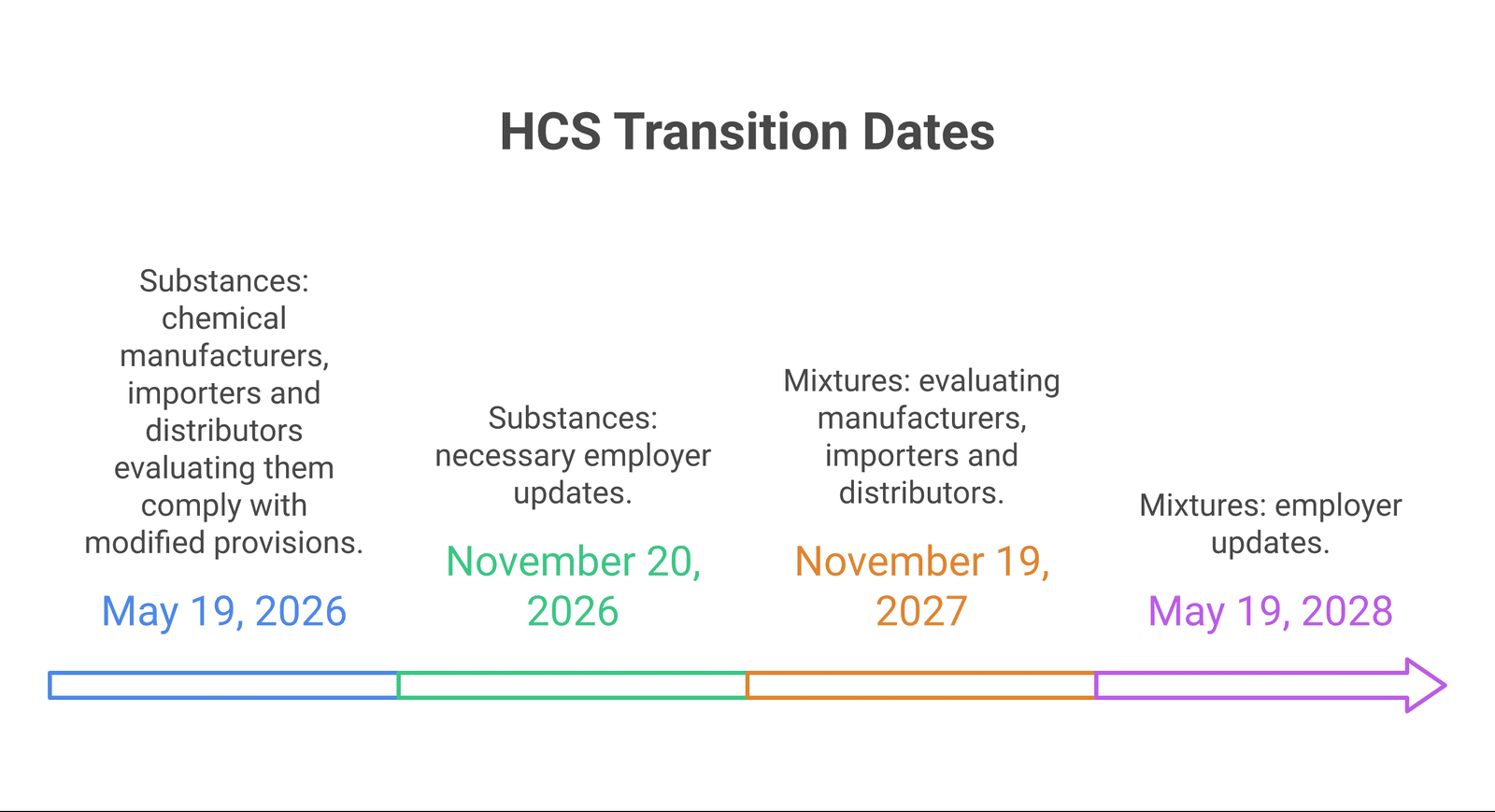
OSHA extended the HCS transition dates by four months in January 2026. The updated schedule distinguishes substances from mixtures and separates the duties of parties evaluating chemicals from the later employer implementation milestones. 2
For substances, chemical manufacturers, importers and distributors evaluating them were required to comply with the modified provisions by May 19, 2026. The November 20, 2026 milestone concerns the necessary employer updates described above. For mixtures, the corresponding dates are November 19, 2027 for the evaluating manufacturers, importers and distributors, and May 19, 2028 for employer updates. OSHA’s current standard and May 2026 enforcement directive set out those distinctions. 1 3
A business may have more than one role. Selling inventory does not mean that its only relevant responsibility is the November employer milestone. Equally, the later timetable for mixtures should not be read as permission to disregard existing hazard-communication duties.
Before using a deadline to make a commercial decision, the responsible team should establish which material, role and obligation it is discussing.
Workplace labels and shipment labels are not interchangeable
The November employer milestone refers to alternative workplace labeling, the hazard communication programme and additional training, as necessary. Labels on containers shipped from a workplace are addressed separately in paragraph (f) of the standard. 1
That distinction becomes practical when inventory moves from storage into a sale. A label used within a workplace should not simply be assumed to satisfy the requirements for an outgoing shipment. The responsible party must assess the applicable requirements for that shipment.
OSHA also has specific provisions for significant new hazard information. Paragraph (f)(11) addresses label updates, including circumstances involving material already released for shipment. Those provisions are not a general exemption for old stock and should not be confused with the November employer deadline. 1
My recommendation is to resolve label questions before arranging collection. A commercial agreement is not the point at which warehouse personnel should first discover that no one has established which information must accompany the material.
The safety data sheet must reach the next responsible party
A safety data sheet, or SDS, is more than a document kept in the seller’s archive. OSHA requires distributors to provide SDSs and updated information to other distributors and employers with the initial shipment and the first shipment after an SDS update. The document must accompany the containers or be sent before or at the time of shipment. 1
For a surplus transaction, that makes document control part of the handoff. The seller should establish whether the SDS corresponds to the identified material and whether relevant updates have been obtained from the responsible source. A file attached to an old purchase order should not be assumed to answer those questions.
If the material’s identity, composition or hazard information is uncertain, that uncertainty needs competent technical assessment. It should not be resolved by selecting the nearest matching document or making unsupported edits to a supplier’s SDS.
The next operation also needs to be able to use the information. Sending a file does not replace the receiving employer’s applicable responsibilities for access, workplace communication and training. 1
Hazard communication is not lot qualification
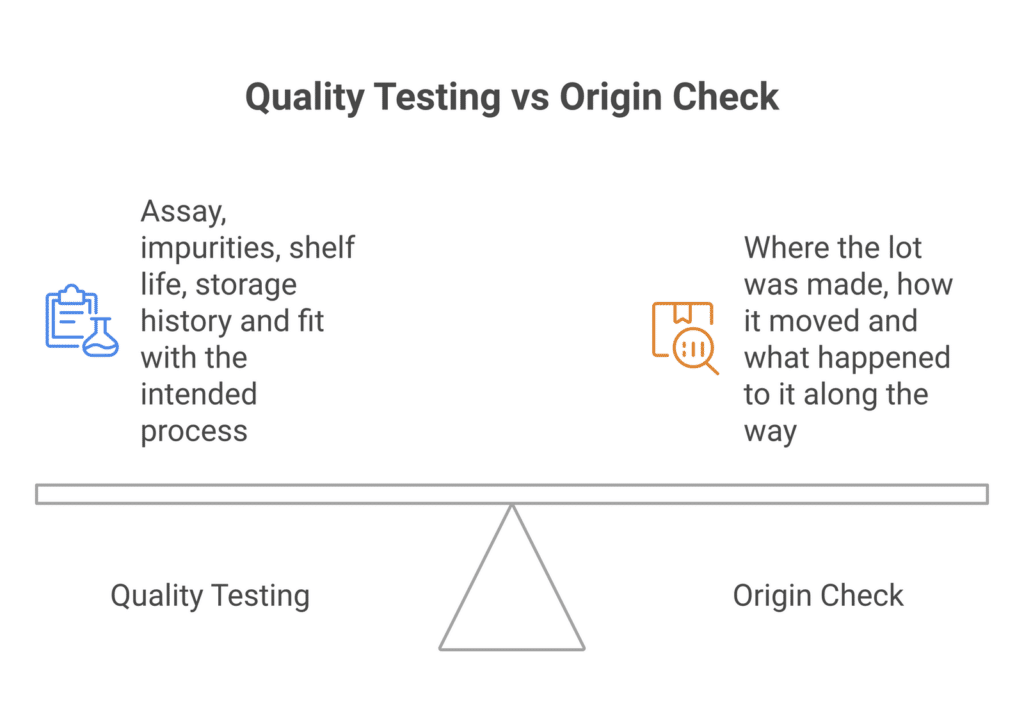
An SDS and a certificate of analysis answer different questions. The SDS communicates hazards. Analytical evidence supports an assessment of the lot’s composition or specification. Neither should be treated as a substitute for the other.
This matters particularly for surplus material described as aged or off specification. A current SDS does not demonstrate that a batch remains stable, meets a buyer’s specification or is suitable for a particular application. Conversely, a satisfactory analytical result does not remove the need to address hazard communication.
For illustration, consider a documented lot retained after a product withdrawal. Its safety information may remain relevant, but a prospective buyer still needs evidence that the particular stock fits its proposed process. If its condition or identity cannot be established, a new label does not solve the underlying problem.
The November milestone is therefore a useful prompt for coordination, not a technical approval of inventory that happens to have paperwork.
Give the handoff an owner
For businesses reviewing non-core stock, I would assign a named person to coordinate the commercial, warehouse and environmental, health and safety teams. That is a management recommendation, not a new OSHA job-title requirement.
The aim is to make sure that the proposed sale refers to clearly identified material, that relevant hazard information has been reviewed by the responsible people, and that outstanding questions are resolved before release. Technical acceptance and the buyer’s intended use should remain separate, explicit decisions.
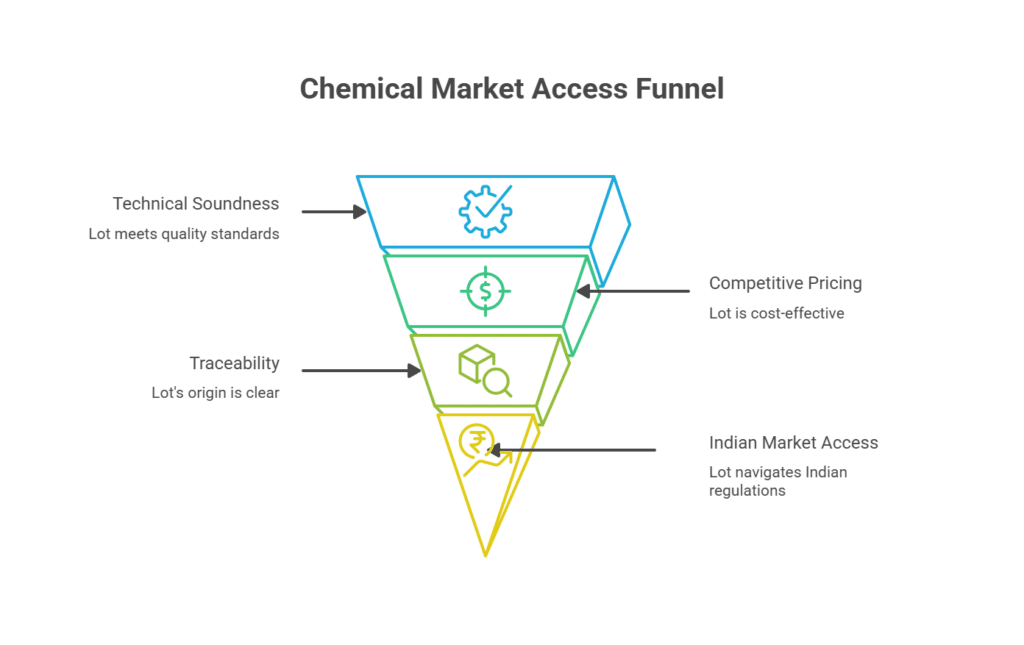
Cross-border transactions add another boundary. U.S. HCS compliance does not establish that a lot can lawfully enter India or any other destination. Import eligibility, transport requirements and the receiving workplace’s duties require their own assessment. Nor does describing material as surplus determine whether it is legally a product or waste.
The practical lesson is straightforward: dormant inventory should not become an active shipment before responsibility for the information handoff is clear.
If your business is assessing documented excess chemical inventory, contact Surplus International to discuss whether a qualified secondary-market use may exist. Hazard-communication and other compliance decisions should be addressed with the relevant qualified specialists.
This article reflects the federal OSHA sources reviewed on October 28, 2026. It provides general operational context, not product-specific legal or regulatory advice.