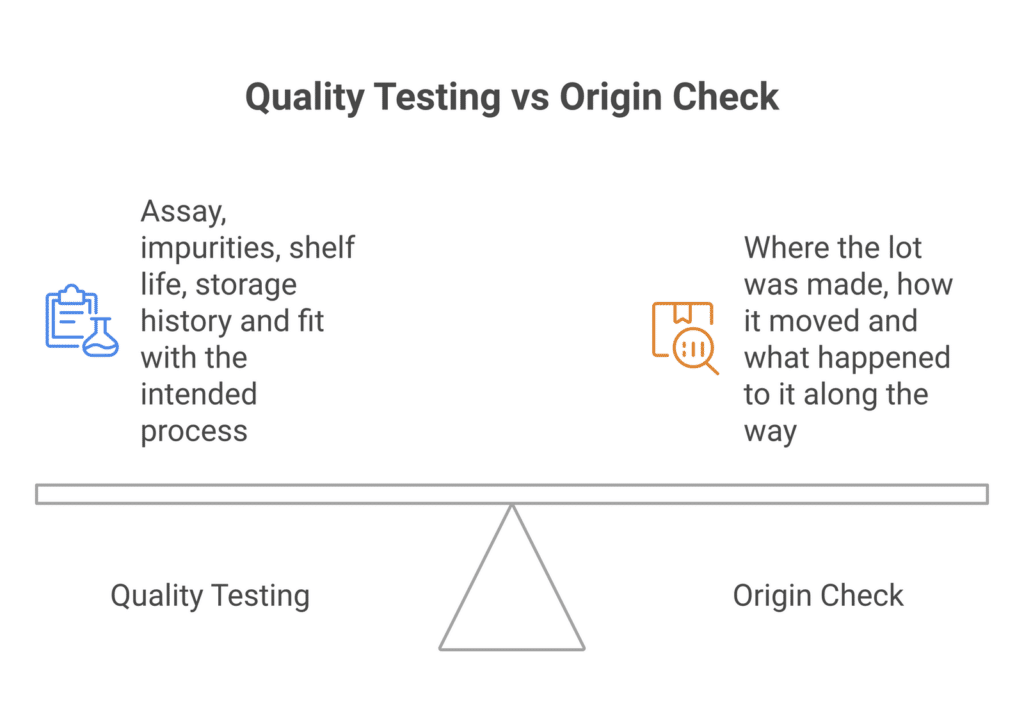
In our previous article, we looked at the evidence behind environmental claims. This article looks at a different kind of evidence: the records that show where a chemical lot was made, how it moved and what happened to it along the way.
Why origin is getting closer attention
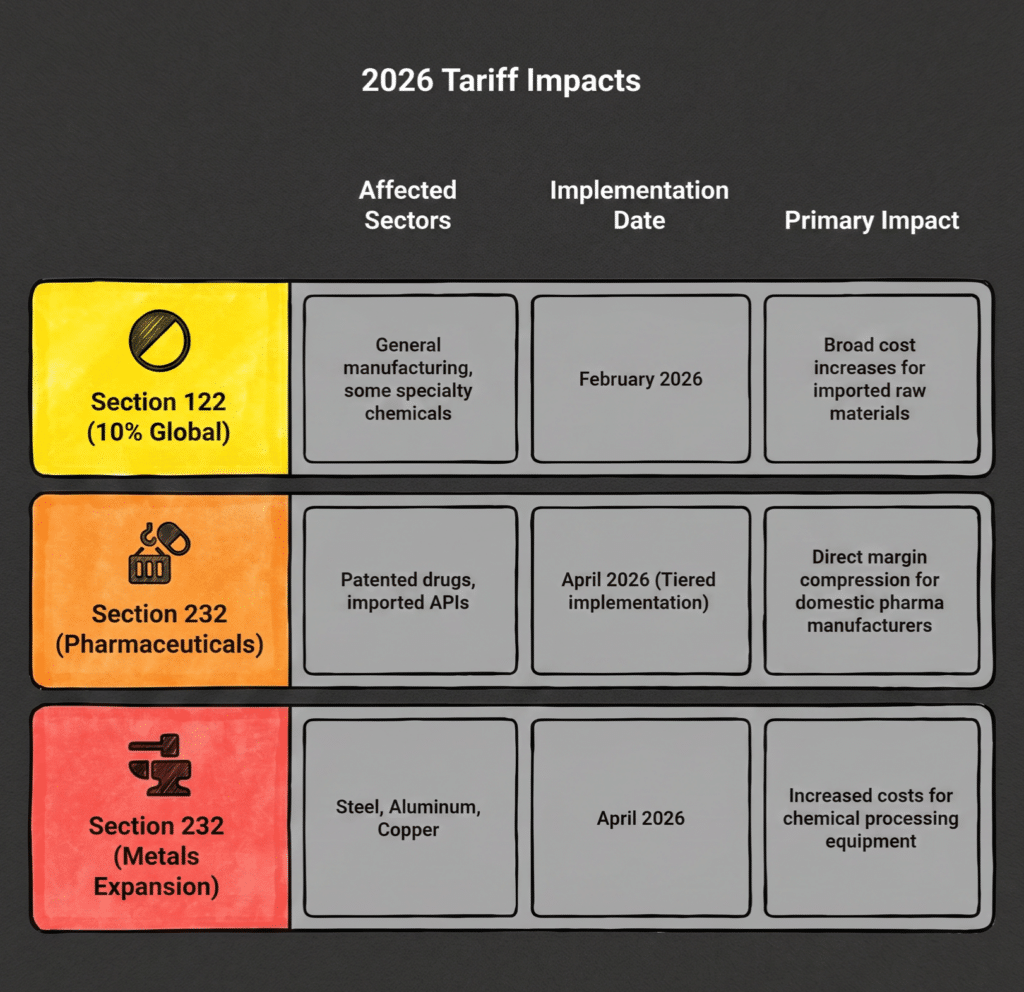
On 14 July 2026, the U.S. Department of Justice announced that the Trade Fraud Task Force it launched with the Department of Homeland Security in August 2025 had passed $1 billion in civil and criminal recoveries, penalties, forfeitures and publicly charged losses in under a year. The task force focuses on misrepresentations to U.S. Customs and Border Protection, including transshipment, mislabelling and false declarations, and its stated priorities include evasion of Section 301 tariffs and antidumping and countervailing duties. 1
The same announcement introduced a joint DOJ and DHS publication, A Resource Guide to Trade Fraud Enforcement. Several of its points matter directly to secondary chemical trading: 2
- A good must be substantially transformed in a country to legally change its origin. The guide names simple assembly and repacking as operations that do not meet that threshold.
- Under the False Claims Act, liability reaches anyone who knowingly causes a violation, and “knowingly” includes deliberate ignorance, wilful blindness and reckless disregard.
- The criminal smuggling statute, Section 545, is not limited to the initial importer. It reaches conduct anywhere in the supply chain, including buying, selling or facilitating the transport of illegally imported goods.
- The guide describes every participant in the supply chain, “from the importer to the secondary wholesaler to the transporter”, as having a role in “maintaining the integrity of the market”. It points to auditing supply chains, verifying partners’ representations and avoiding wilful blindness to sources of supply.
The announcement also cited a case from the chemical sector. In December 2025, DOJ declined to prosecute MGI International, described as a global plastic resin distributor, under its corporate voluntary self-disclosure policy. According to DOJ, a former chief operating officer allegedly instructed staff in 2021 to misrepresent the manufacturer and country of origin on paperwork submitted to CBP, to avoid Section 301 duties on resin of Chinese origin. The company agreed to credit $6.8 million it had already paid to resolve False Claims Act liability, and the former executive agreed to plead guilty to conspiracy to smuggle goods into the United States. 3
MGI is a distributor of new material, not a surplus trader, and nothing in the case suggests that surplus trading carries particular risk of fraud. The case is relevant for a narrower reason. The facts that were allegedly misstated, the manufacturer and the country of origin, are the same facts that can become unclear when a lot passes through several hands.
Four facts that are easy to confuse
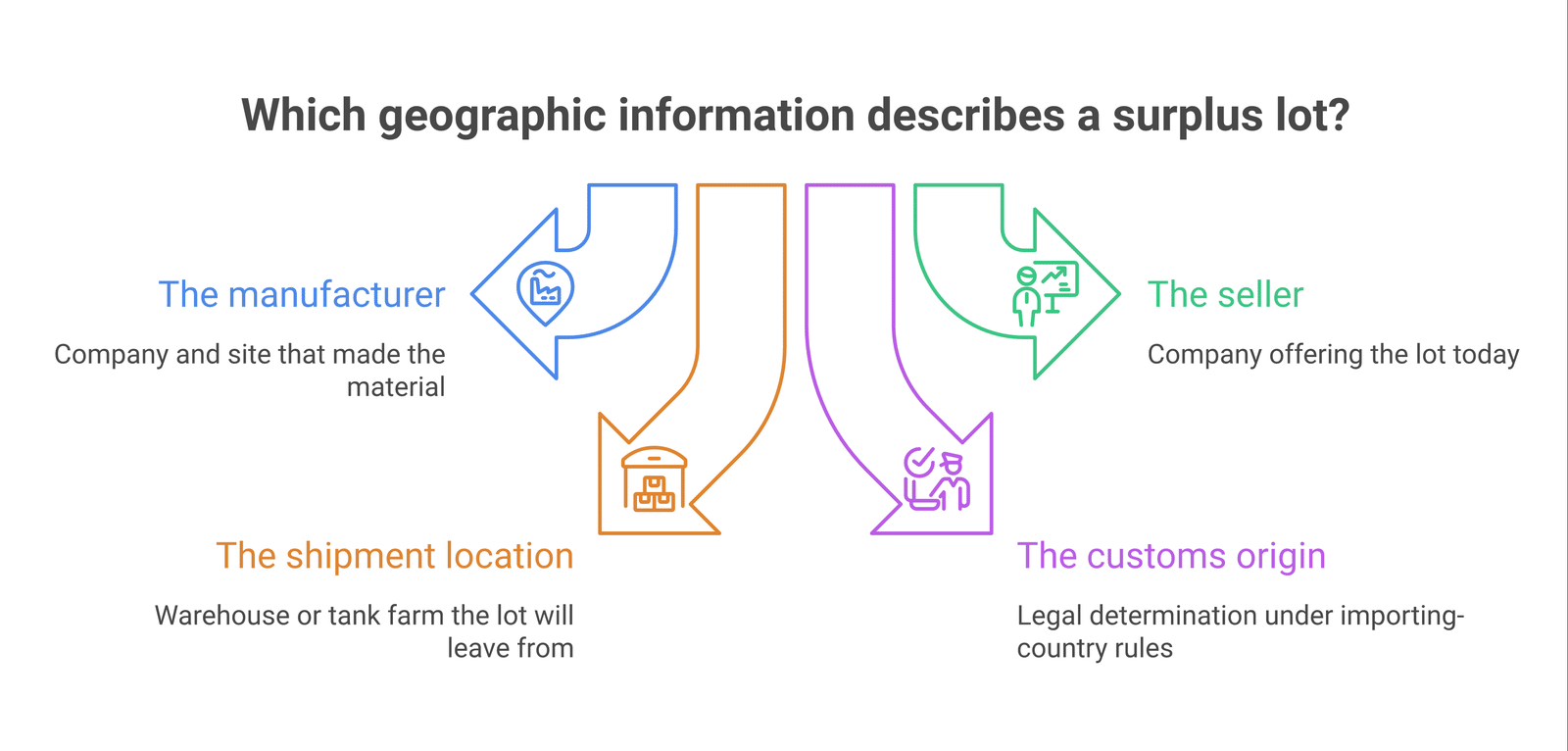
A surplus lot usually carries four different pieces of geographic information. Only one of them is its customs origin.
- The manufacturer. The company that made the material, and the site where it was made.
- The seller. The company offering the lot today. Its address says nothing about where the material came from.
- The shipment location. The warehouse or tank farm the lot will leave from. Stock held in Rotterdam or Houston is not Dutch or American because of where it is stored.
- The customs origin. A legal determination made under the rules of the importing country.
In the United States, CBP’s guidance on origin marking states that a substantial transformation occurs when a new article with a different name, character and use is created. 4 In the European Union, Article 60 of the Union Customs Code gives a product the origin of the country where it was wholly obtained or, when several countries were involved, where it underwent its last substantial transformation. The European Commission notes that certain “minimal operations” never confer non-preferential origin. 5 Preferential origin under a trade agreement has its own rules and documents on top of these.
The detailed tests differ by country and by product, so the same lot can need a separate analysis for each destination. What they share is that origin depends on where and how the material was produced, not on who sells it or where it is stored.
Repacking, dilution and relabelling do not reset origin
Surplus material is often handled after it leaves the manufacturer. IBCs are split into drums, partial containers are combined, labels are replaced and material is sometimes diluted to a commercial grade. Each of these steps can be legitimate. None of them should be assumed to create a new origin.
The DOJ and DHS guide treats repacking as a passthrough operation that does not meet the threshold for substantial transformation. 2 CBP’s Part 102 rules, which it uses to determine origin for marking goods under USMCA and for certain other trade agreement purposes, go further for the operations surplus traders see most. They state that a material does not undergo the required change in tariff classification merely through simple packing or repacking, mere dilution with water or another substance that does not materially alter its characteristics, or a change in end use. 6
Blending, purification and chemical reaction are less predictable. Whether they confer origin depends on the product, the process and the applicable rules, which is why they belong in a product-specific review rather than a general assumption. Nothing here suggests that repackaging or routing material through another country is a way to change the duty owed. It is not.
Following one lot through resale
Consider a hypothetical lot. A solvent is made by a producer in Country A and sold in IBCs to a distributor in Country B. The distributor stores it in a warehouse in Country C, where part of the lot is repacked into drums and relabelled with the distributor’s name. Two years later, a trader in Country D offers the remaining stock as surplus to a buyer in the United States.
The buyer receives a CoA from the original producer, an SDS, drum labels showing the distributor and an invoice from the trader. Each document is accurate for its own purpose. None of them, on its own, states the customs origin. If no substantial transformation took place along the way, the material is still of Country A origin, whatever the label, the invoice or the shipping point say.
The risk in this example is not that anyone intends to mislead. It is that a declaration gets prepared from the most convenient document, such as the trader’s address or the repacker’s label, rather than from the manufacturing record.
What a certificate of analysis proves, and what it does not
A CoA reports the measured properties of a batch against a specification at the time of testing. It is the right document for the quality question. It does not establish:
- the country of manufacture, even when it names the manufacturer, since many producers operate several plants
- that the drums offered today contain the batch the CoA describes, unless batch numbers are linked through every split and repack
- the tariff classification or the customs origin under the destination’s rules
- how the lot was declared if it was imported before, or which duties were paid
A fresh CoA from an independent laboratory after resale is useful evidence that the material still meets specification. It describes the material, not its history.
In our article on supplying chemical lots to India, origin and chain of custody were already part of the seller’s lot dossier. The same records support a defensible origin position in any market.
The records an origin review needs
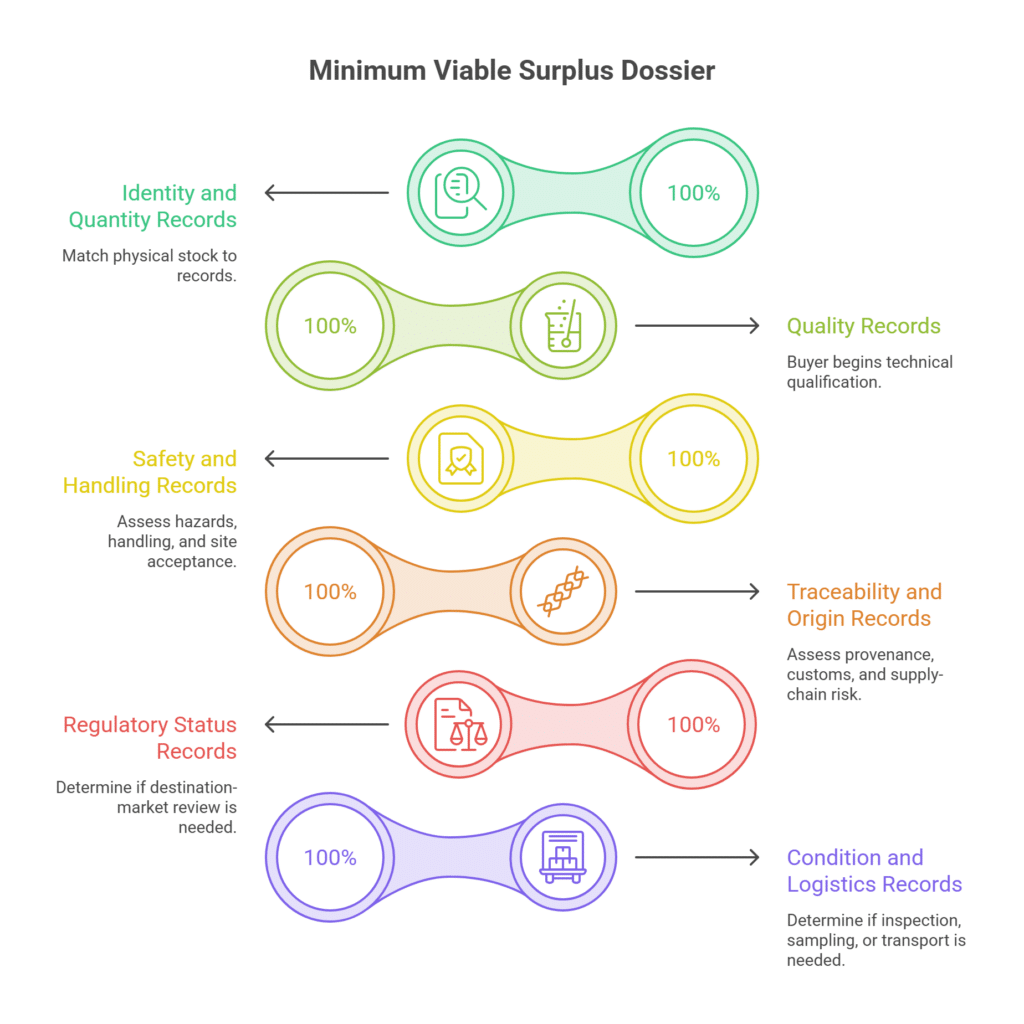
Before a lot is offered for export or import, the seller and buyer should establish what records exist. A practical file for a product-specific review includes:
- Manufacturer and production site. The producer’s name, the plant where the batch was made, and the original CoA tied to the batch number.
- Chain of custody. Purchase and transfer documents from the manufacturer to the current seller, with batch numbers carried through every split and resale.
- Handling after manufacture. Where, when and by whom the material was repacked, combined, diluted, blended or relabelled, with records linking new containers to the original batch.
- Prior customs history. If the lot was imported before, the entry documents, declared origin, classification and duties paid, including any Section 301 or antidumping duties. In the United States, importers must generally keep entry records for five years from the date of entry, so these records often still exist if someone asks early. 7
- Classification basis. The tariff code used and the reasoning behind it, because origin rules are often tied to classification.
- Discrepancies. Any point where the label, SDS, CoA and commercial documents disagree about the manufacturer or origin, with an explanation.
Not every lot needs a thick file. A lot bought directly from its manufacturer and never repacked may need little more than the manufacturer’s documents. The file grows with the number of hands the lot has passed through.
When a customs specialist should decide before shipment
Some situations should go to a licensed customs broker or trade counsel before a price is agreed, not after the goods arrive:
- the records disagree about the manufacturer or country of origin, or a link in the chain of custody is missing
- the material was blended, diluted, purified or reformulated in a country other than the one where it was first made
- the duty or trade measures at the destination differ materially depending on origin
- preferential treatment under a trade agreement is being claimed
- the lot’s price advantage seems to come mainly from an origin difference
In the United States, the importer of record must use reasonable care in the information it gives CBP and cannot contract that responsibility away to a broker or supplier. 2 Where the answer is uncertain, CBP accepts written requests for ruling letters on origin from any party with a direct and demonstrable interest, for a specifically described transaction. 8 Other customs administrations offer comparable advance rulings.
A discount cannot buy back a missing record
Surplus chemicals are usually priced below new material, and that is part of their value to buyers. But if the origin or entry history of a lot cannot be supported, the possible costs include additional duties, penalties, delays at the border and goods that cannot be released. Those costs can be far larger than any discount.
Most surplus lots have ordinary, legitimate histories. The work is in keeping the records that show it. For sellers, that means keeping manufacturing and trade documents with the stock instead of letting them stay behind in a former owner’s files. For buyers, it means asking about provenance in the same conversation as the specification, so that a lot is judged suitable only when both questions have answers.
Liability for customs and trade violations depends on the applicable law and the facts of each case. This article is general information, not legal advice.
Manufacturers and distributors holding surplus chemical inventory can contact Sur+ to discuss a potential outlet and the documents needed to assess the lot.
Frequently asked questions
Does a certificate of analysis show a chemical’s country of origin?
No. A CoA reports a batch’s measured properties against a specification. Even when it names the manufacturer, it does not establish the customs origin, which depends on where the material was produced and the rules of the importing country.
Does repackaging a chemical change its country of origin?
Normally not. The DOJ and DHS trade fraud guide names repacking as an operation that does not meet the threshold for substantial transformation, and CBP’s Part 102 rules state that simple packing, repacking and mere dilution do not count. More complex processing needs a product-specific review.
Is a surplus lot’s origin the seller’s country or the warehouse location?
Neither, on its own. Origin follows where the material was wholly obtained or last substantially transformed. The seller’s address and the shipping point are commercial facts, not origin determinations.
References
[4] U.S. Customs and Border Protection: Marking of Country of Origin on U.S. Imports
[5] European Commission: Non-preferential rules of origin
[6] 19 CFR 102.17: Change in tariff classification not resulting in a change of origin
[7] 19 CFR Part 163: Recordkeeping
[8] U.S. Customs and Border Protection: What are Ruling Letters?