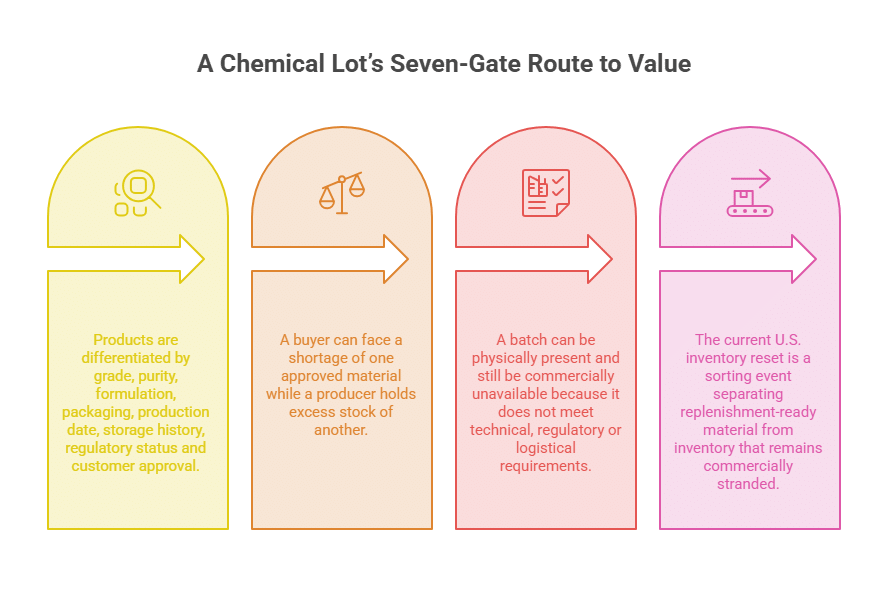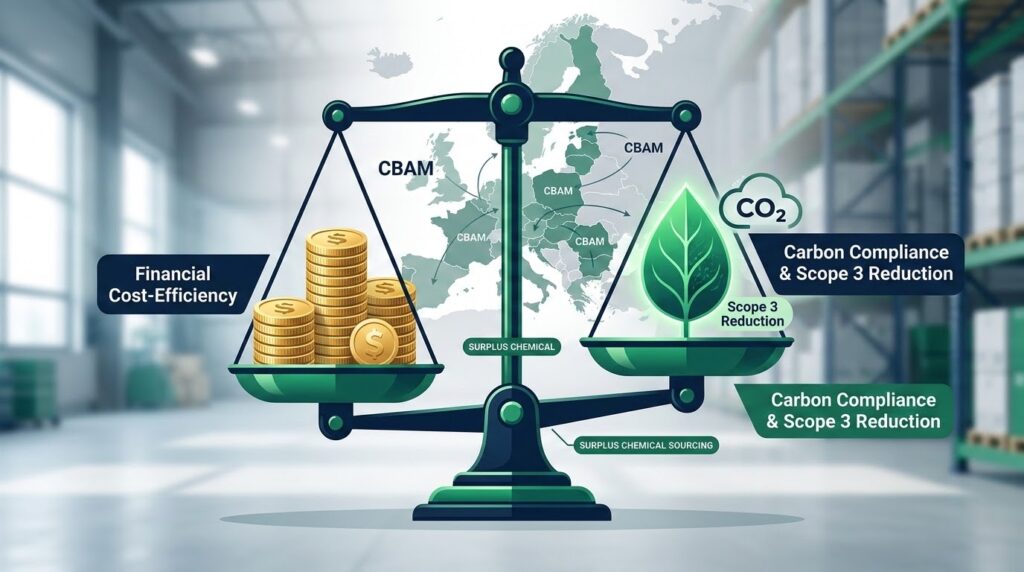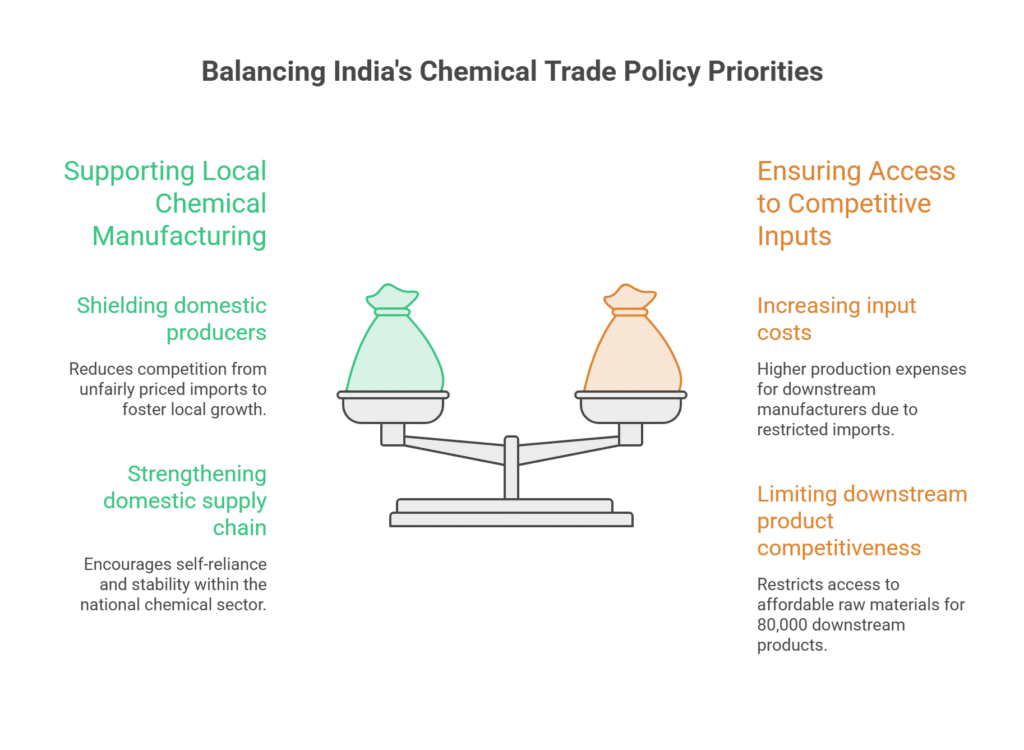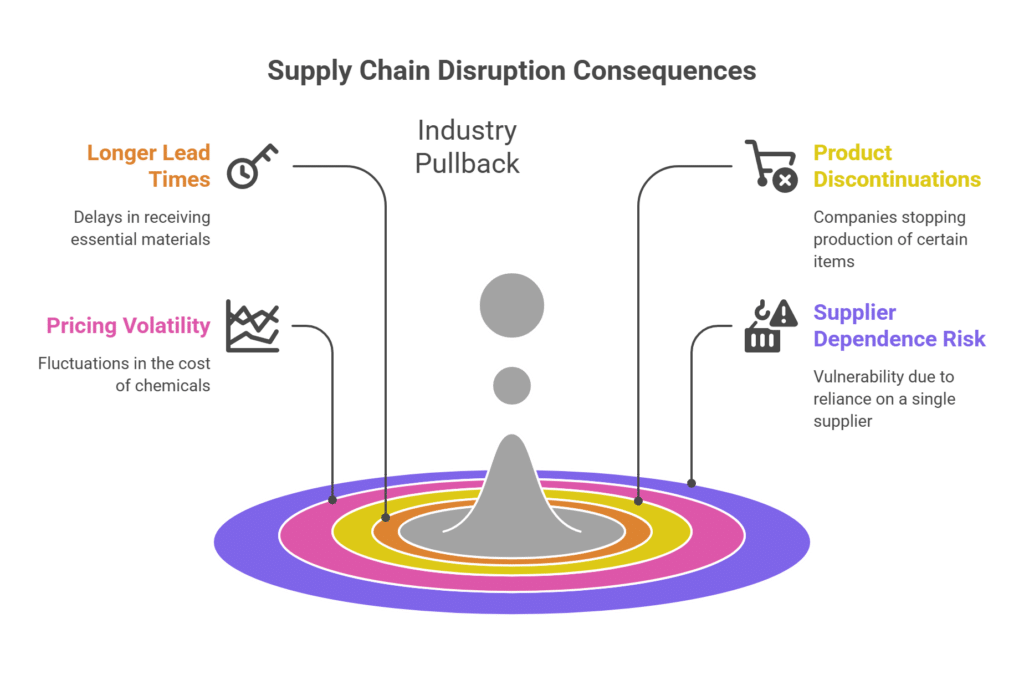

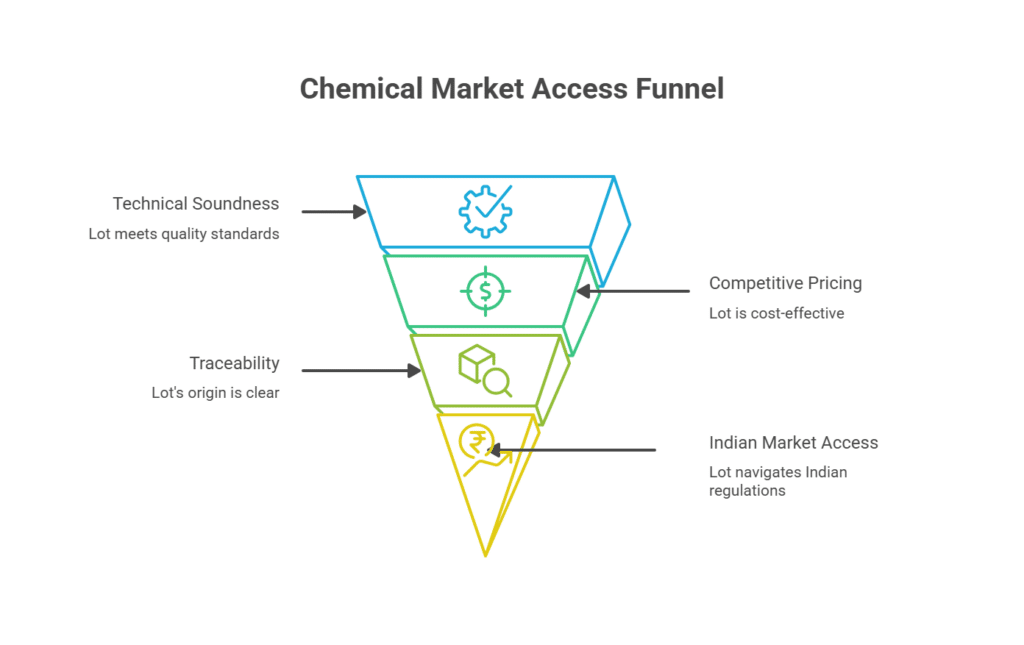
This is becoming especially important in India, where the Quality Control Order landscape is being recalibrated product by product.
During 2025, the Department of Chemicals and Petrochemicals recorded withdrawals affecting products that included acetic acid, methanol, aniline, acrylonitrile, maleic anhydride, styrene, pyridine, beta picoline, p-xylene, toluene, vinyl acetate monomer, ethylene dichloride and vinyl chloride monomer. In 2026, the same official notification index recorded temporary suspension actions for Linear Alkyl Benzene and n-Butyl Acrylate.2
The current status of those notices differs. The operative 25 June LAB amendment states that the QCO is suspended from 1 July through 30 September 2026.5 The later n-Butyl Acrylate extension ran only through 31 July 2026, so it was no longer a live suspension at the 6 September research cutoff.6
BIS’s advance-information page, last updated on 4 August 2026, lists Linear Alkyl Benzene under IS 12795:2020 with an enforcement date of 30 September 2026.1 This page and the operative Gazette must be read together. Neither is a decision on a specific transaction.
The practical conclusion is not that India has opened or closed its chemical market.
The conclusion is that market access now depends even more clearly on the exact product, named manufacturer, documentation, intended use, current official notices and transaction-specific timing.
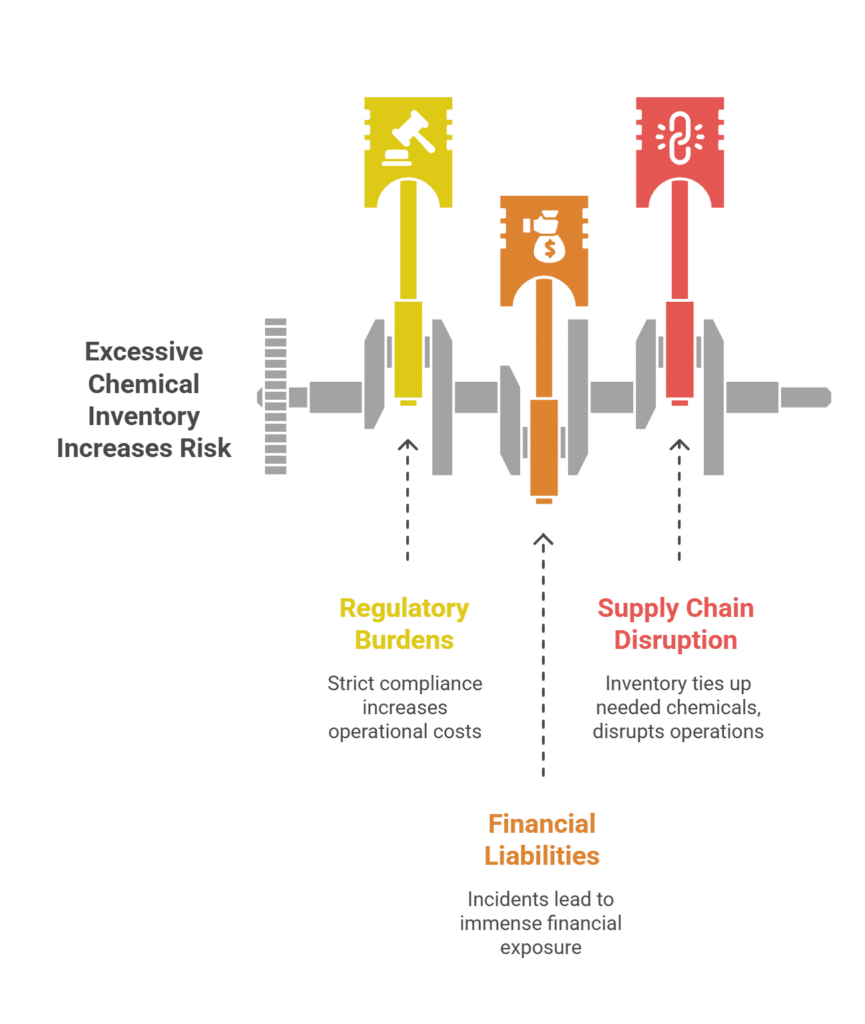
For surplus chemical trade, that distinction can determine whether inventory becomes a useful supply option or a stranded asset.
What a Quality Control Order Changes
A Quality Control Order, commonly called a QCO, makes compliance with a specified Indian Standard mandatory for the products within its scope. The relevant government ministry issues the order, while the Bureau of Indian Standards oversees certification and conformity requirements.4
The policy goals include product quality, safety, environmental protection and prevention of unfair trade practices. These are legitimate objectives. The commercial challenge appears when a required input has limited compliant supply, the certification process takes time, or a downstream user depends on a grade that is not readily available under the applicable route.
The Centre for Social and Economic Progress reported that QCO coverage expanded from 70 products in 2017 to 756 by December 2024. Approximately 46% of covered products were intermediate goods. Its chemical-sector analysis found that exposure grew from 12% of chemical-using firms in 2019 to 56.6% in 2024.4
The same research estimates that imports of QCO-affected goods declined by around 24% over the three years after implementation, with an approximately 30% decline for affected intermediate goods. These findings cover historical data through 2023. They do not forecast demand for a particular chemical in September 2026, and they do not prove that any individual surplus lot can be imported.4
Their value is more fundamental. They show that a product standard can affect not only the imported material, but also the downstream manufacturers that depend on it.
Recalibration Is Not Removal
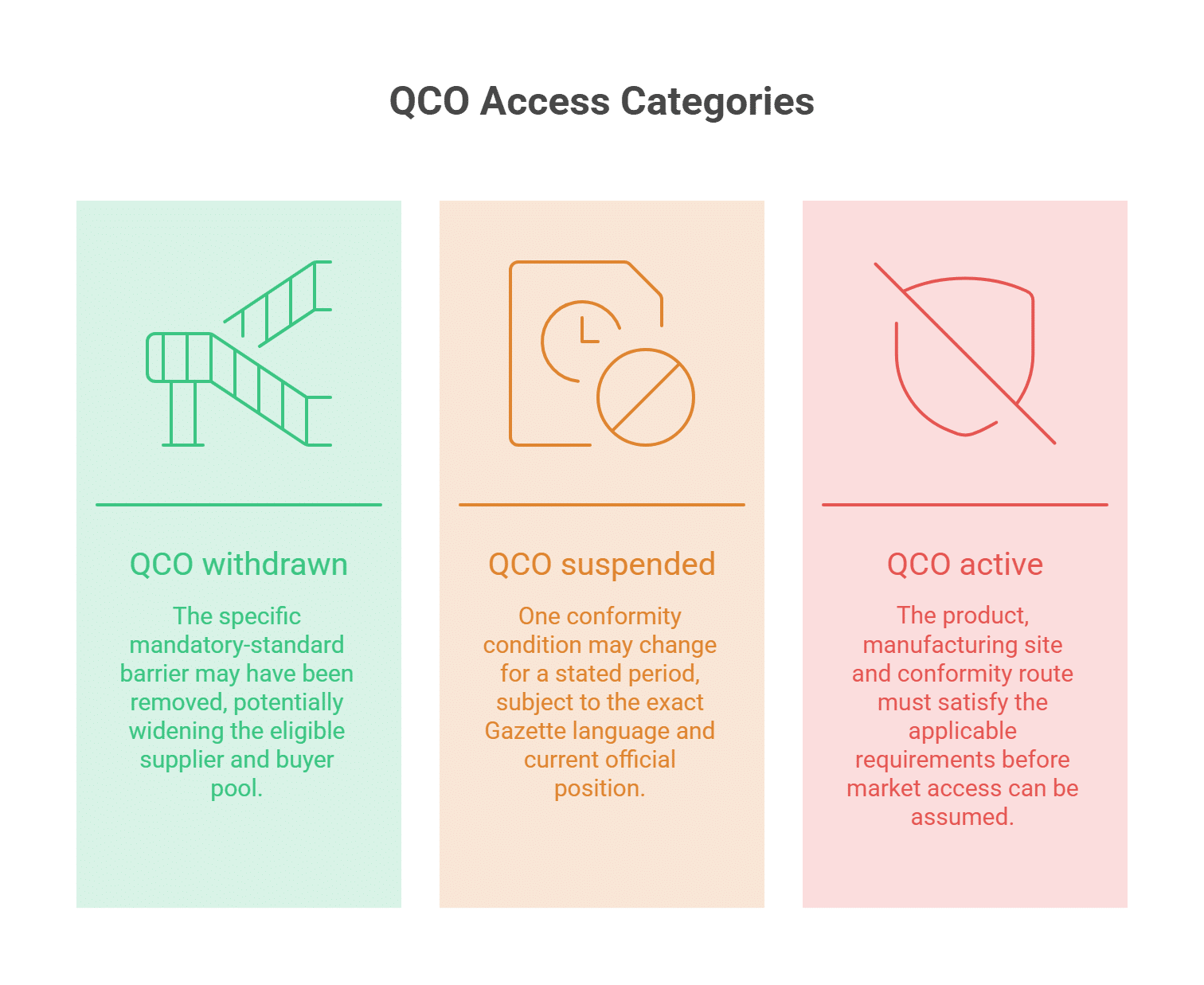
The current environment is best understood as a variable access map with three main categories.
| Access category | What it means commercially | Main risk for a surplus lot |
|---|---|---|
| QCO withdrawn or rescinded | The specific mandatory-standard barrier may have been removed, potentially widening the eligible supplier and buyer pool. | Parties may wrongly assume that all other customs, safety, environmental, contractual and customer requirements have also disappeared. |
| QCO temporarily suspended or deferred | One conformity condition may change for a stated period, subject to the exact Gazette language and current official position. | Parties may treat a supply-continuity measure as a liquidation opportunity or assume it determines shipment treatment without qualified advice. |
| QCO active or approaching enforcement | The product, manufacturing site and conformity route must satisfy the applicable requirements before market access can be assumed. | An otherwise usable lot may become commercially stranded if the site, grade or documentation cannot support the required route. |
These categories cannot be applied using a product name alone. A valid review requires the official notification, exact chemical identity, Indian Standard, named manufacturer, grade, end use and transaction-specific timing.
This is why a suspension should not be marketed as a general permission to move off-spec or poorly documented material. A QCO addresses mandatory conformity to an Indian Standard. It does not replace the buyer’s application requirements, chemical safety controls, hazardous-goods obligations, customs classification, environmental rules or contractual quality terms.
The Transition Facilitation Order Is Not a Chemical Shortcut
The Transition Facilitation (Quality Control) Order, 2026 is a conditional mechanism only for the QCOs listed in its schedule. The Department for Promotion of Industry and Internal Trade may grant permission to a company incorporated under the Companies Act, 2013, following an Implementation Committee risk assessment. For a permitted company, a Scheme II licence is available only to a manufacturer supplying that company. The goods must still conform to the applicable Indian Standard and remain subject to market surveillance.3
Applications are accepted within 24 months of commencement. The order entered into force on its Gazette publication date, 25 June 2026, and remains in force for five years unless extended.3
Its scope must be read carefully.
The published schedule contains ten QCO categories covering toys, footwear, air conditioners and related parts, specified domestic electrical appliances, hinges, furniture and household or commercial electrical appliances. Chemical intermediates are not listed.3
Therefore, the Transition Facilitation Order should not be presented as a general path for chemical imports. A chemical seller or buyer must still identify the actual QCO and conformity route applicable to the exact product.
This is a useful example of why regulatory summaries are not enough. Commercial decisions should follow the official schedule and current product-specific notice, not a broad description of policy flexibility.
The Five-Layer Date-Specific Access Map
Before a surplus chemical lot is quoted for India, the seller and buyer should build a five-layer access map.
| Layer | Required questions | Commercial consequence |
|---|---|---|
| 1. Product identity | What is the exact chemical name, CAS number, grade, composition and intended end use? Does the QCO scope clearly include or exclude it? | A broad trade name may conceal a product that is regulated differently or cannot meet the buyer’s application. |
| 2. Official status and timing | Which current, product-specific official notice applies, and what timing assumptions has the Indian importer confirmed with qualified regulatory and customs advice? | Timing can affect viability, but a website date does not determine a specific transaction. |
| 3. Manufacturer eligibility | Does the named manufacturer hold the licence required by the applicable QCO or BIS scheme for the exact product, or is there a written, current product-specific exemption or mechanism? | Do not infer eligibility from a trader’s records or possession of inventory. |
| 4. Lot evidence | Are the specification, batch-linked certificate of analysis, test methods, manufacture or retest date, safety data sheet, storage history, packaging and chain of custody available? | Documentation determines whether the buyer and authorities can assess the actual lot rather than rely on a label. |
| 5. Buyer and route readiness | Has the buyer approved the material and intended use? Are customs, dangerous-goods, environmental, importer and testing requirements understood? | A compliant chemical can still fail commercially if the buyer, port, route or application is not ready. |
This framework is commercial due diligence. It does not replace product-specific legal, customs, regulatory, technical, environmental, health and safety advice.
What North American Sellers Should Do
A North American seller should not treat India as a pressure-release destination for excess inventory.
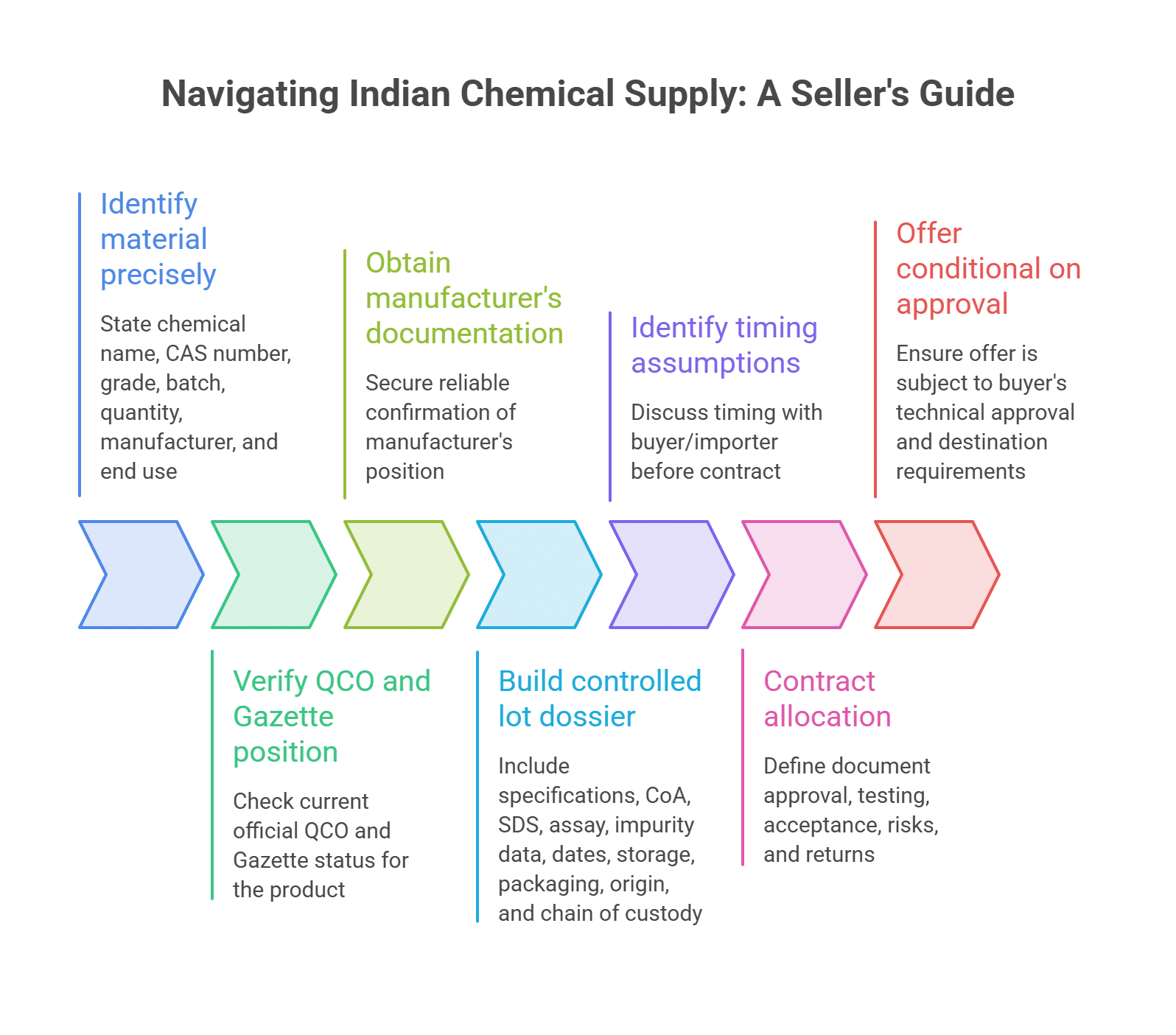
The first step is to identify the material precisely. The offer should state the chemical name, CAS number where applicable, grade, batch, quantity, named manufacturer and proposed Indian end use. The seller should then verify the current official QCO and Gazette position for that exact product.
The second step is to obtain reliable documentary confirmation of the named manufacturer’s position for the exact product. A trader’s documentation cannot substitute where the applicable scheme requires manufacturer certification.
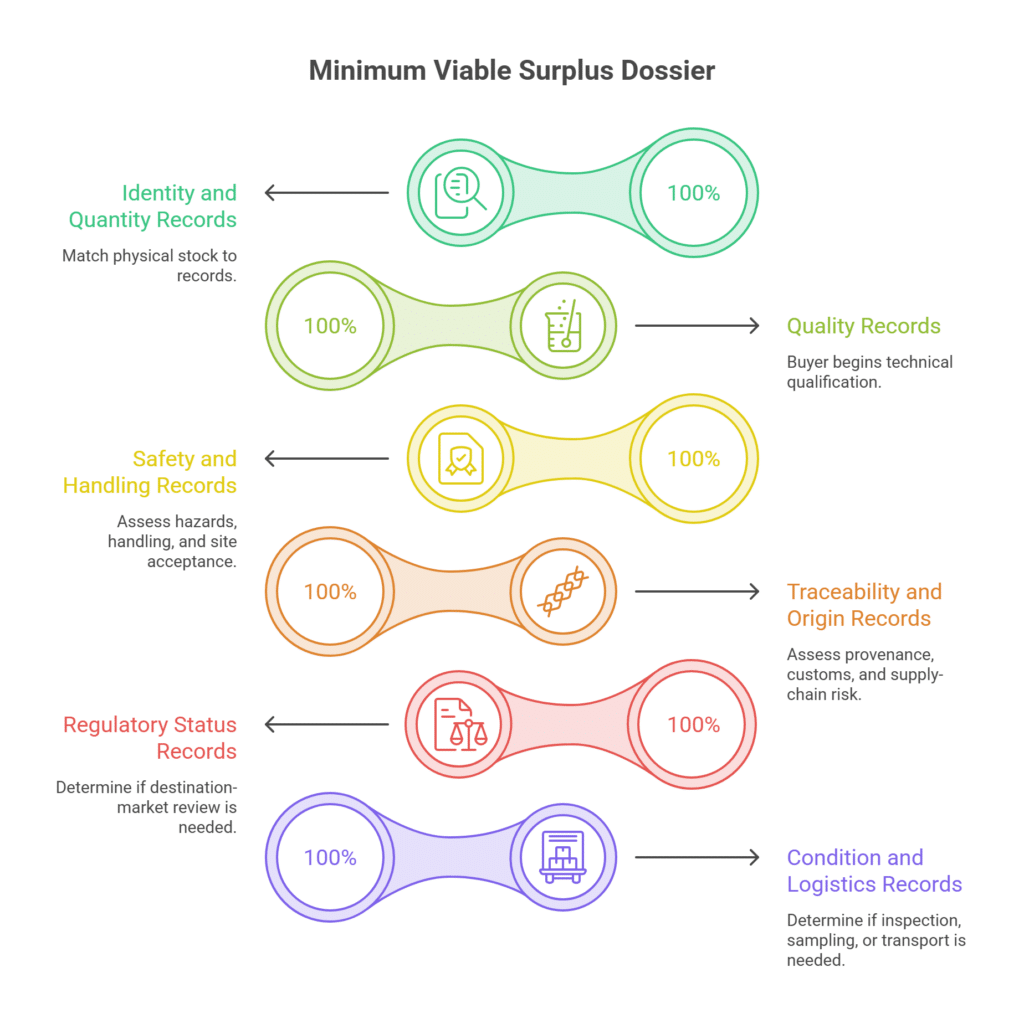
The third step is to build a controlled lot dossier. It should include the current specification, batch-linked certificate of analysis, safety data sheet, assay and relevant impurity data, manufacture or retest date, remaining usable life, storage history, packaging condition, origin and chain of custody.
The fourth step is to identify timing assumptions with the Indian buyer or importer before contract signature. The parties should obtain transaction-specific customs and regulatory advice where timing is material. They should not ship on a sales assumption that a temporary measure will apply.
The contract should allocate document approval, testing and acceptance, delay risk, regulatory-change risk, and return or compliant management if the lot is not accepted. Finally, the offer must remain conditional on the buyer’s technical approval and all destination requirements. A withdrawn or suspended QCO does not make unsafe, degraded, mislabelled or application-incompatible material acceptable.
What Indian Buyers Should Do
Indian buyers should begin with access and qualification before negotiating the discount.
The first question is whether the exact product can be supplied under the then-current product-specific rules, subject to customs and competent-authority determinations. BIS describes its upcoming-QCO page as “advance information for better awareness purposes.” It is useful for planning, not a shipment-specific clearance ruling.1
The buyer should assign a named compliance owner to reconcile the CAS number and grade, QCO and Indian Standard scope, manufacturer evidence, customs classification, intended use and current Gazette position before release. It should also establish whether the proposed lot meets the intended application, not merely the minimum regulatory standard.
A lot-specific certificate of analysis and representative sample may be necessary. For application-sensitive materials, buyers should define assay, impurities, moisture, additives, colour, stability and performance criteria before accepting the shipment. The contract should state what happens if the independent test result differs from the seller’s documentation.
The buyer should also account for the entire delivery timeline. Ocean transit, port delays, customs review, inland transport, incoming testing and production scheduling all consume time. This is especially important for material with a retest or expiry date, and for products facing a stated regulatory milestone. Where timing is material, obtain transaction-specific customs and regulatory advice rather than relying on a website date.
Price becomes meaningful only after these checks. The relevant measure is the delivered cost of material that can legally clear, technically qualify and remain usable through production.
How QCO Changes Revalue Surplus Inventory
A QCO change can alter the destination value of a chemical lot without changing the chemistry inside the package.
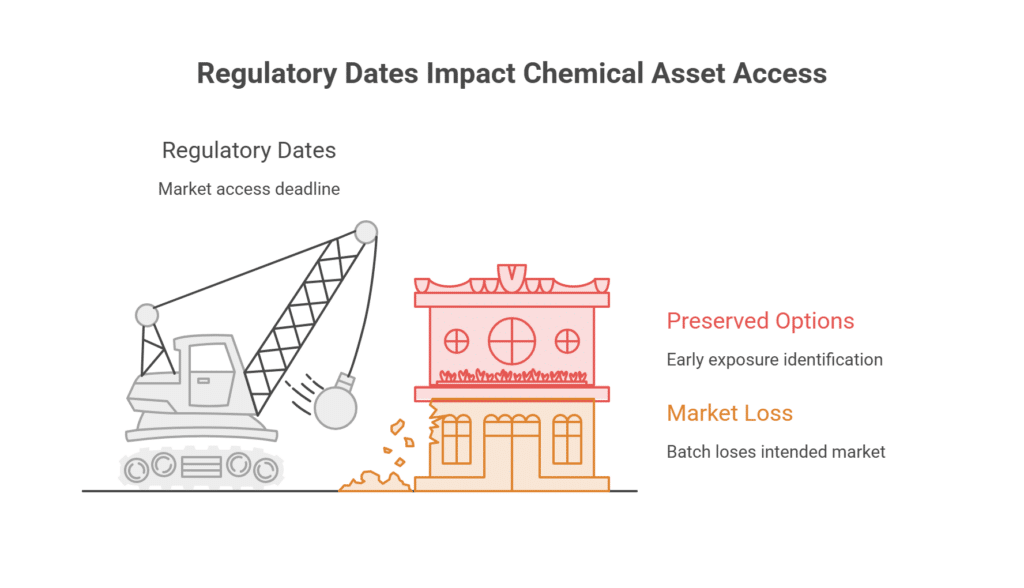
A rescission can remove the rescinded QCO’s certification condition for products actually within that order’s scope, but it does not establish that a particular imported lot is admissible. A temporary suspension may temporarily change one conformity condition, but it does not convert a supply-continuity measure into a liquidation opportunity. A stated regulatory milestone may affect demand for material that already supports the required route, subject to product-specific verification.
The reverse is equally important. A regulatory opening does not cure a quality problem. Off-spec, degraded, contaminated, relabelled or waste-like material does not become suitable because one QCO has been suspended. It requires a legitimate, disclosed and technically approved use. If that cannot be demonstrated, keep the material out of the sales channel and use a lawful rework, return or compliant waste-management route. Export must never be treated as disposal.
This is where a specialist surplus trader can add value. Our commercial task is not to locate a jurisdiction with a lower regulatory threshold. It is to match a documented lot with a qualified buyer, a lawful route, sufficient remaining life and credible delivered economics.
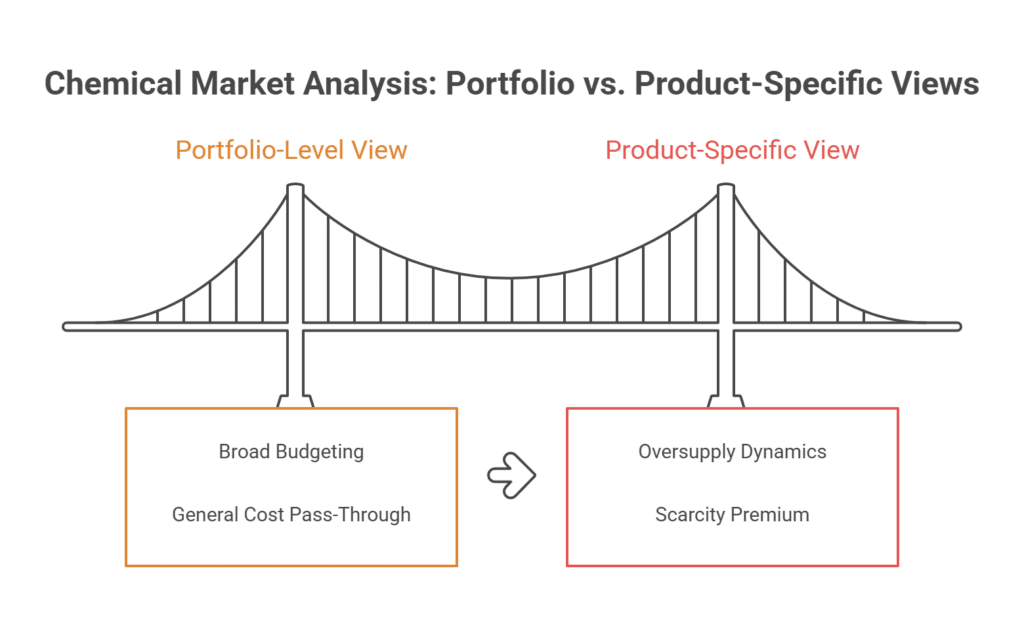
The Market Is Product-Specific and Date-Specific
India is not a generic outlet for excess chemical inventory. At Surplus International, we start with the lot file: identity, batch evidence, buyer-approved end use and documented regulatory status. If one is missing, the discussion stops before price.
The 2025 withdrawals, 2026 suspensions and continuing product requirements point to a more selective system. For chemical trade, this increases the importance of precise identity, primary-source verification and transaction-specific timing.
Every chemical lot has its own access map.
If your company holds excess chemical inventory in North America, begin by mapping the product, named manufacturer, documentation, intended use and current official position. If your company sources chemicals in India, begin by defining the regulatory and technical evidence required for the intended application. The purpose is to stop a weak transaction before it becomes a shipment risk.
The next article will examine a different form of marketability risk: how recent U.S. TSCA draft reviews are raising the evidence threshold for ageing chlorinated-solvent inventory. Follow the series for the next lot-level test.