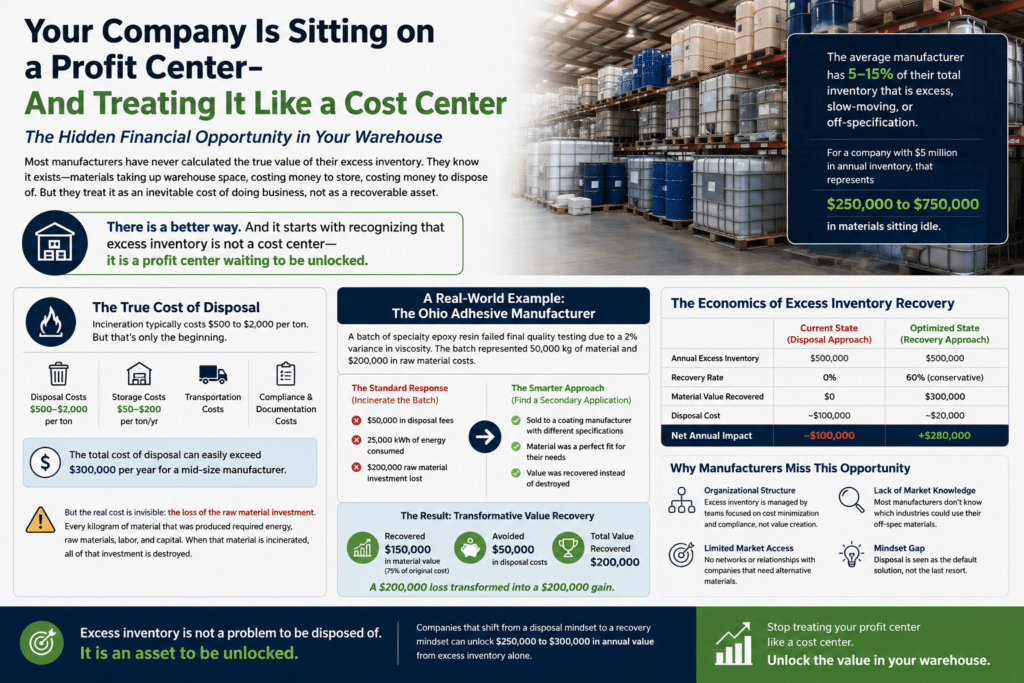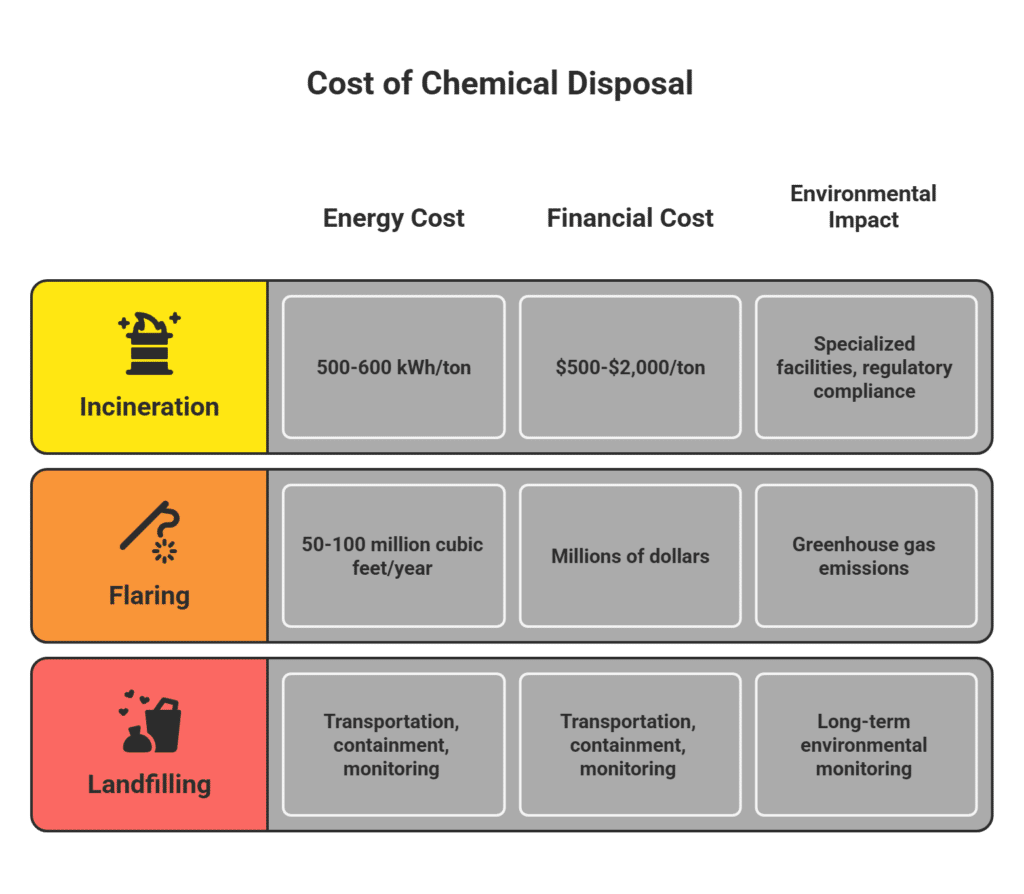

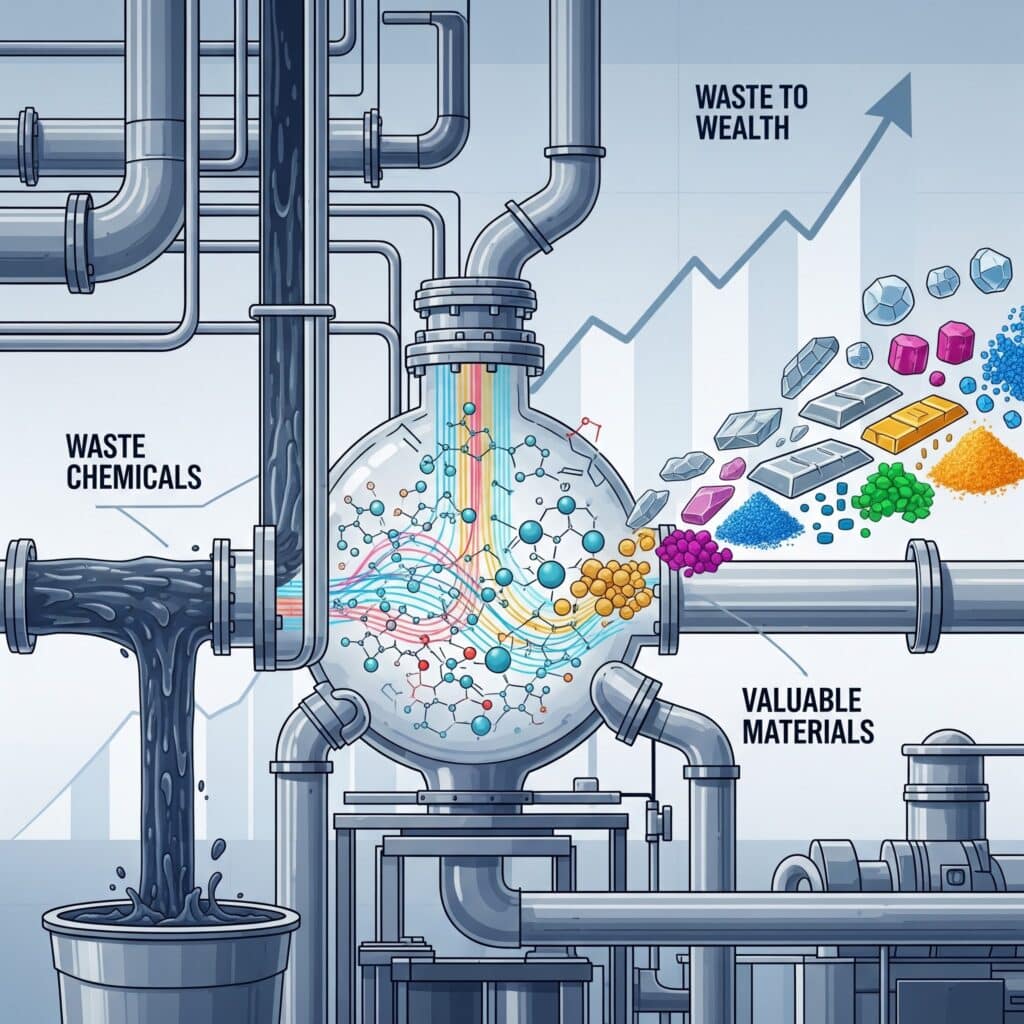
This guide provides a practical, five-step framework for getting started, designed to de-risk the process and build a strong internal business case for a full-scale program.
Step 1: The Surplus Stream Audit – Know What You Have
You cannot monetize what you do not measure. The first critical step is to conduct a comprehensive audit of all your surplus and off-spec material streams. This goes beyond simply knowing the names of the chemicals; it requires a deep characterization of each stream.
- Quantify: What is the consistent volume and frequency of each surplus stream? Is it a one-time batch or a recurring byproduct?
- Characterize: What is the precise chemical composition? This requires detailed analytical data, including purity levels and the identity of any impurities. The more data you have, the more transformation opportunities you can identify.
- Document: Maintain meticulous records of each material, including its original intended use, specifications, and any safety data sheets (SDS). This documentation is crucial for both regulatory compliance and for assessing potential new applications.

This initial audit creates the foundation for your entire program. It turns a vague notion of “waste” into a concrete, data-rich inventory of potential feedstocks.
Step 2: Opportunity Analysis – What Can It Become?
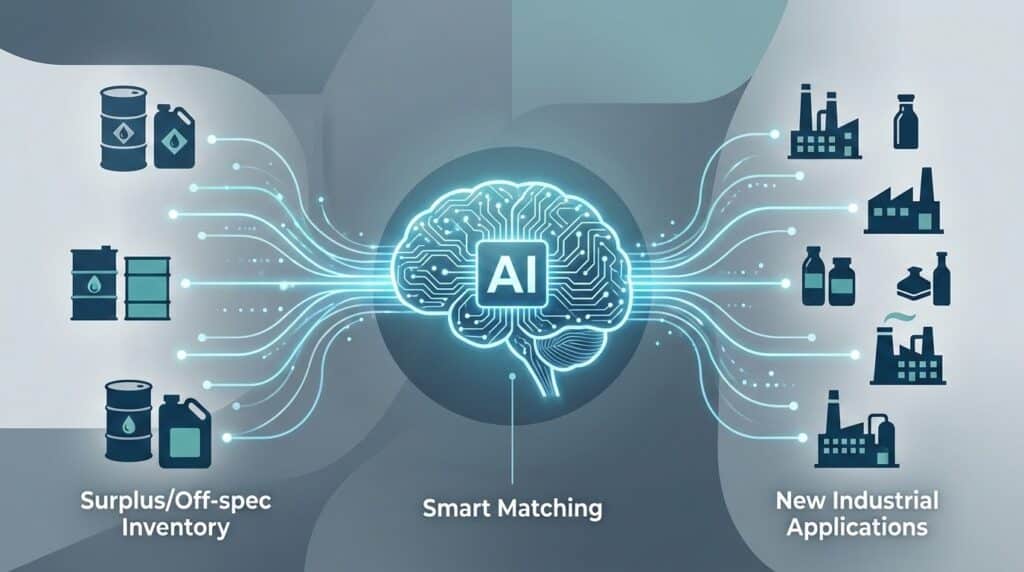
Once you have a clear picture of your surplus inventory, the next step is to research potential transformation opportunities. This involves a combination of chemical knowledge and market analysis. The goal is to identify high-value derivatives that can be created from your specific surplus materials.
For example, a surplus stream of a particular solvent might be purified to a higher grade for a more demanding application. A byproduct from a pharmaceutical synthesis could potentially be used as a starting material for a completely different class of industrial chemicals. This is where the concept of chemical reuse becomes a powerful engine for innovation.

It is also essential to consider market demand. Is there a ready market for the potential derivative? What is the current market price? Answering these questions helps prioritize the most promising and profitable transformation pathways. This research phase is critical for building a business case that will resonate with financial stakeholders.
Step 3: Partnership – You Don’t Have to Go It Alone
Developing and scaling chemical transformation processes requires specialized expertise and equipment that most companies do not possess in-house. This is where strategic partnerships become essential. Attempting to build this capability from scratch is often not feasible or cost-effective. Instead, leverage the existing ecosystem of specialists.
- Toll Manufacturers: These are companies that have the reactors, distillation columns, and other equipment necessary to perform chemical transformations on a contract basis. They can take your surplus material and process it according to a defined protocol.
- Chemical Experts and Consultants: Academic labs or specialized consulting firms can help develop and validate the chemical pathways to transform your surplus into the desired derivative.
- Specialized Brokers: Companies that specialize in off-spec chemical trading often have a deep network of both suppliers and potential buyers, and can help facilitate the entire process, from identifying opportunities to managing the logistics.

A good partner de-risks the entire endeavor, providing the technical capability and market access needed for success.
Step 4: The Pilot Project – Prove the Concept
Before committing to a full-scale program, it is crucial to run a small-scale pilot project. The goal of the pilot is to prove both the technical and economic viability of a specific transformation. A successful pilot provides the hard data and the compelling story needed to secure buy-in for a larger investment.
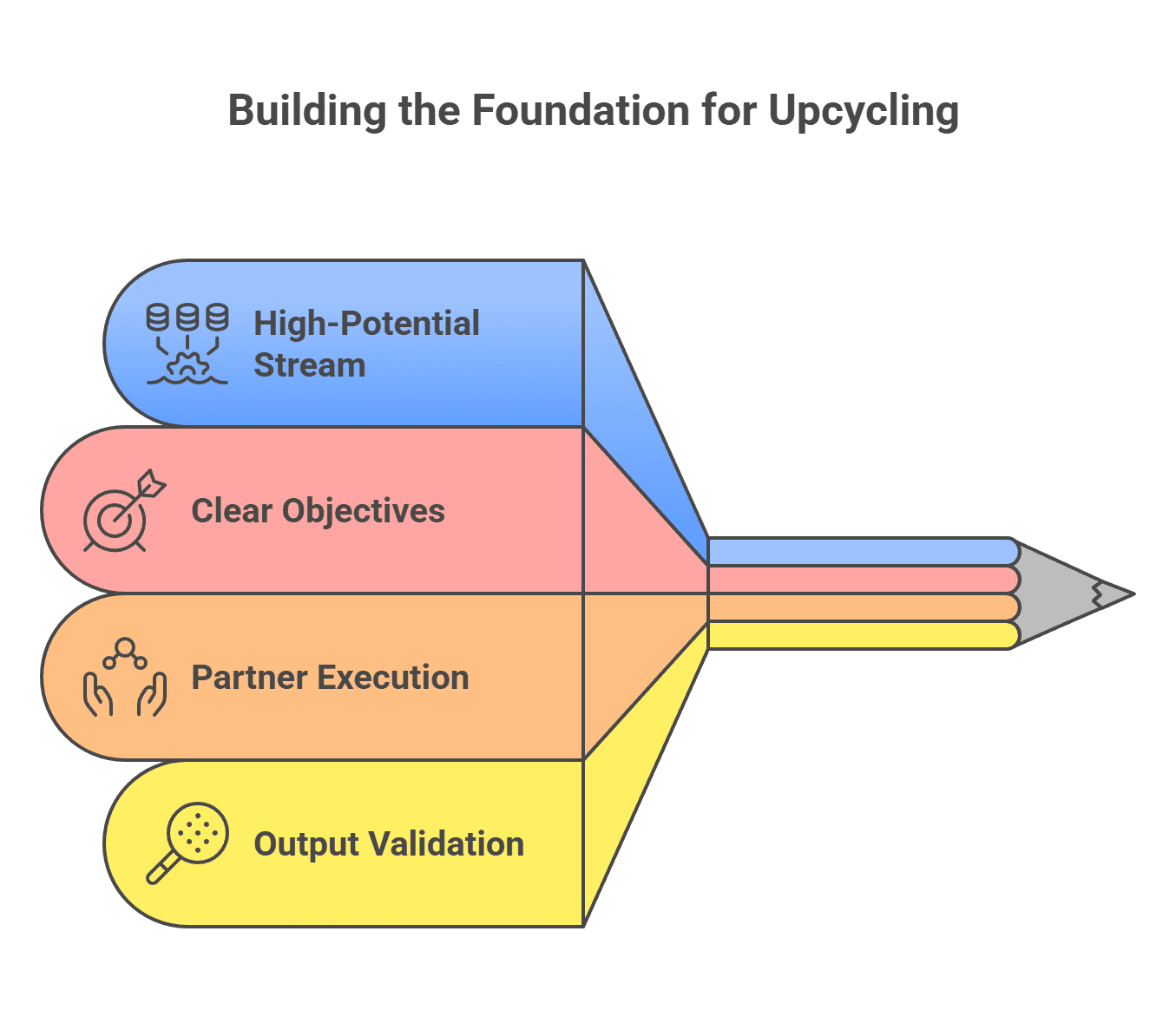
- Select a High-Potential Stream: Choose one of your most promising surplus streams from the opportunity analysis.
- Define Clear Objectives: What are the target specifications for the final derivative? What is the target yield and cost of production?
- Execute with Your Partner: Work with your chosen toll manufacturer or technical partner to run the transformation on a small batch of material.
- Validate the Output: Conduct rigorous analytical testing on the final derivative to ensure it meets the required quality standards.
Step 5: Measure, Report, and Scale – Build the Business Case
The final step is to meticulously measure the results of your pilot project and present them in a clear, compelling business case. The metrics should speak to a variety of stakeholders.
- For the CFO: Calculate the ROI, the net profit generated, and the reduction in disposal costs.
- For the Sustainability Officer: Quantify the reduction in waste, the carbon footprint reduction, and the contribution to the company’s circular economy goals.
- For the Operations Head: Report on the efficiency of the process and the successful creation of a new, valuable product stream.

By starting small, proving the concept, and building a data-driven case, you can transform a promising idea into a fully-fledged, profitable, and sustainable chemical upcycling program. The journey from waste to wealth is a step-by-step process, and with this framework, it is a journey that any forward-thinking organization can begin today.
References
- General Principles of Waste Management and Circular Economy: U.S. Environmental Protection Agency (EPA), “Sustainable Materials Management: Non-Hazardous Materials and Waste Management Hierarchy,” https://www.epa.gov/smm/sustainable-materials-management-non-hazardous-materials-and-waste-management-hierarchy
- Toll Manufacturing Resources: Society of Chemical Manufacturers & Affiliates (SOCMA), “Toll Manufacturing Services,” https://www.socma.org/toll-manufacturing-services/