
Signal Before the Storm: How to Read Market Shifts Before They Disrupt Your Business
In our last discussion, we established that proactive regulatory compliance is a powerful competitive advantage. But what good is a compliant operation if it’s derailed by a market shock you never saw coming? In today’s hyper-connected and volatile global economy, the ability to anticipate disruption is no longer a luxury- it is the cornerstone of a resilient enterprise.
The challenge, as Deloitte noted in their 2026 Chemical Industry Outlook, isn’t a lack of information; it’s a deluge of it [1]. The key is learning to filter the noise and identify the faint but critical signals that precede major market shifts. This skill is what separates market leaders from market followers.

This article provides a framework for identifying and interpreting these signals across four key domains, enabling your organization to move from a reactive posture to a state of proactive readiness.
1. Regulatory Signals: The Canary in the Coal Mine
Regulatory bodies are often the first to signal major industry shifts. A proposed change in environmental standards, a new safety protocol, or a consultation on a new chemical classification can have profound and far-reaching consequences. These are not just administrative hurdles; they are leading indicators of future market conditions.
How to Read the Signals:
- Monitor Agency Agendas: Actively track the dockets and public meeting agendas of key agencies like the EPA, ECHA, and Health Canada. What topics are they prioritizing? What research are they commissioning?
- Analyze Consultation Documents: When a regulator issues a public consultation, it is a clear signal of their direction of travel. The questions they ask and the data they request reveal their underlying concerns and policy objectives.
- Track Enforcement Patterns: A sudden increase in enforcement actions related to a specific substance or practice is a strong indicator that broader regulations are on the horizon.
For example, the EPA’s increased scrutiny of PFAS (“forever chemicals”) over the past several years was a clear signal that stricter regulations were inevitable. Companies that began phasing out PFAS from their products and supply chains early are now years ahead of competitors who waited for the final rule [2].
2. Competitive Signals: Watching the Horizon
Your competitors’ actions provide invaluable insights into their strategic priorities and their assessment of the market. While you should never blindly follow their lead, ignoring their moves is a recipe for being caught off guard.
How to Read the Signals:
- Pilot Plants and R&D Investments: A competitor building a pilot plant for a new technology or filing a cluster of patents in a specific area is a multi-million dollar signal of their future direction. This is where patent data analysis becomes a powerful tool for market intelligence.
- Strategic Partnerships: When two companies- especially those in adjacent markets- form a strategic alliance, it often signals an attempt to enter a new market or develop a new capability. This can reshape the competitive landscape.
- Executive Hires: A company hiring a senior executive with a specific skill set (e.g., an expert in AI or a leader in sustainable materials) is a strong indicator of a new strategic focus.
3. Supply Chain Signals: The Flow of Materials
Your supply chain is a rich source of real-time market intelligence. Shifts in pricing, availability, and logistics can provide early warnings of broader economic or geopolitical disruptions.
How to Read the Signals:
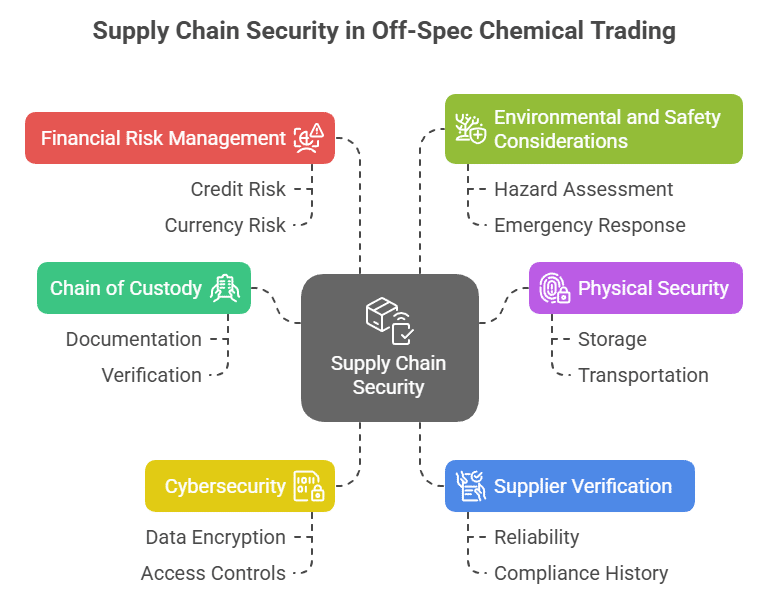
- Feedstock Availability and Pricing: A sudden spike in the price of a key raw material or a sudden shortage can be the first sign of a major supply disruption. This is where having a robust chemical sourcing strategy becomes critical.
- Logistics Bottlenecks: Rising shipping costs, port congestion, or a shortage of transportation capacity can all signal underlying economic pressures or geopolitical tensions that could impact your business.
- Supplier Behavior: Are your suppliers trying to renegotiate contracts? Are they changing their payment terms? These can be signs of financial distress or a shift in their own market power.
By cultivating strong relationships with a diverse network of partners, including surplus chemical traders, you gain access to a wider range of market intelligence and can more quickly adapt to changing conditions.
4. Technological Signals: The Seeds of the Future
Technological breakthroughs can render entire business models obsolete in a matter of years. Staying ahead of the curve requires a constant focus on the technological horizon.
How to Read the Signals:
- Academic Research: Monitor leading universities and research institutions for breakthroughs in chemistry, materials science, and process engineering.
- Venture Capital Investment: Track where venture capital firms are investing their money. This is a strong indicator of which technologies are believed to have the greatest commercial potential.
- Cross-Industry Innovation: Look for technologies that are transforming other industries and consider how they could be applied to your own. For example, the use of AI and machine learning in the financial sector is now being adapted for predictive maintenance and supply chain optimization in the chemical industry.
Conclusion: From Signal to Strategy
Identifying market signals is only the first step. The real value comes from integrating this intelligence into your strategic planning process. This means creating a culture of curiosity, empowering your teams to share what they are seeing, and having a formal process for evaluating potential disruptions and developing mitigation strategies.
In our next article, we will explore how the principles of sustainability and the circular economy are not just a response to market signals, but a powerful strategy for creating a more resilient and profitable business.
References
[1] Deloitte. (2025). “2026 Chemical Industry Outlook.” https://www.deloitte.com/us/en/insights/industry/chemicals-and-specialty-materials/chemical-industry-outlook.html
[2] U.S. Environmental Protection Agency (EPA). (2026). “PFAS Strategic Roadmap: EPA’s Commitments to Action 2021-2024.” https://www.epa.gov/pfas/pfas-strategic-roadmap-epas-commitments-action-2021-2024
[3] Gartner. (2026). “Beyond Supply Chain 2026 Predictions.” https://www.gartner.com/en/supply-chain/insights/beyond-supply-chain-blog/beyond-supply-chain-2026-predictions ”’