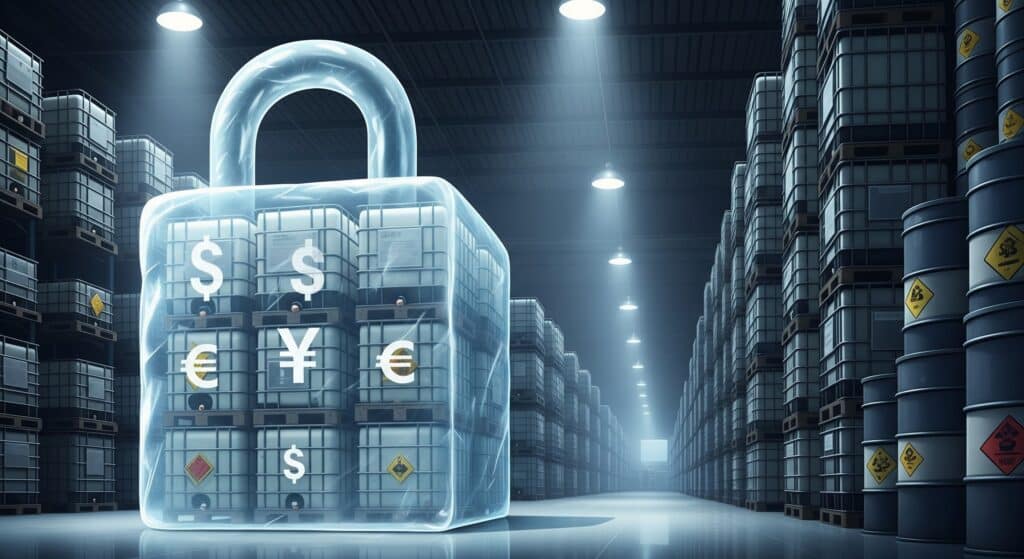

The Shifting Landscape of Global Chemical Trade
China’s role in the global chemical market has expanded dramatically, making its domestic policies increasingly influential on international supply dynamics. In 2025, China’s sulfuric acid market delivered outstanding performance, with annual production reaching approximately 110 million tons and apparent consumption hitting about 105 million tons [2]. That same year, exports surged 73.3% year-on-year to 4.65 million tons, officially transitioning the country from a net importer to a net exporter [2].
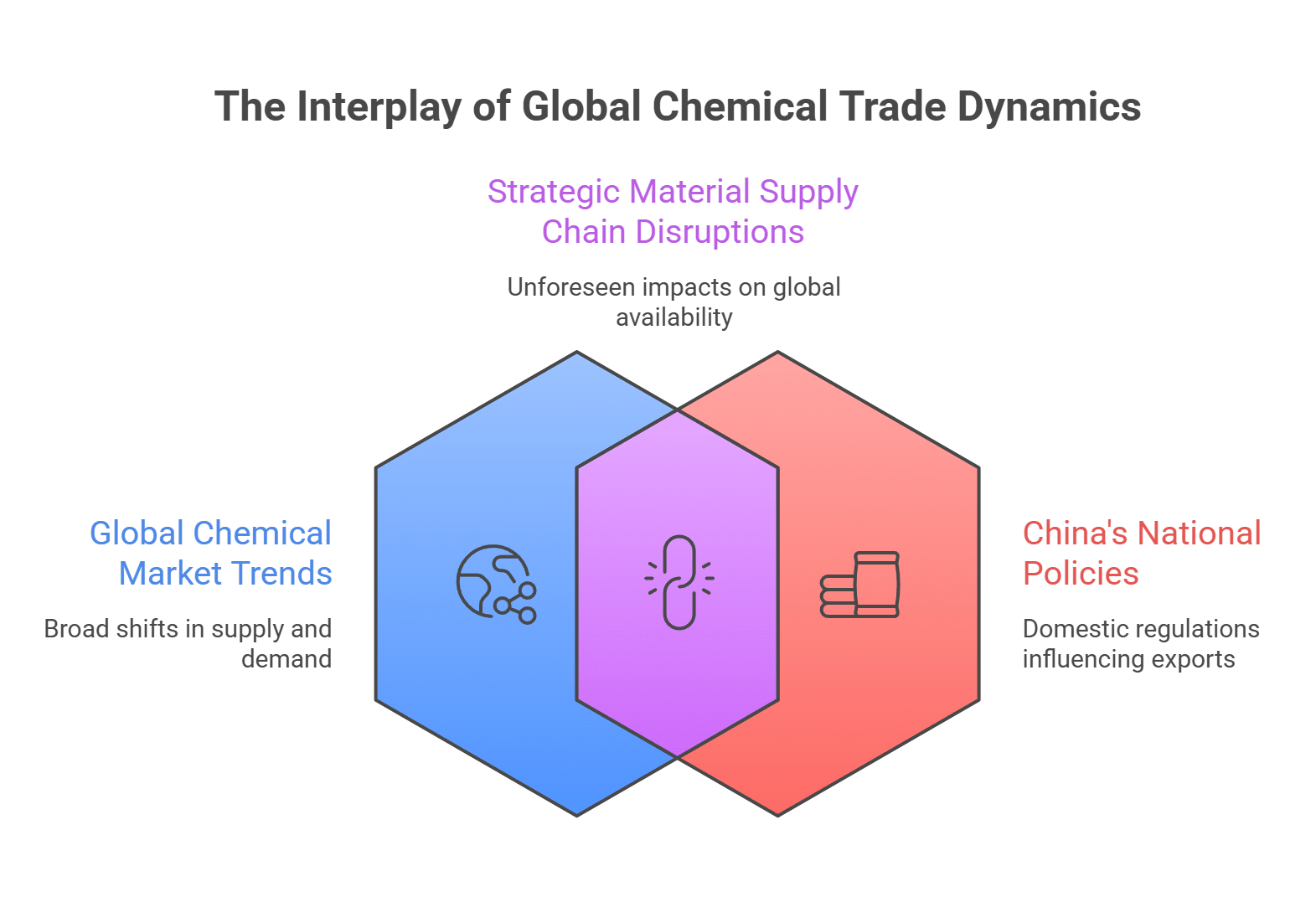
However, we have recently observed a trend where China has exerted greater control over the export of strategically important materials. This is driven by factors such as environmental protection, domestic demand, and national strategic interests. For instance, China’s new Hazardous Chemicals Safety Law, which takes effect on May 1, 2026, introduces stricter enterprise obligations and risk management protocols [3]. Understanding these broader trends is crucial for anticipating movements in specific chemical markets.
The 2026 Export Halt: From Speculation to Reality
While earlier discussions framed the potential for export restrictions as speculation, the situation has rapidly evolved. As of April 10, 2026, it has been confirmed that China will halt exports of sulfuric acid from May 2026 [1]. This ban specifically covers sulfuric acid produced as a by-product of copper and zinc smelting [1].
The decision is rooted in a confluence of factors. The National Development and Reform Commission (NDRC) had already imposed a strict quota of 700,000 tonnes for the January-April 2026 period, a sharp decline from the 1.3 million tonnes exported during the same period in 2025 [4]. This policy appears designed to prioritize domestic supply and the phosphate fertilizer industry, particularly ahead of peak agricultural planting seasons [4].
Furthermore, the ongoing conflict in the Middle East has severely disrupted global sulfur supplies. The Middle East accounts for roughly one-third of global sulfur production, and 50% of seaborne sulfur trade passes through the Strait of Hormuz [5]. With the effective closure of this critical chokepoint, sulfur prices have increased by approximately 70%, exacerbating the global shortage of feedstocks required to produce sulfuric acid [5].
Why Sulfuric Acid Matters: A Critical Industrial Backbone
Sulfuric acid (H2SO4) is universally recognized as the “king of chemicals” due to its ubiquitous role across countless industrial processes [6]. It is an indispensable material for a vast array of industries, acting as a fundamental building block in manufacturing worldwide.
The largest single industrial use of sulfuric acid is the manufacture of phosphate fertilizers, which accounts for roughly 50% of its global consumption and is essential for global food security [7]. Beyond agriculture, it is critical for petroleum refining, chemical synthesis for plastics and detergents, car battery manufacturing, and water treatment facilities [6] [8].
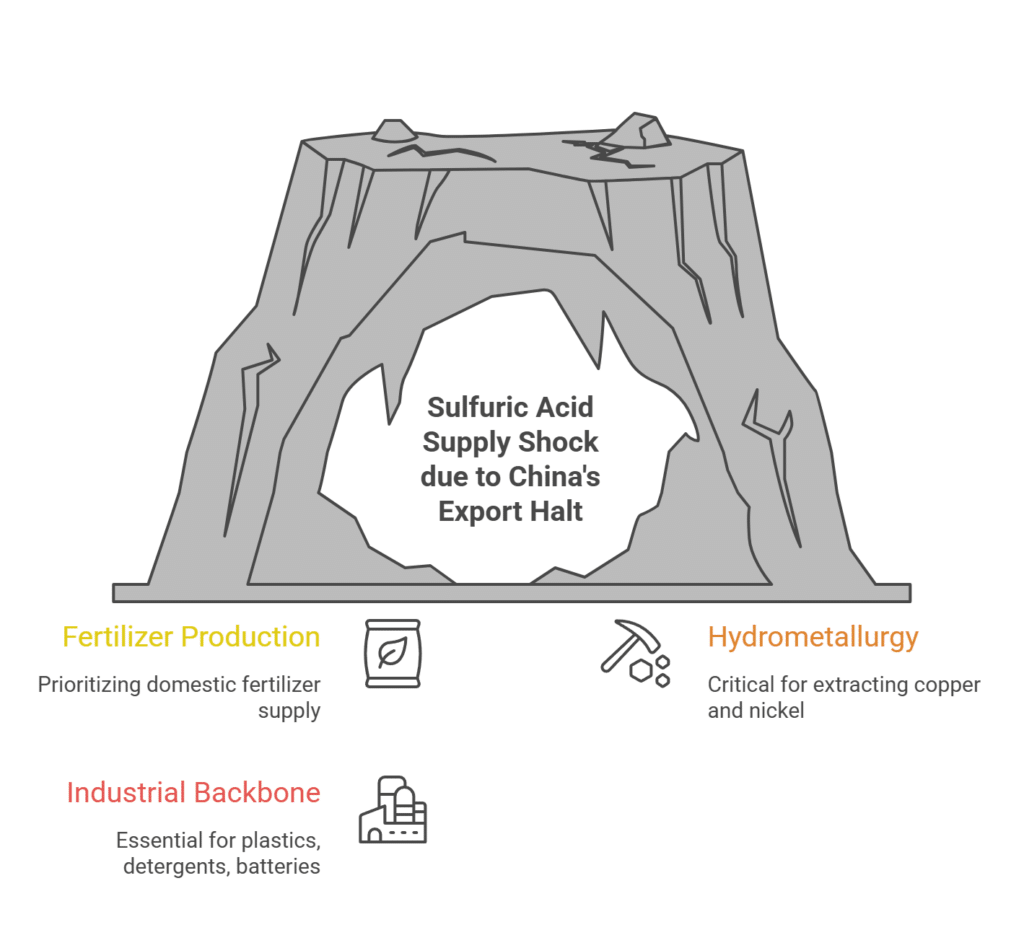
Crucially, sulfuric acid is the lifeblood of modern hydrometallurgical extraction processes for critical minerals like copper and nickel. The impending loss of Chinese export volumes threatens to create severe bottlenecks for miners and processors in major producing regions.
| Major Importers of Chinese Sulfuric Acid (2025) | Share of Total Exports | Primary Industrial Use |
|---|---|---|
| Chile | 32% | Copper Mining (Heap Leaching) |
| Indonesia | 15% | Nickel Processing (HPAL) |
| Morocco | 12% | Phosphate Fertilizers |
| Saudi Arabia | 12% | Chemical Manufacturing |
Data Source: 2025 Export Distribution [9]
Given this critical importance, the confirmed export halt carries significant weight. Importing nations and industries reliant on stable sulfuric acid supplies are already facing severe challenges. For example, in Chile- which buys over 1 million tons of Chinese sulfuric acid annually to support its copper output- prices surged 44% in just one month following the supply disruptions [5].
The ongoing supply shock reflects a broader trend of nations reassessing their critical material supply strategies. Industries globally must closely monitor policy developments and proactively develop contingency plans. Securing essential materials like sulfuric acid is becoming a paramount concern for national economies and individual businesses, highlighting the strategic importance of foresight and resilience in an interconnected world.
At Sur+, we understand the imperative of a resilient supply chain and the strategic value of every chemical asset. Our mission is to transform challenges into opportunities, providing a world of solutions for surplus stock and connecting demand with supply sustainably, globally.